Our little corner of the world doesn’t make international news much, and it’s usually bad news that travels – I learned of the Christchurch earthquake because I was listening to BBC radio and heard it on their news. Often the only way we know we’ve made it on a global scale is when our phones ping repeatedly as we’re eating dinner. You know, just as the UK is waking up. This is how, last evening, we realised that Wellington’s latest trauma had gone global. I suppose that’s what happens when half your capital city seems to be trying desperately to get into the sea, helped by the record-breaking amounts of rain that have fallen on it over the last couple of days (‘extreme, even by tropical standards’).
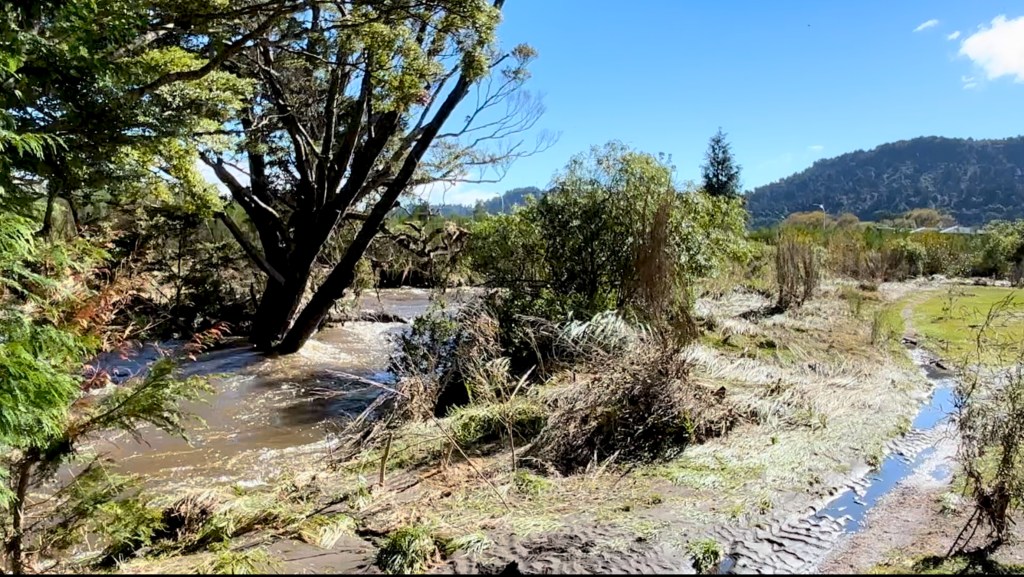
We were able to reassure our concerned family and friends that we weren’t impacted by what they were seeing. In a stroke of good fortune, we moved away from Wellington earlier this year. We’re not known for our timing but seeing streets that we used to walk on running like rivers and water pouring out of stores we used to shop in, it would seem we got it right for a change.
Wellington probably made the news because of its capital status and, to be fair, it did cop it worse than most other places this weekend, but a week earlier we’d all battened down against a forecast cyclone bearing down on the country. It wasn’t as bad as feared (and as we’ve experienced) but there was still localised flooding in some places, roads closed and power out because of falling trees. The point I’m making is that we’re getting used to this sort of thing in New Zealand.
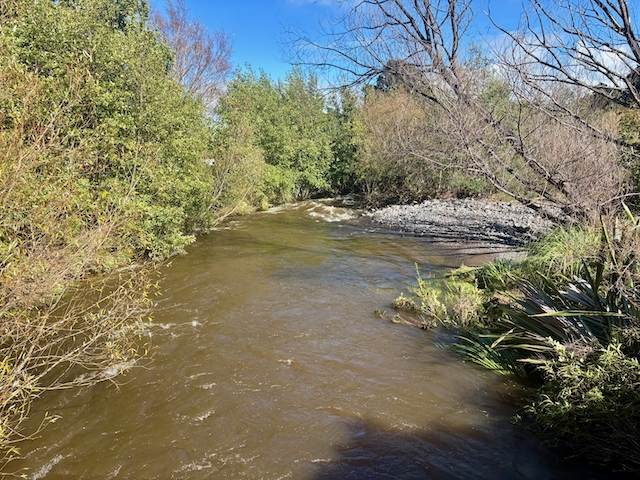
Not long after we arrived in this country we learned that rain here is different to that of the country we’d left. We sometimes get a delicate sprinkle, the sort that peppers romance stories and freshens a spring day, but most of our rain has ambitions to be of the monsoon variety, falling in solid sheets and quickly filling up standard escape routes like drains and gutters. Often it is ruler straight, too heavy for the wind to make it lash against windows. Country waterways can rise faster than the price of petrol in a Middle East crisis, a trickling brook becoming a raging torrent within seconds, powerful enough to sweep all before it. In urban areas it finds the easiest route, turning streets into rivers, surrounding homes and flowing into them, forcing people from their safe havens into the cold and wet.
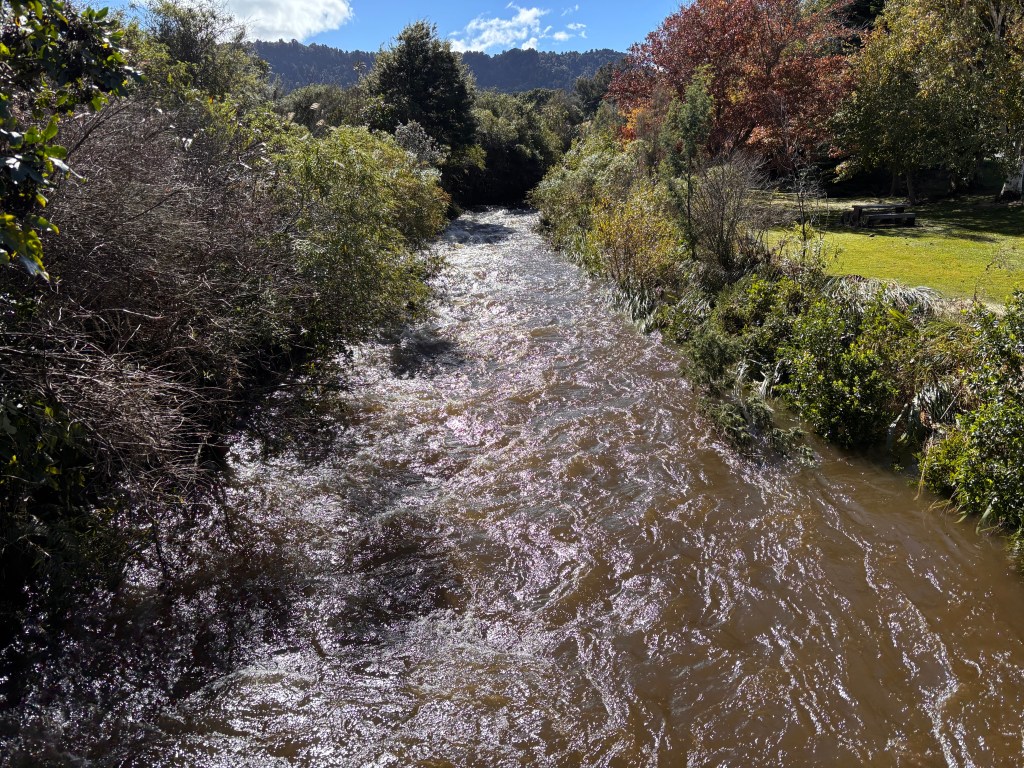
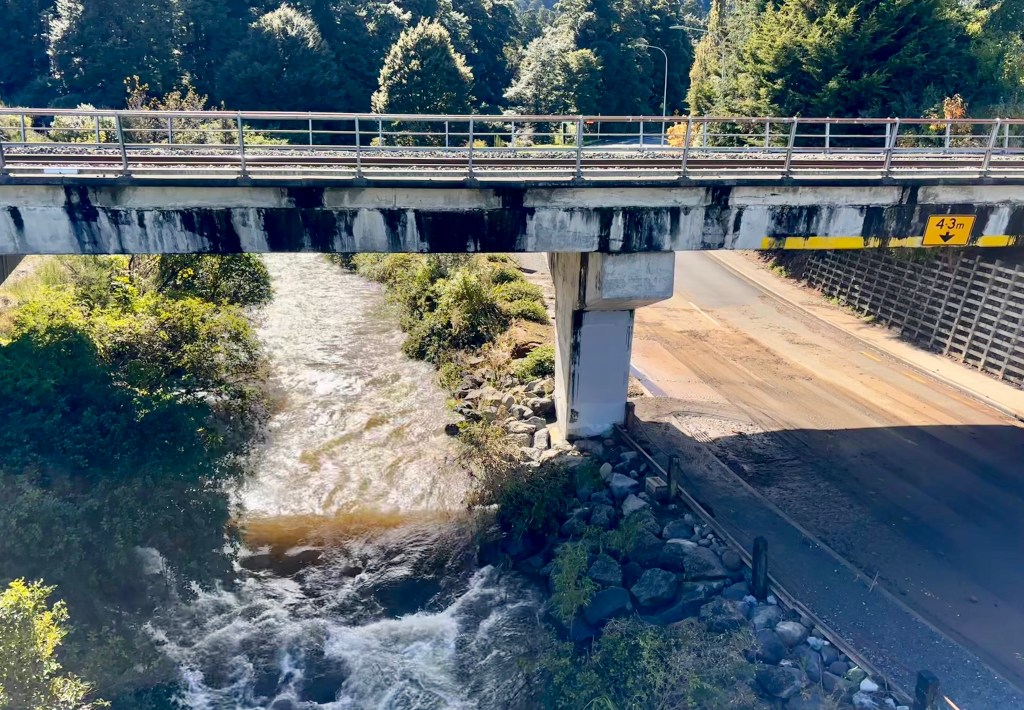
Our waterway here in Ohakune is named a river but is really a stream, mere meters wide and bubbling over rocks and beneath trees. Children and dogs paddle in it, swimming in a couple of places where it’s deep enough, although even then only waist deep to an adult. Still, we know that when it rains on the mountain the Mangawhero River fills, flowing fast over the rocks it hides, still rarely reaching the top of its banks. The rain here on Saturday was apocalyptic, falling in a heavy stream non-stop for over twelve hours. On Sunday we cycled the path alongside the river and were astounded by the amount of water flowing past us, gaping in amazement at the line of debris that showed where it had flowed at its highest. We’ve known this river for over fifteen years and have never seen it like this. Any dog or even adult would be swept away within seconds and never seen again, and no one with any sense would let a child anywhere near it.
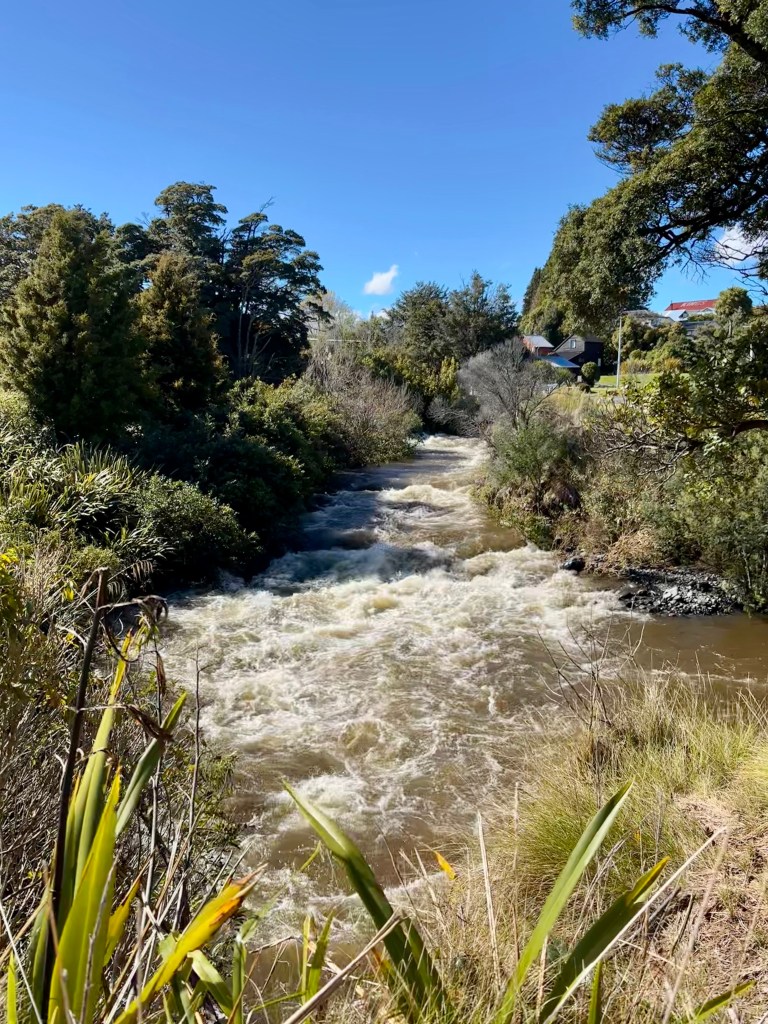
Wellington doesn’t have a mountain, but it is surrounded by hills. It doesn’t have a large river, just a lot of tiny streams, and a lot of roads and paths that become waterways when it rains. Seeing what the rain that fell here did to our little river it’s easy to understand why water rolling off Wellington’s hills caused so much carnage – we had far less than the record-breaking amounts the city copped.
As I type the rain is lashing down again and it’s fair to presume it will also be doing so in the city. We might feel fortunate that we no longer live there, but we know a lot who do. It’s sobering to see sandbags lined up outside what was our local pub, but heartening to see the Kiwi spirit alive and well in the capital – next door to the sandbags piled outside the pharmacy the café still has its usual tables on the pavement under the awning. Well, everyone needs a decent cup of tea or coffee in a crisis, don’t they.
As they say around these parts, kia kaha, Wellington.
 Tracy Annenberg
Nicely put, Tracy. I was thinking of you yesterday and the impact
LikeLike
Thank you!
LikeLike