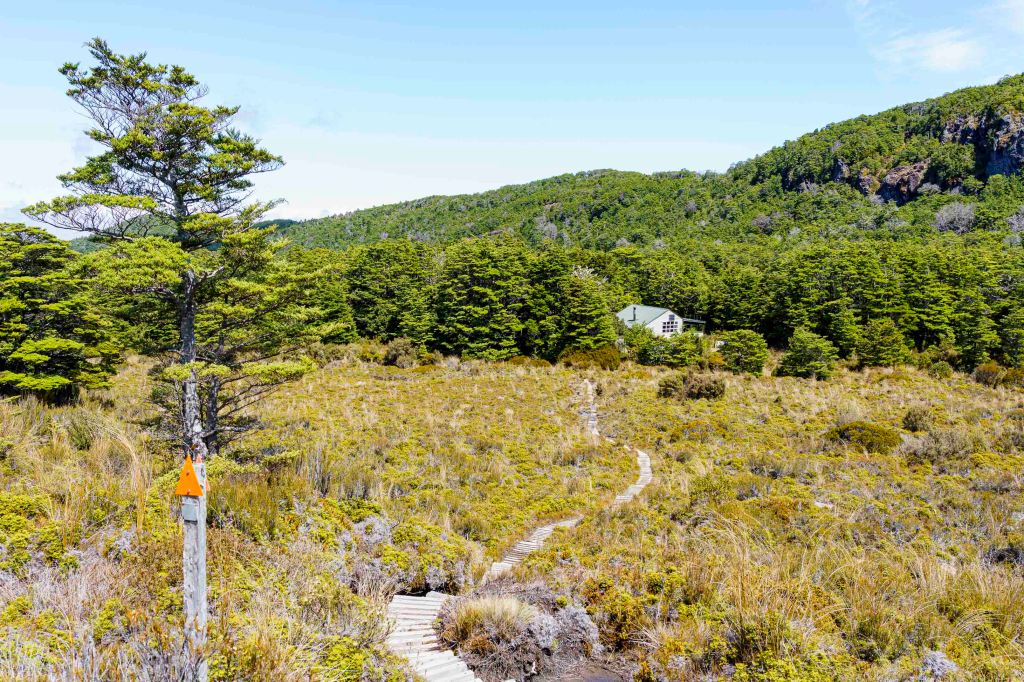
On a sunny day there’s nothing better than putting on hiking boots, grabbing a pack and a picnic, and heading out for a walk. Walking: putting one foot in front of the other, sometimes going uphill, sometimes downhill; the path may be smooth or maybe a little rough, meaning you have to tread carefully to avoid tripping. Then there’s walking in New Zealand, where the path may allow you to follow all or many of the guidelines above but is just as likely to be one that sends both you and them skittering out of control downhill. Worst case the path is non-existent, only random, orange-triangle-topped, poles marking a vague route.
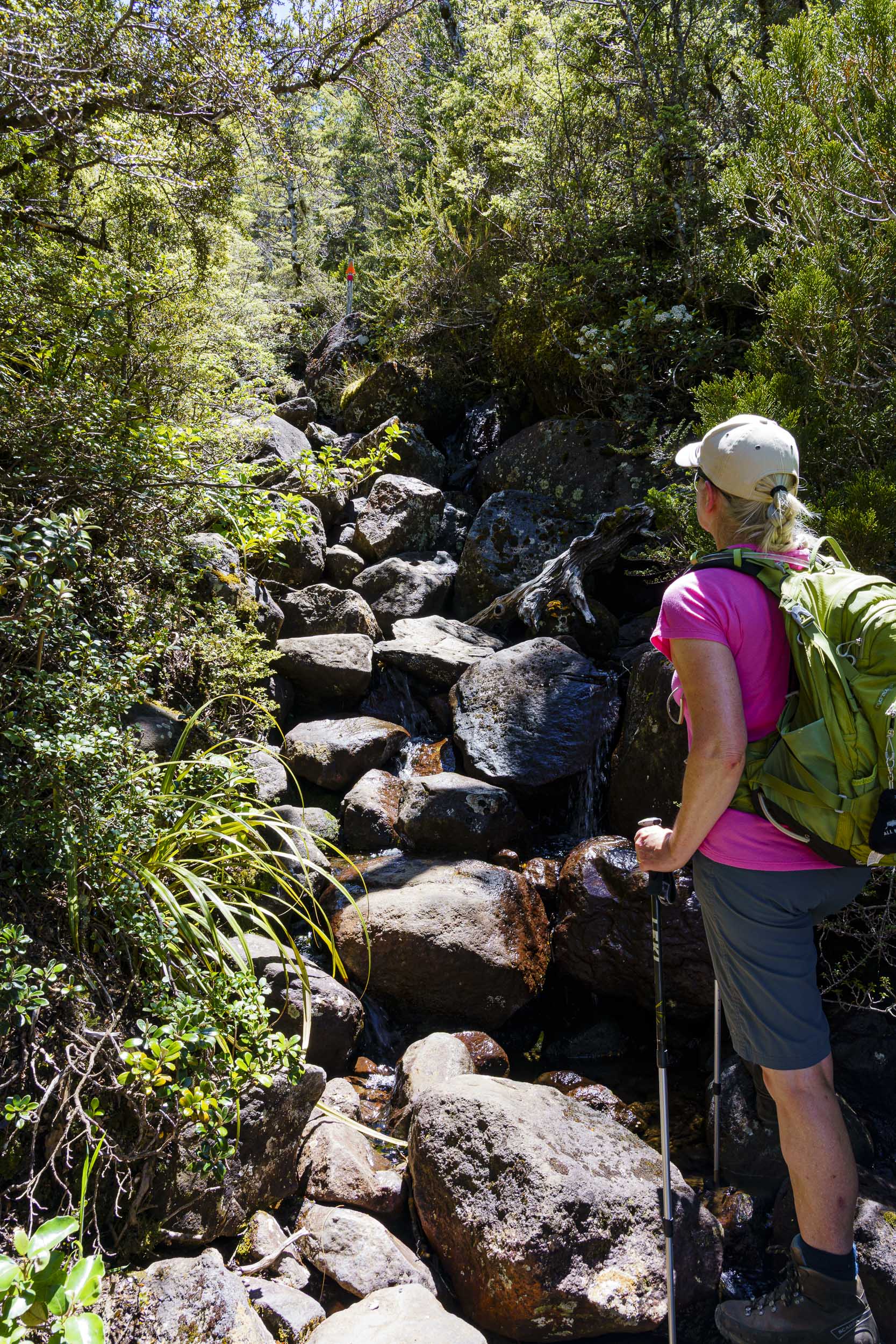
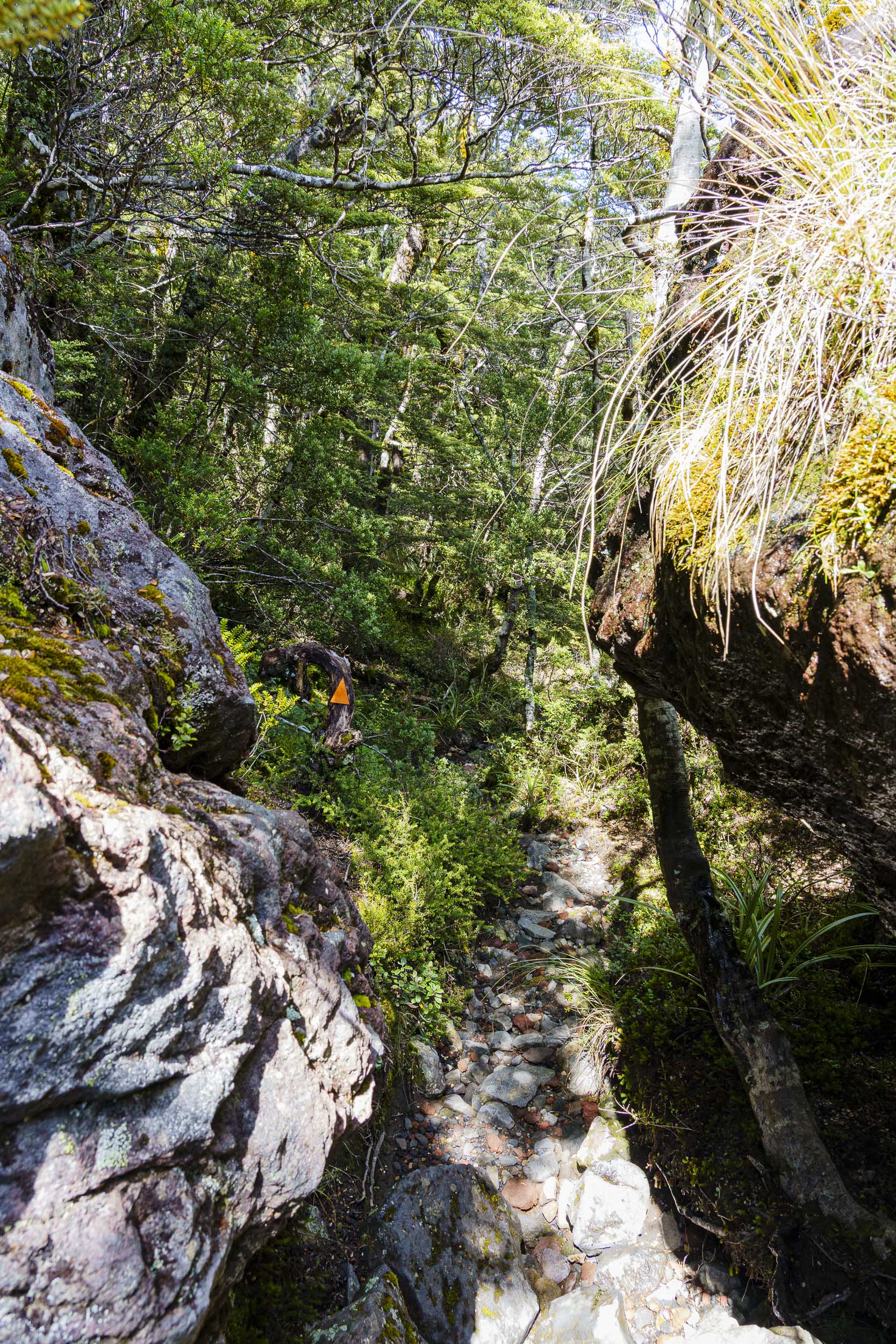
Ruapehu is a prime example. Even well-trodden walks cross slopes that mountain goats would struggle with and sometimes well-trodden means the path has eroded so badly it’s impossible for anyone with normal length legs to get up or down a step on a suggested route. This, in turn, means straying from the path and therefore more erosion and, well, you get the picture. In short, walking on this mountain, as in many places in New Zealand, is more akin to adventure sport than it is to a stroll in the park.
The Department of Conservation describes the Lake Surprise walk as a tramping track, meaning there may be areas where the way ahead is unclear and you may have to work out how to get to the next track marker. If you can see one. This is not a ‘walk’ to be undertaken lightly and, I imagine, horrible in rain (I wouldn’t know because I’m not a masochist so if it’s raining I’m not heading out anywhere unless there’s a café or a bar at the end of it). It’s part of the Round the Mountain track, much of which is well-worn and eroded in places and which has parts where you seriously start to question what the hell you’re doing here.
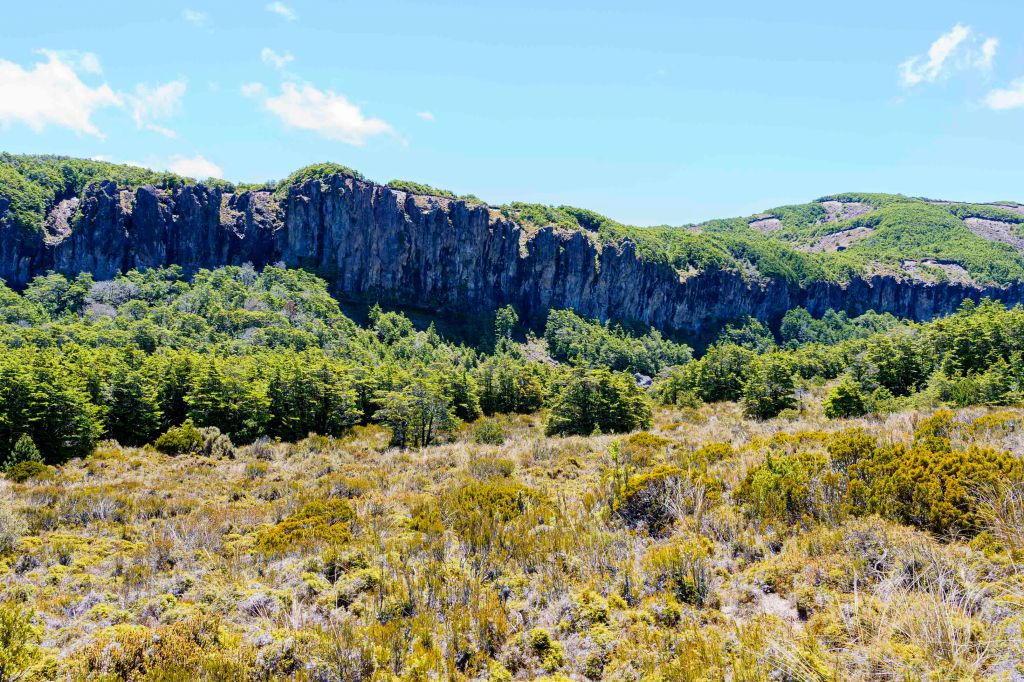
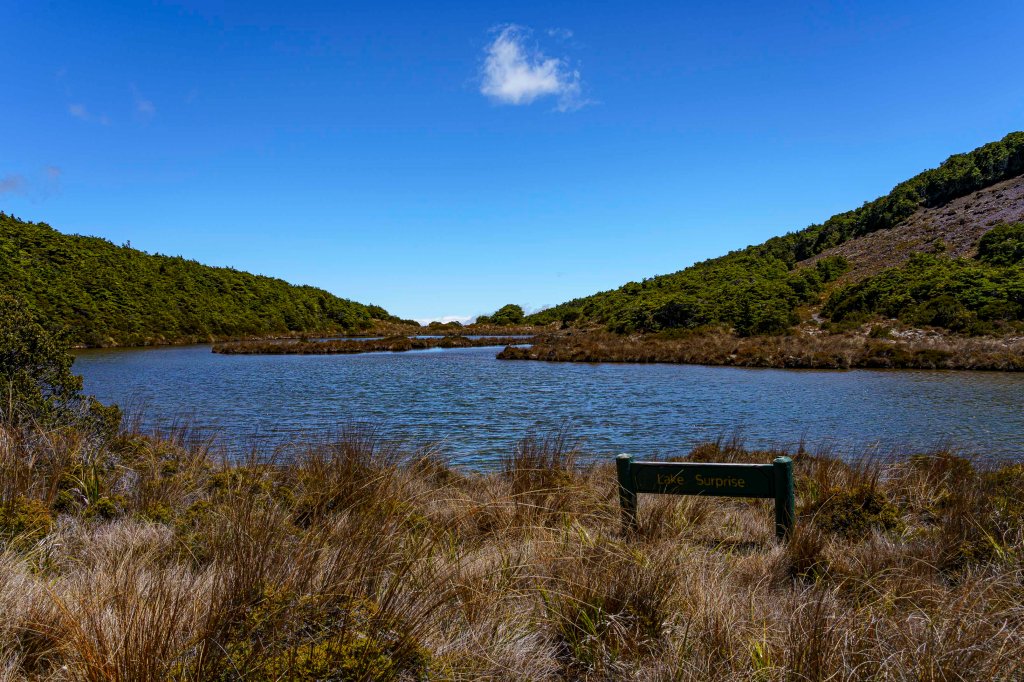
According to DoC this walk is so named because you come upon the lake so suddenly it’s a surprise. A friend says it’s called Surprise because when you get to it you think: why the fuck did I bother? It isn’t a particularly scenic spot, even less so when the wind whips across it with the sole intent of making your visit unpleasant and discouraging lingering. The wind is best friends with this mountain and visits a lot.
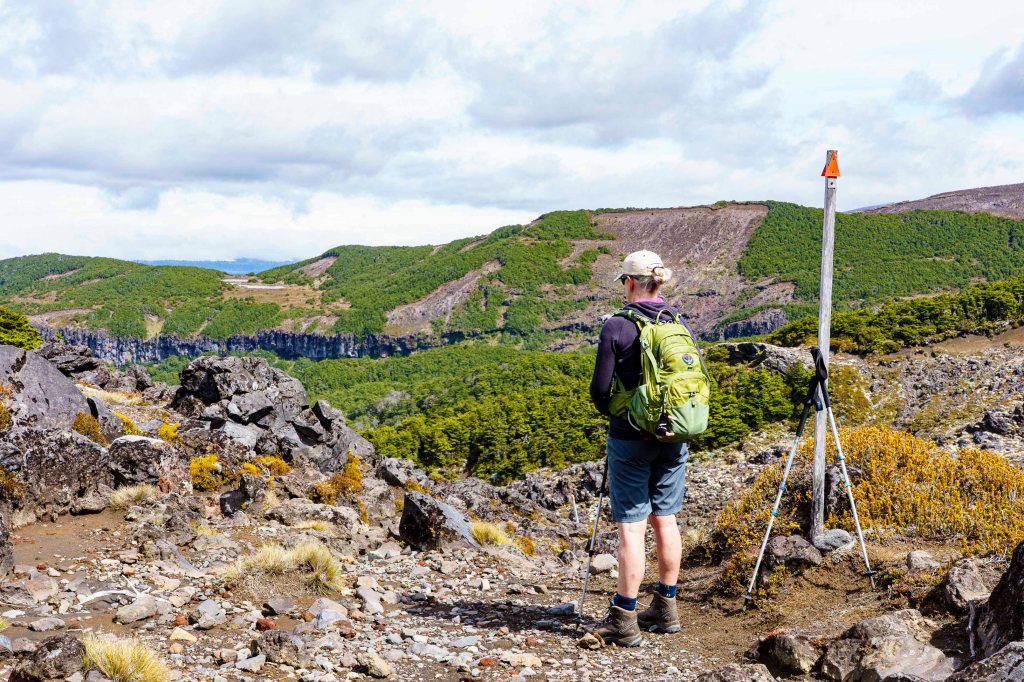
You can see the lake from near the beginning of the walk, a gleaming silver-grey patch in the dark of the bush, seeming a lot closer than it is and giving no hint of how difficult it is to get to it. We’ve only made the full effort a couple of times, choosing instead to stick to the first part of the walk, pause at the Mangaturuturu hut for lunch, then turn back. This avoids having to work out how to get across the river of the same name, a river that, like many on this mountain, varies from a three-metre wide easily-crossed-on-rocks slow flow to a ten-plus-metre wide torrent that pours into your boots and wets you to the thighs, the rocks now drowned and merely a brake to wedge yourself against so the force of the water doesn’t knock you over. Even in summer its waters are frostbite-inducing.
We never undertake this walk without my mind straying to the Grand Canyon, where signs as you descend into the canyon warn that what goes down must then go up, ie the track and therefore you if you are on it. There are no signs here but you get the gist – the way to the hut is mainly downhill, ergo, the way back is the opposite. One big difference: the track into the depths of Arizona is wide and well-formed, its only drawback the gradient; here, be prepared to scramble and negotiate multiple river crossings even before you get to the Mangaturuturu.
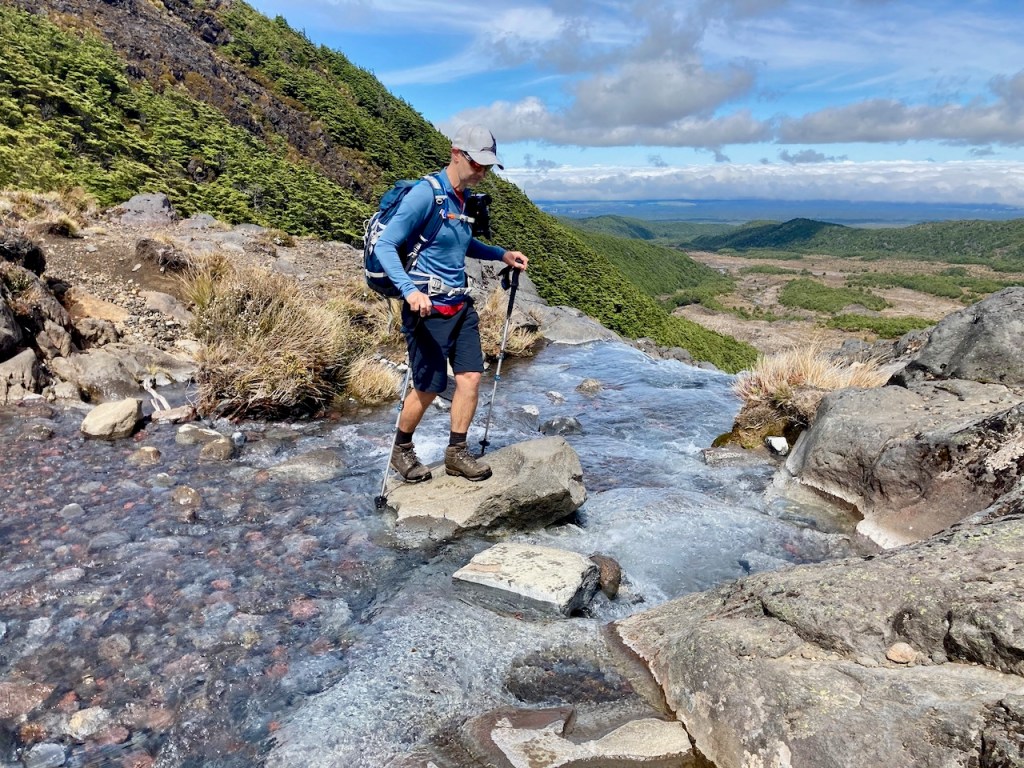
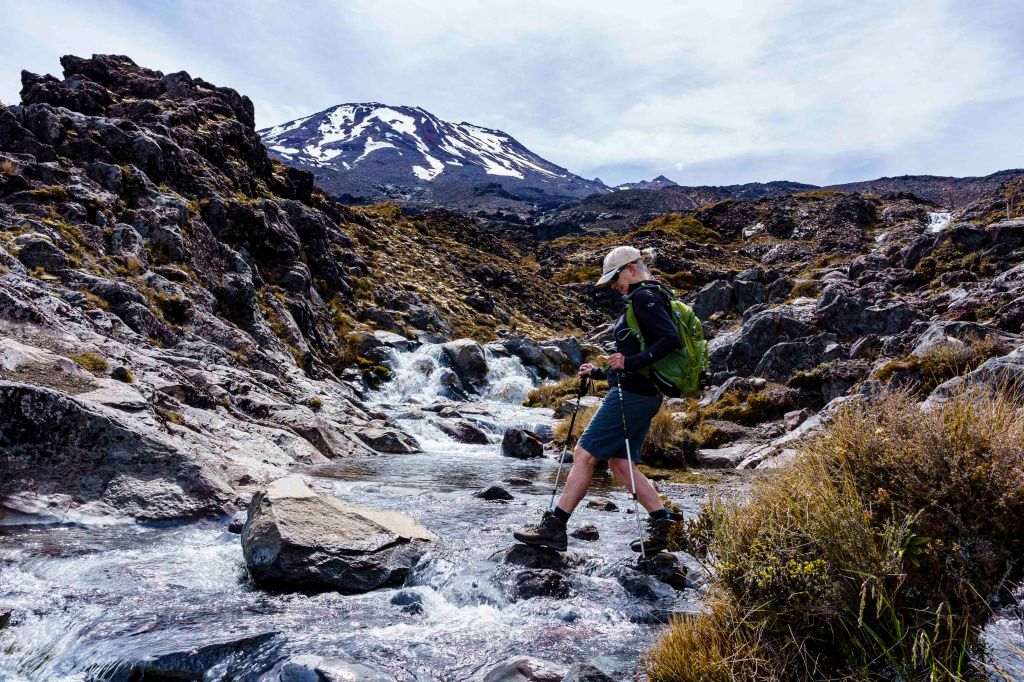
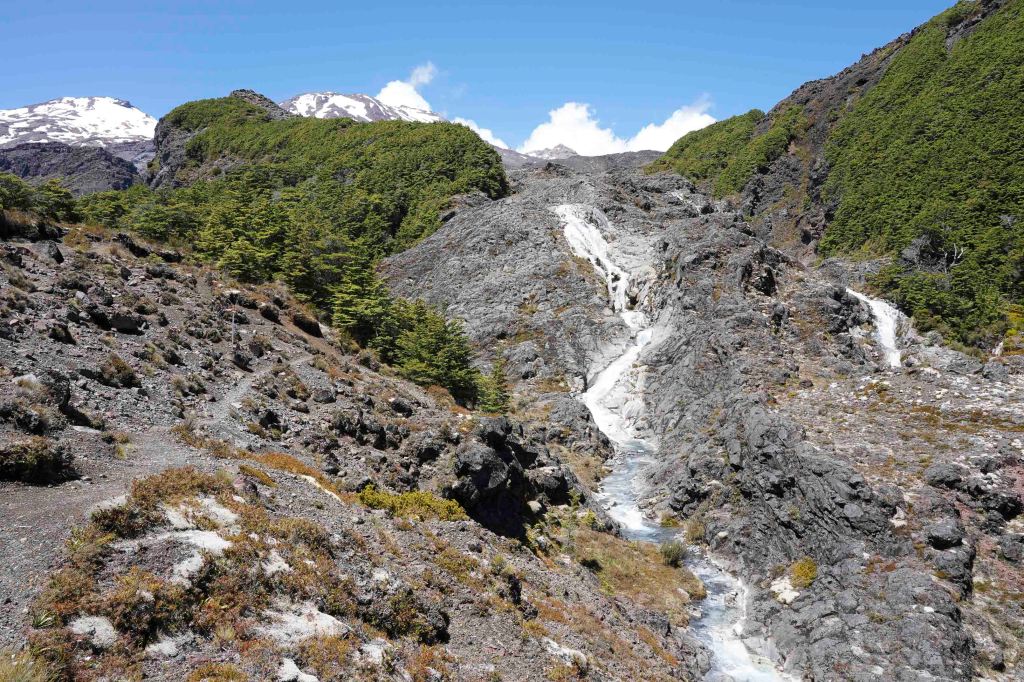
Ah, yes, river crossings – a feature of hiking in New Zealand. Another throwback, another US National Park: in Yosemite on a hike that led past the top of a waterfall, ropes strung alongside the (I have to say, small) river, signs warning against climbing over them as the force of the water could push you over the edge. Small speakers play recordings of calls to emergency services with crying voices saying their [insert idiot friend/relative] had crossed the ropes and disappeared in the water. Here, on this section of the Round the Mountain track, half a dozen river crossings, two within metres of the water disappearing off a shelf of rock. No warnings, just a pole the other side: You need to be here – good luck! At one, before you even get to the watery bit, you have to shimmy down a narrow ridge of rock as slippery as egg white, its surface polished smooth and shiny by the many bums (I presume, as that’s the only way I can get down it) that have slid along it, the water one side, a sheer fifty-metre drop the other. On our last visit we directed a young French hiker who was searching for the route. Non…! she said, shaking her head. We assured her that was the way. Are you sure? It’s not even a path. Welcome to hiking the Kiwi way.
Did I mention the vertiginous cliffs? Not to look at, to get down. Standing at the top you can practically hear the marker poles – one halfway down, another at the bottom – sniggering. Come one! Try your luck! Your knees had better be up for it (tramping poles are useless – no purchase on solid stone) or you’ll be making a faster and more painful descent than you’d planned. At the bottom, looking back up, you won’t believe you managed to get down in one piece. Then you’ll remember you have to get up it on the way back.
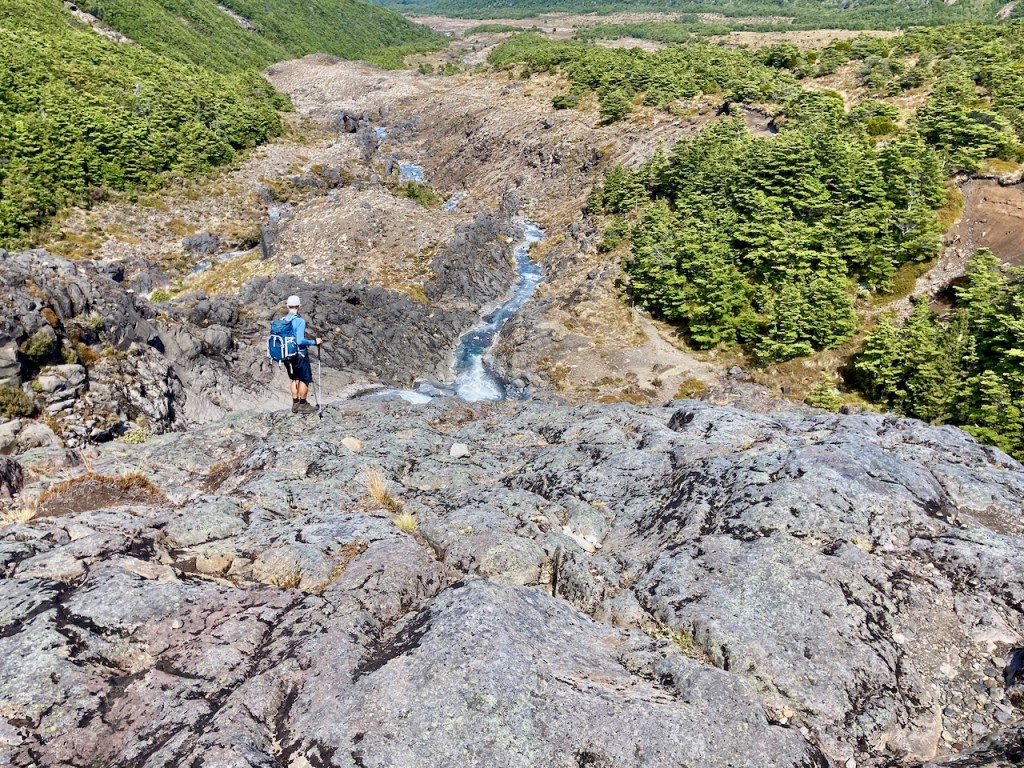
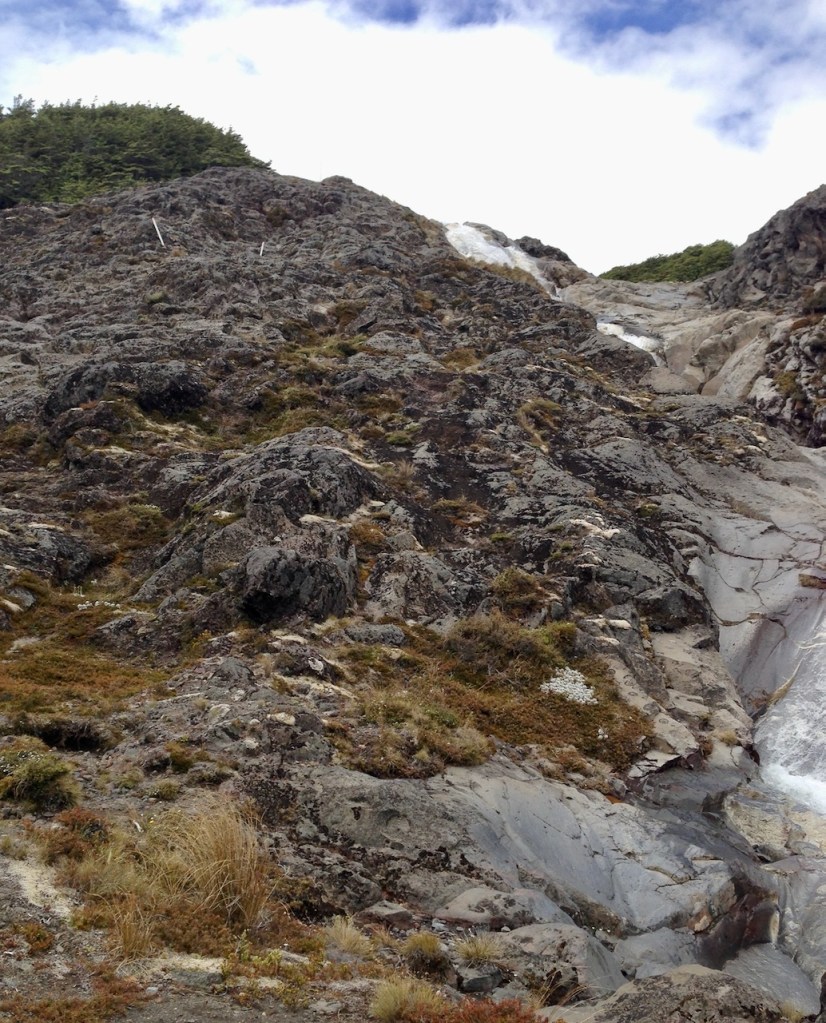
This is a hip-crunching, knee-grinding kind of hike, the parts where you can actually walk being few and far between. I wouldn’t recommend it in winter (although some do) and it would be downright dangerous after heavy rain (DoC warn against it) when rivers can easily upend a person carrying the heaviest pack. In a strong wind much of it is wings and prayers territory.
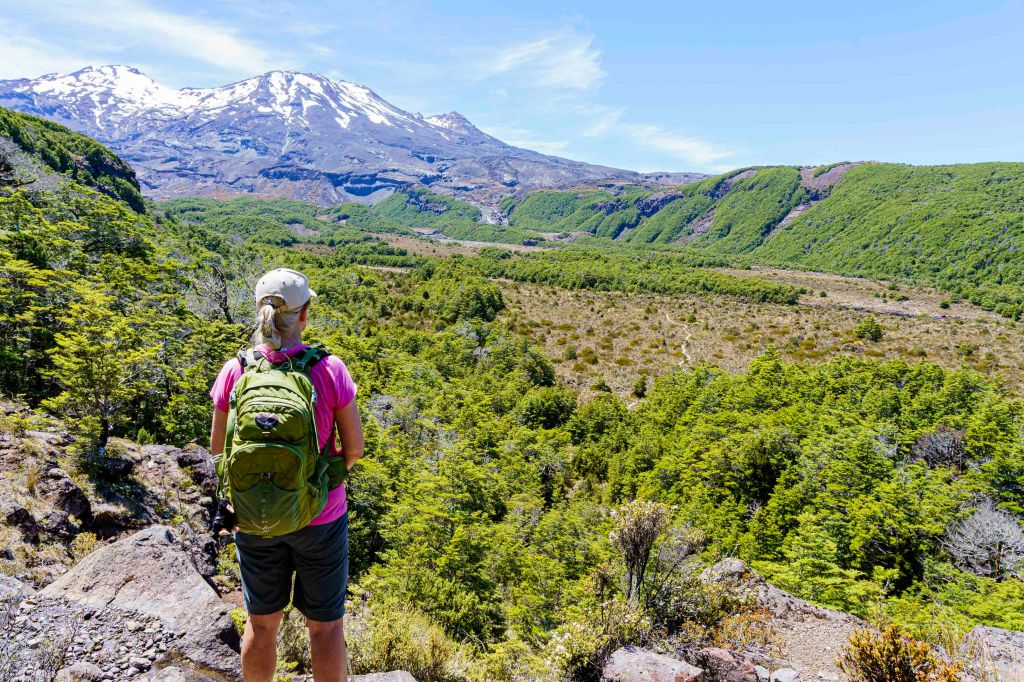
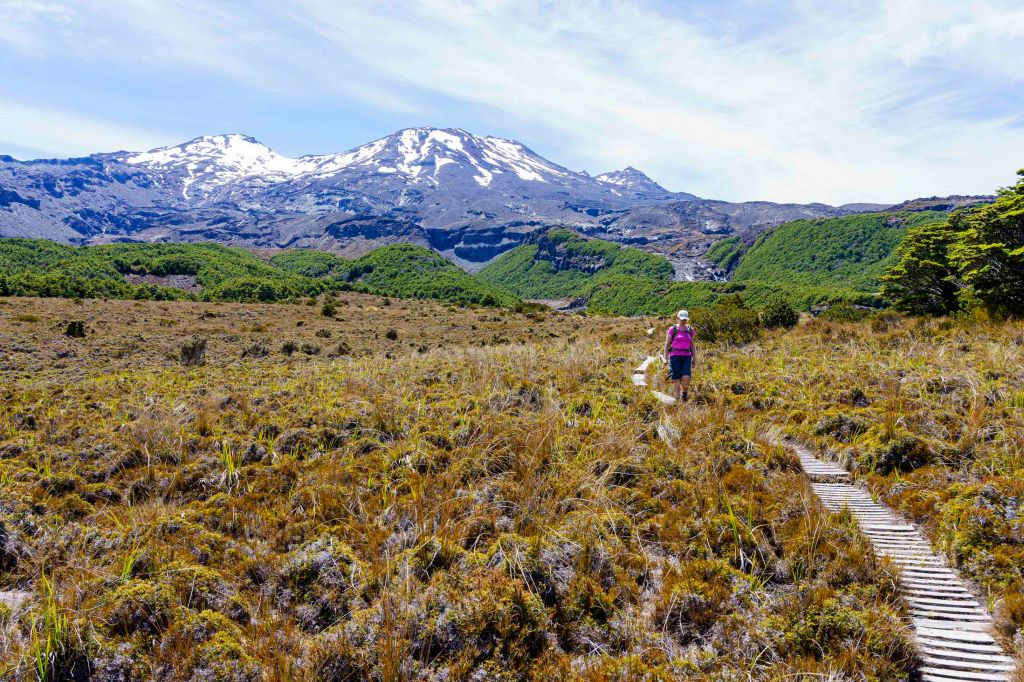
Each time I do it I think: I’m not doing this again. Then I forget the scrambling, the aching knees, the fear that I’ll be lifted from the bottom of a cliff in a stretcher dangling from a helicopter. Instead I remember the stunning views, the water tumbling over silica-encrusted lava flows, the moonscape vista of once-molten rock, the mountain watching over us, the wide-open space. So we pack a picnic, pull on hiking boots and put one foot in front of the other. Until we can’t. Then we scramble.
 Tracy Annenberg
great description of a great walk
LikeLike