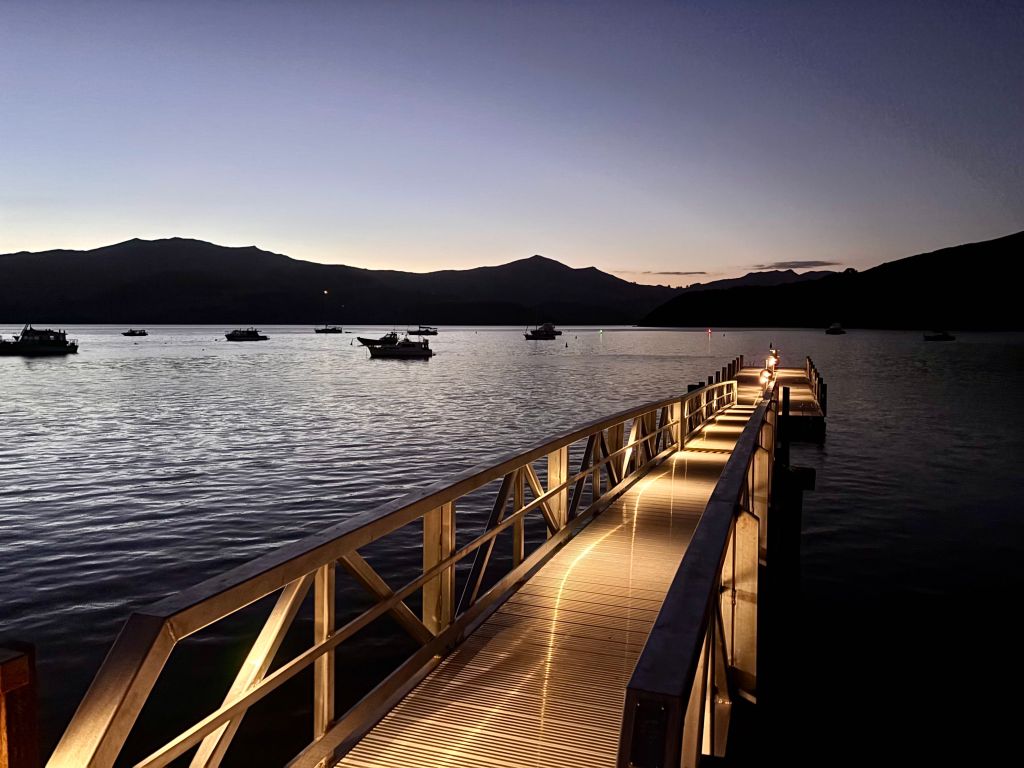
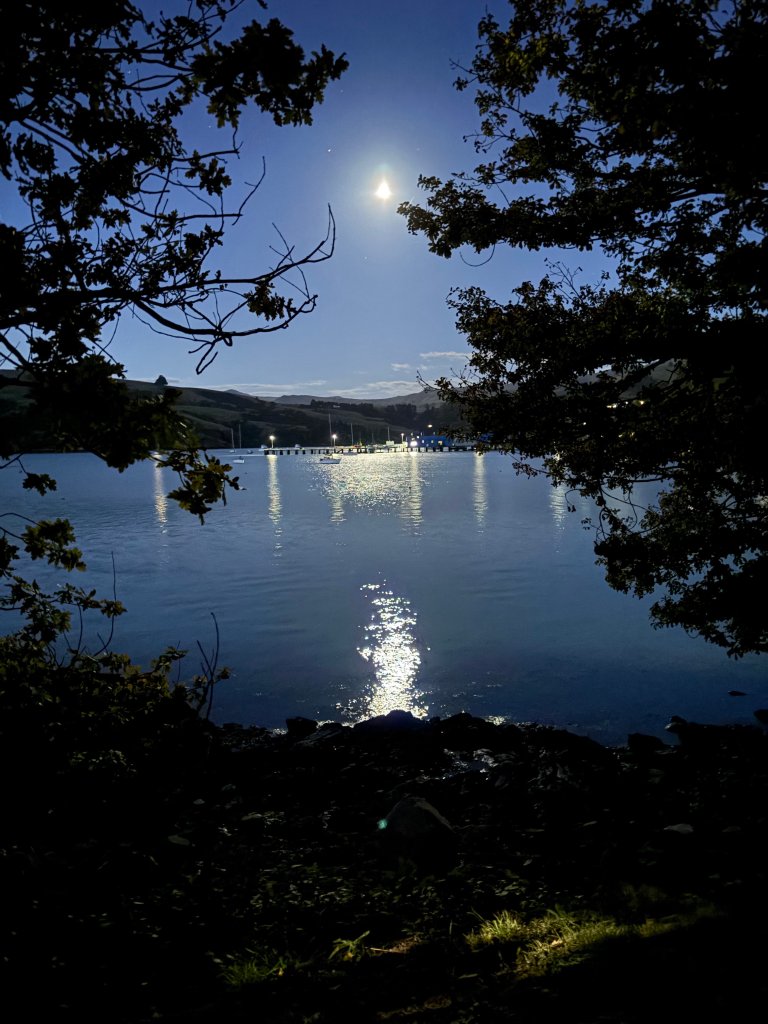
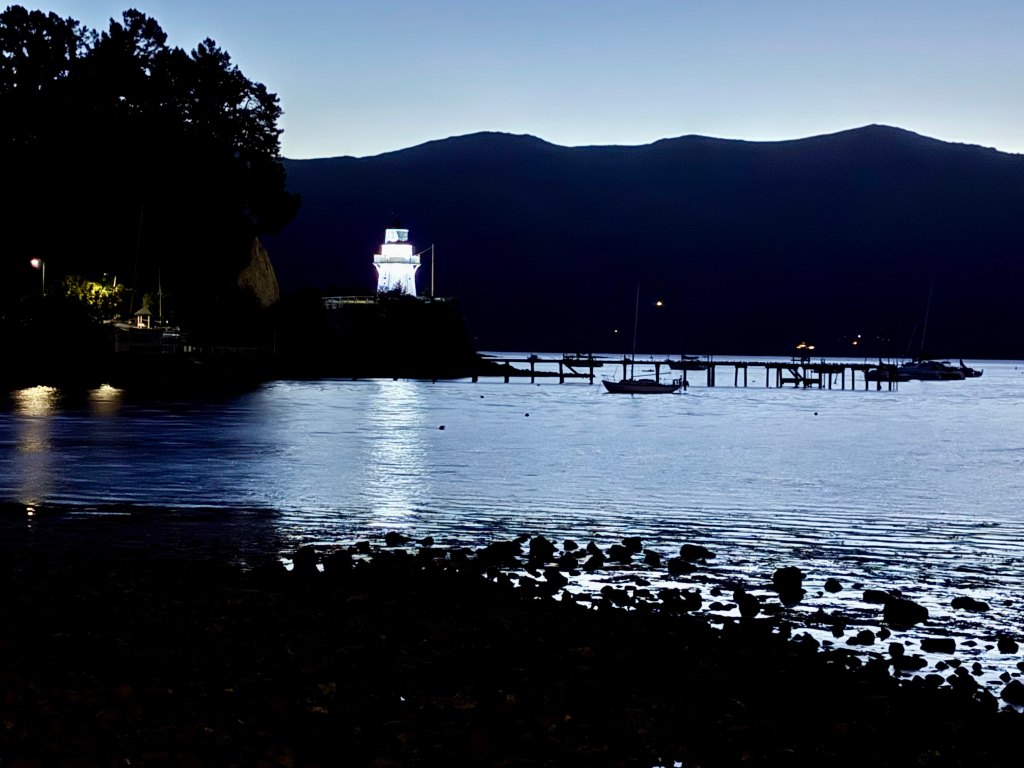
The lowering sun blinds us as we walk to dinner on our first evening in Akaroa, the small town on Banks Peninsula in the South Island originally settled by the French and retaining their influence. The rough-pebbled beach is dark, the sea brown and murky, not inviting a swim. On our return the light from the moon is kinder, scattering onto the water like spilt milk on a dark floor. Boats and piers are colourless silhouettes, the artificially lit lighthouse an aberration, stark white and harsh, all features and definition killed. Once we are past it the darkness settles again, the only light from the moon and our torches as we pick our way up the uneven path.
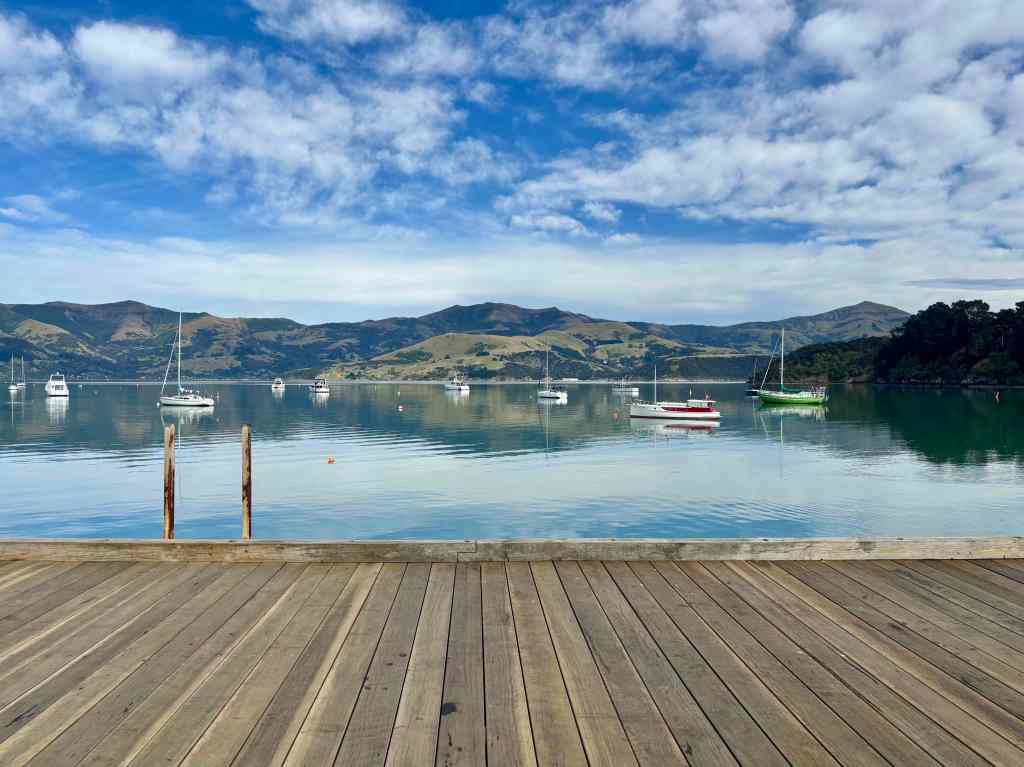
In the morning the hills across the bay are shades of grey in the pre-dawn light. As the sky pales they become muted gold and dark green, the light of the rising sun flowing down them – by the time its rays hit the sea the colours are already washed out. The water is flat, tiny movements sprinkling its surface, dark streaks marking the movement of boats. White blobs of buildings scatter at the join of land and sea, a cluster at the small indent of a bay.
We retrace our steps from the evening before, our hope to find a bakery in this French-influenced town a vain one – the only one is closed the two days we are here. An inquiry in a café that claims fresh artisan bread on its website is met with a brusque: ‘Counter food only’. We don’t stay. The town is full of gift-style shops interspersed with average cafes, aimed at tourists. We find a café away from the main street, the chat of locals drawing us in.
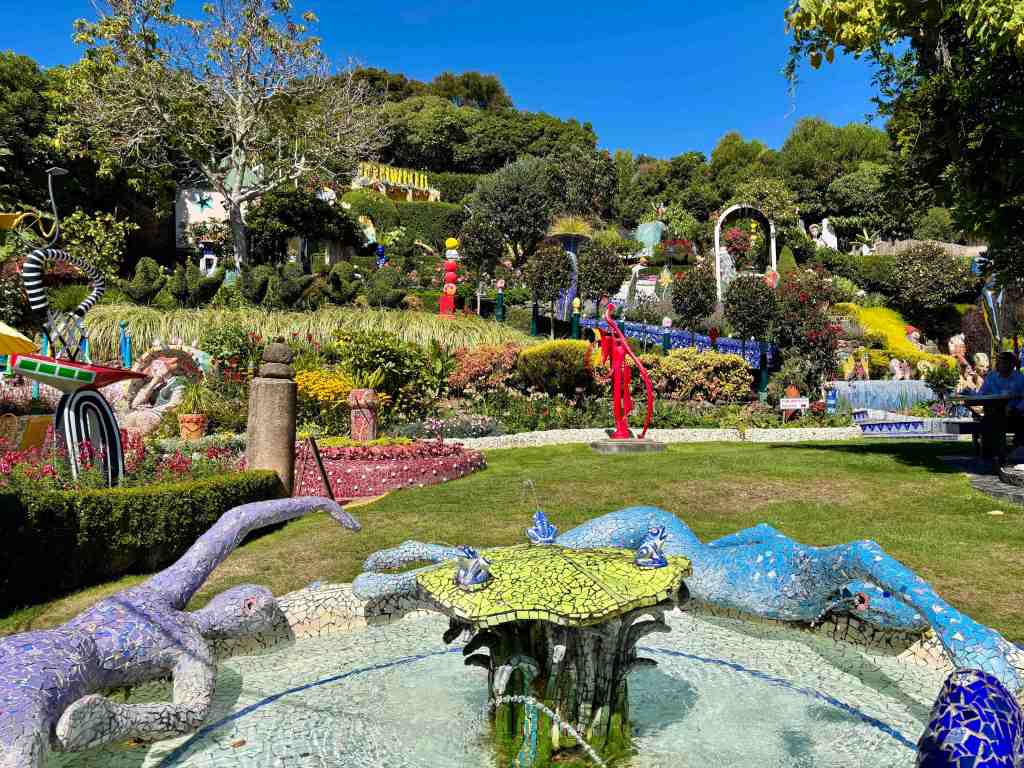
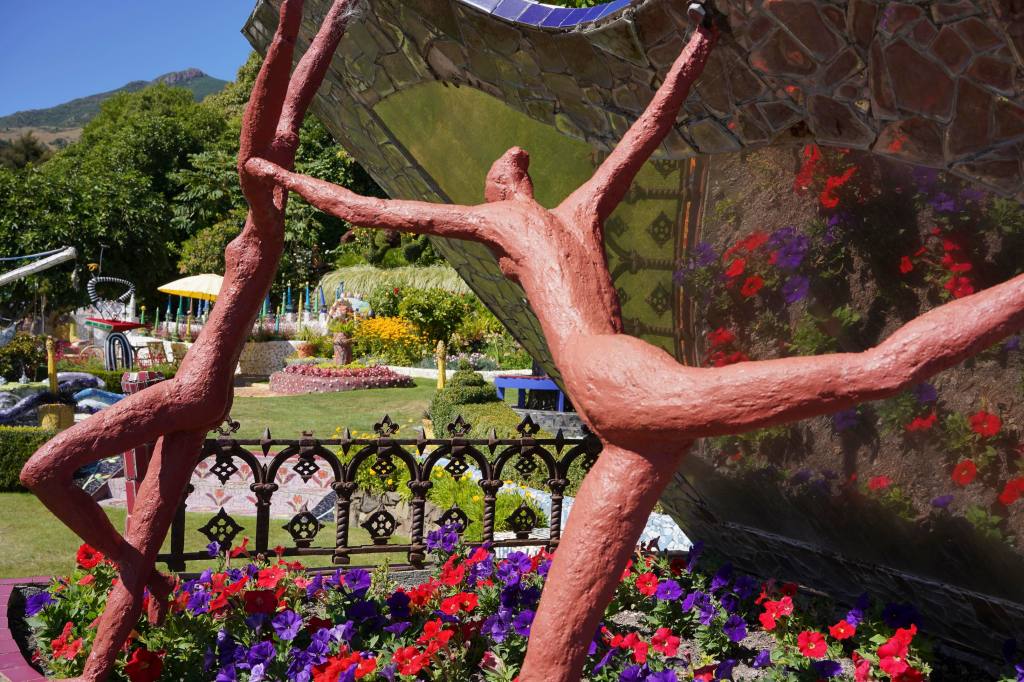
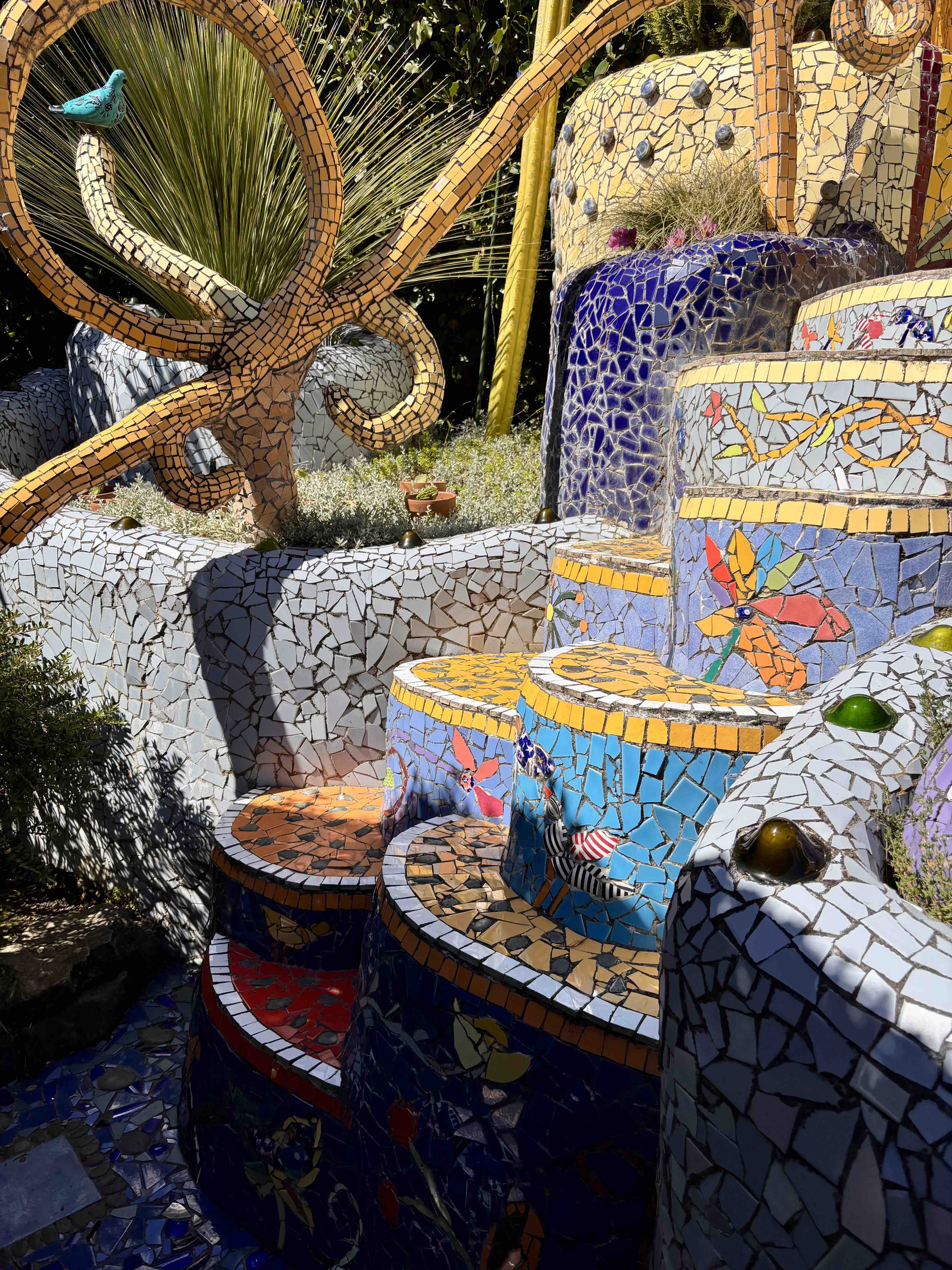
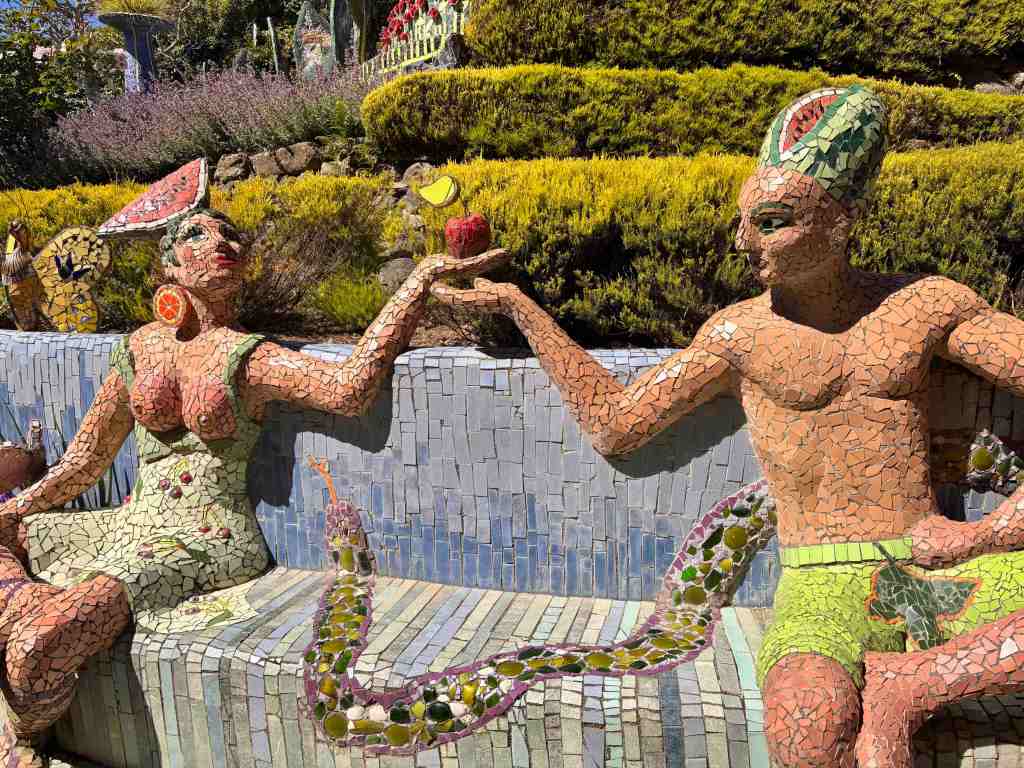
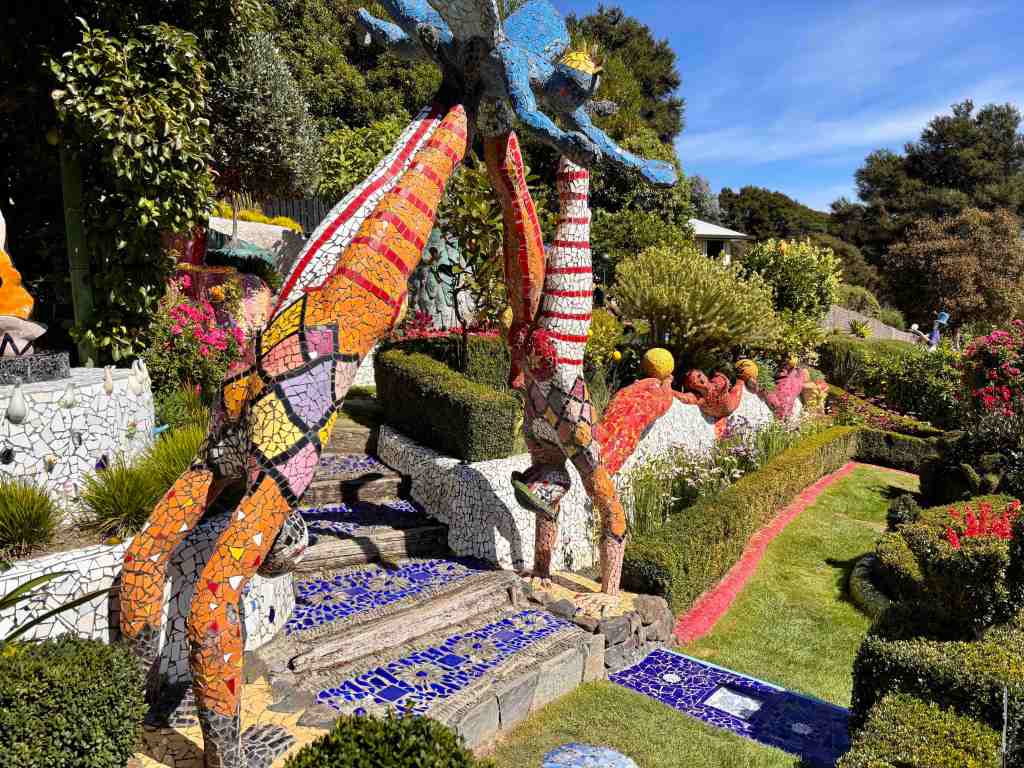
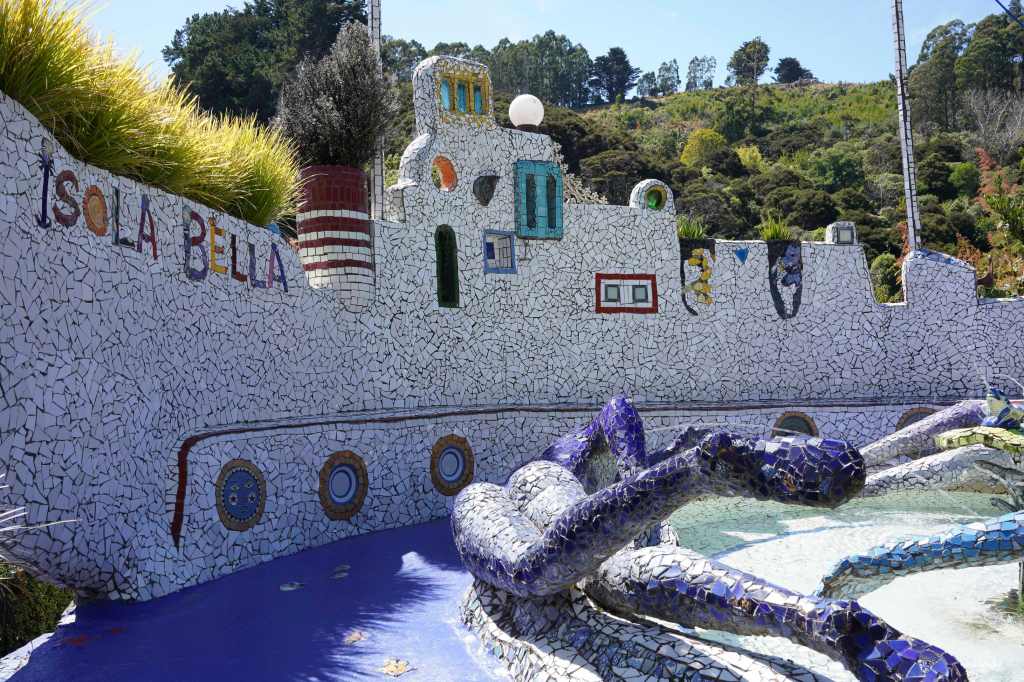
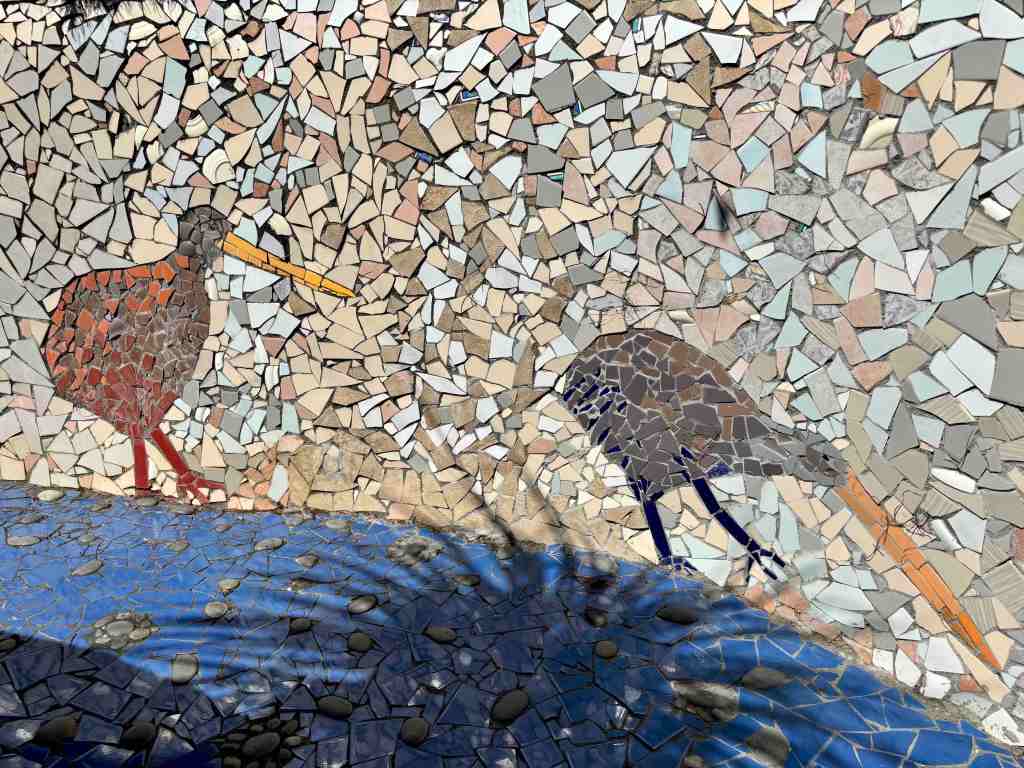
The garden of the Giant’s House (so called because a child looking up towards its perch on a slope thought it looked so) is a place of colour and joy, with bright mosaic, a mix of broken tile and crockery, adorning large sculptures, animal and half-human forms that spring from colourful flowerbeds and mix with clipped topiary. Glass pebbles stud paths and steps, and figures dance along the edge of a mosaiced grand piano stuffed with red and purple petunias. I’m in awe of anyone who can create something like this.

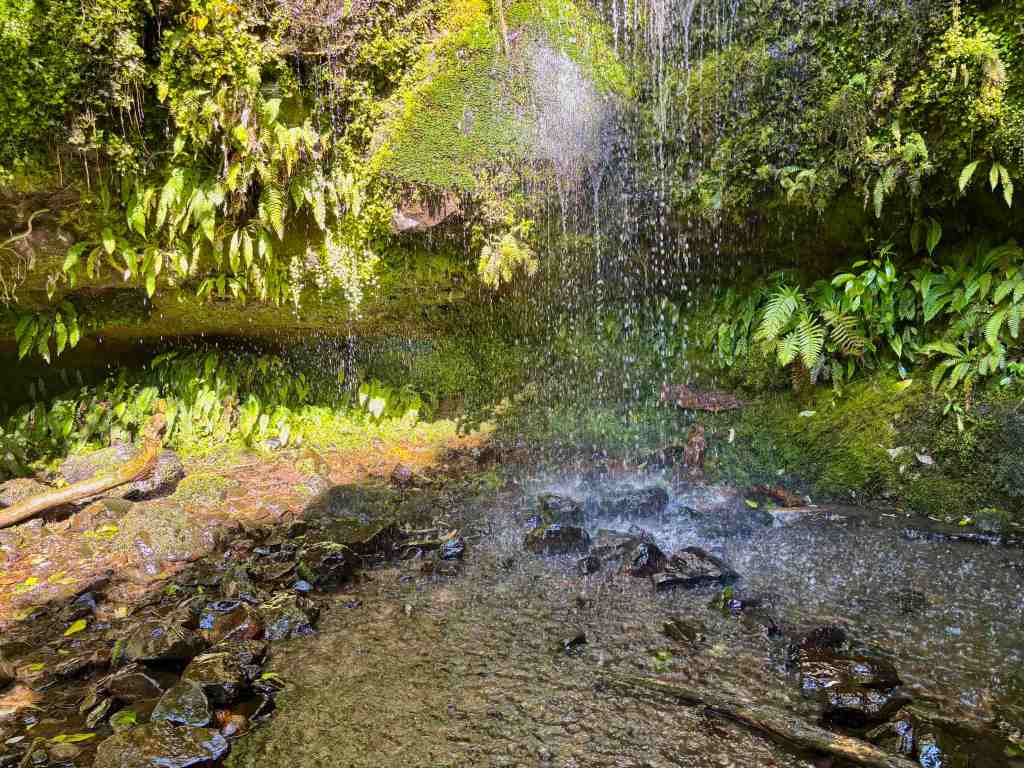
We tackle the ‘easy’ track to Newton’s Waterfall, the steady slog up a narrow road anything but with the sun hot on our backs. A path leads into the bush, steep and covered in the type of mud that will be slippery as raw egg in the wet. In the respite from the heat birdsong fills the air and it takes me a moment to realise we aren’t hearing tuis but bellbirds, a handful of them flitting about the trees above us. It’s rare to hear so many together and it’s a lovely backdrop to the short walk. The waterfall, in a shady little dell, is more a trickle – possibly due to the recent lack of rain – sliding down a moss-covered bank at the end of the track.
Debating whether to head for a drink or get an early dinner we decide on the latter so we can enjoy fish and chips by the sea before the cool wind beats the heat out of the day. The chippy is closed, a handwritten note on the door saying back in an hour, right next to the one saying open all day, and not too helpful when we aren’t sure what time it was placed there. Drink it is then and we head to a bar in town. Also closed, again despite saying open all day. Neil mutters and swears until he sees a board outside a garden bar for happy hour with the local beer, Cassells, an option. The lager is crisp and fresh, the garden pleasant with the sun losing its fierceness. As we sip, the open sign (with the same words: all day) is turned to closed. It’s not yet 5pm. We’re beginning to get a message here and, as we laugh about it, a man – the bar manager it seems – rudely turns people away with no apology, telling them to ‘Get alcohol elsewhere’.
‘Painting a tricolour on the wall and putting le in front of random words doesn’t make it French.’ Neil says. ‘What does is that everything’s closed and they’re rude to tourists.’
I giggle but it is odd. Generally tourist places in New Zealand are welcoming to visitors, aware that they exist because of them. Here we seem barely tolerated. On our return to the chippy it is thankfully open and we carry our paper package to the waterside, sitting at a picnic table overlooking the sea and attracting a lot of new (feathered) friends. They squawk away disappointed when we eat all but one small burnt chip. Not that I’d have fed them anyway.
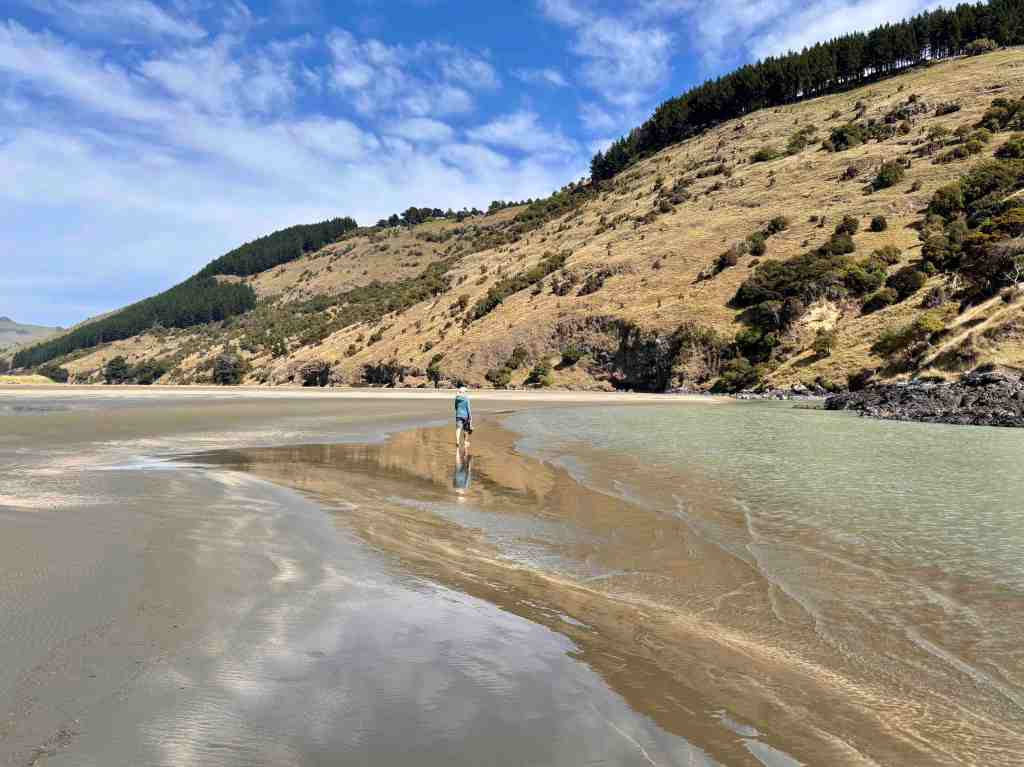
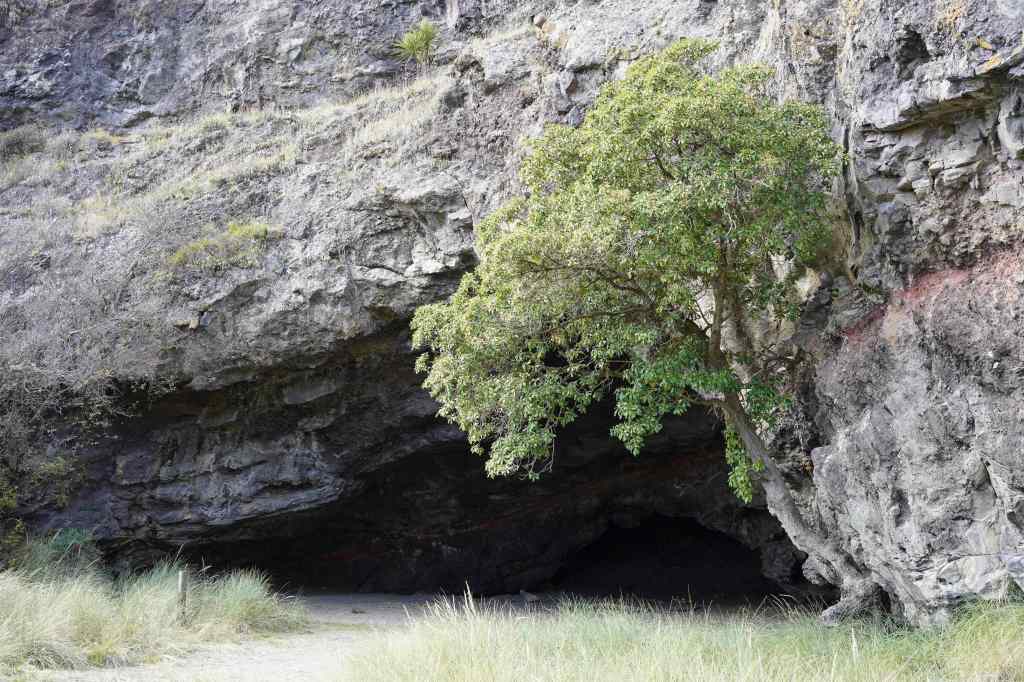
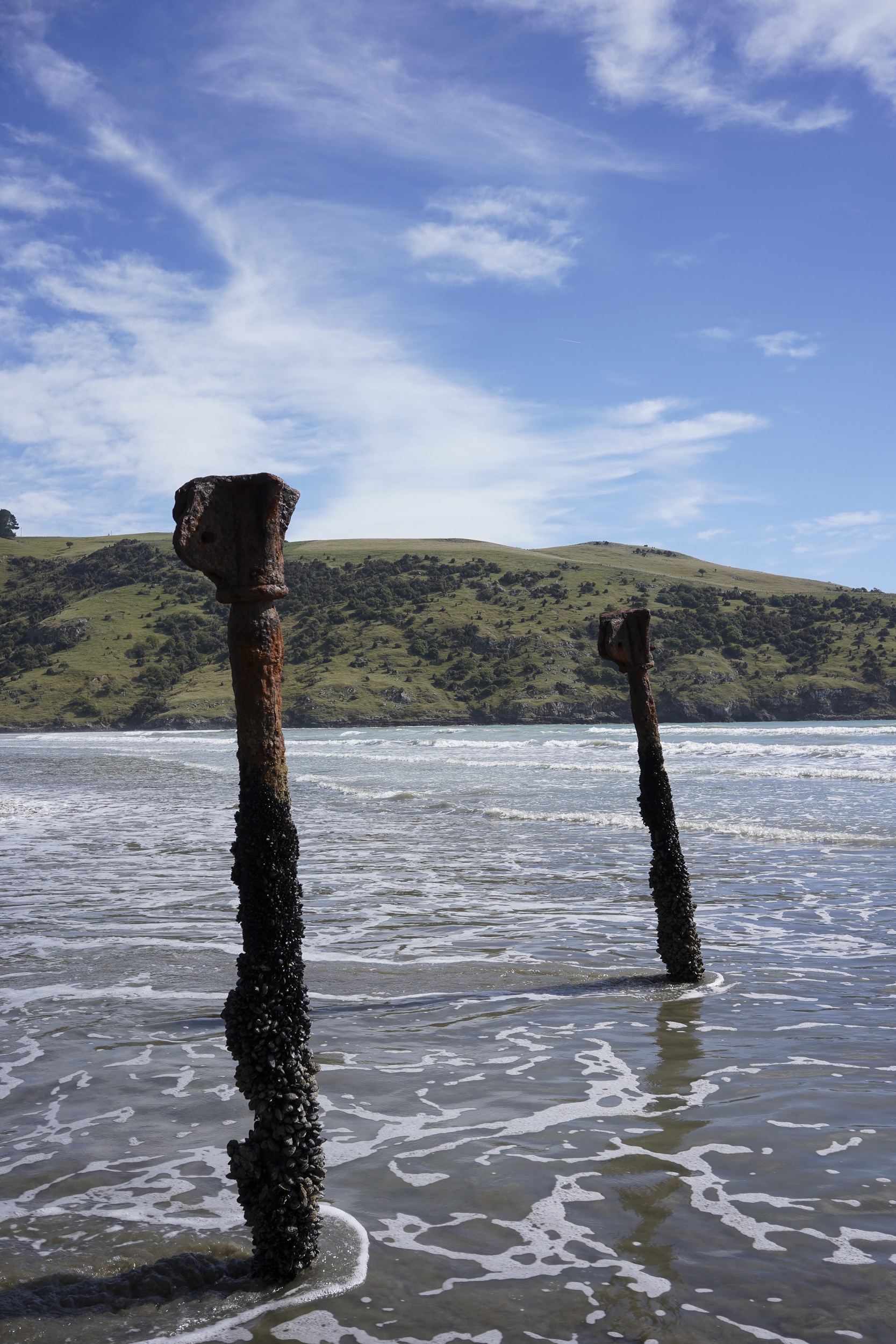
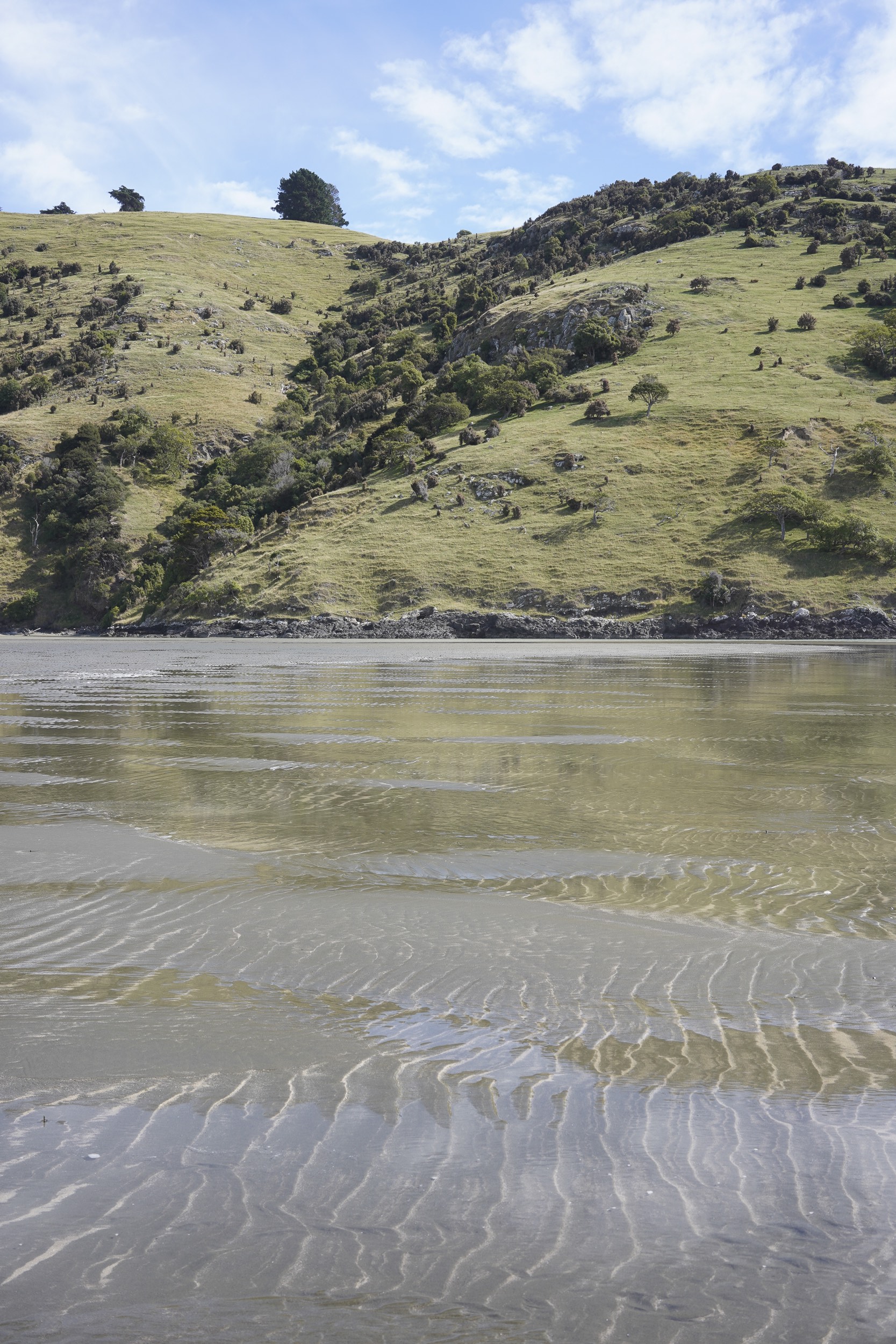
Our friend Justin had mentioned a connection to Okains Bay on the other side of the peninsula so the next day we drive the snaking road over the ridge, the grey-green grass of sheep farms ubiquitous. The bay is delightful, arms of land hugging a wide beach, sand dunes rolling behind it, a line of pine trees providing shelter for the campsite that I imagine is heaving with families in the summer holidays. At one side a cave opens in the cliff face, ochre layers in the rock suggesting iron. Above the cave is an obvious track, the odd beam of protruding wood suggesting the hand of man, car-width and following the cliff to its end, stone walls filling in gaps in the natural rock. A line of iron posts, mussel-encrusted and dark-brown rusty lend credence to an old wharf and a road leading to it that is usable at high tide. We wander along the deserted beach, small waves lapping at our ankles, a slight breeze wafting off the sea. At the end a river runs under the cliff, the sandy floor dropping away steeply.
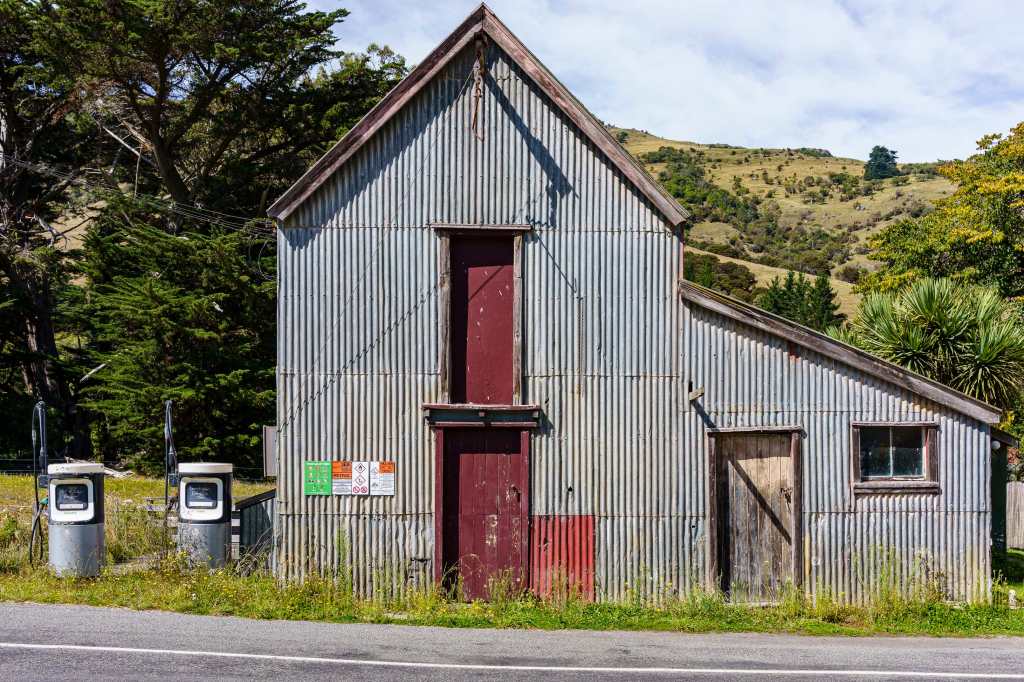
The village is deserted, an old telephone box next to a building that I suspect must have been a garage given the retired petrol pumps in front of it. There’s an old school and a new school, the latter with a couple of small scooters leaning against the fence suggesting it is currently in use, and a tiny building with Library signed above it. The only store is closed today (surprise!) as is the museum, a disappointment – it looks extensive and is purportedly well worth a visit, its exhibits collected over decades by a local man, including some donated by Justin’s family. But I feel that, unlike Akaroa, which is definitely a ‘seen that’ place for both of us, Okains Bay is worth a return visit.
 Tracy Annenberg
Great read, Tracey! Growing up in Christchurch, I have spent a lot of time on Banks Peninsula. Dave and I had our first date in Akaroa but it has changed out of all recognition in the meantime. I think it’s still more geared up for self catering and boaties, especially out of the main tourist season. We also love the northern bays: Okains, Le Bons, Little Akaloa, Pigeon but you need to be very self sufficient – take everything with you! The walking above Akaroa is also splendid: Purple Peak track takes you up through pristine bush with piwakawaka challenging your presence with dive bombs and of course the beautiful bellbirds, tui and kererū. Banks Peninsula is at its absolute best once one’s off the beaten track. ❤️
LikeLike
Thank you! Yes, we’d worked out that the Peninsula is the place to be and we will return to explore it more. Afraid we wimped it with hiking on the hills – it was so warm and we couldn’t tell if there would be shade. Next time…
LikeLike
I also stopped off at Akaroa during my trip to New Zealand, and I had the same feeling of a fake French village, taking advantage of that moment in history when the French thought they could settle there. They ended up going to New Caledonia.
LikeLiked by 1 person