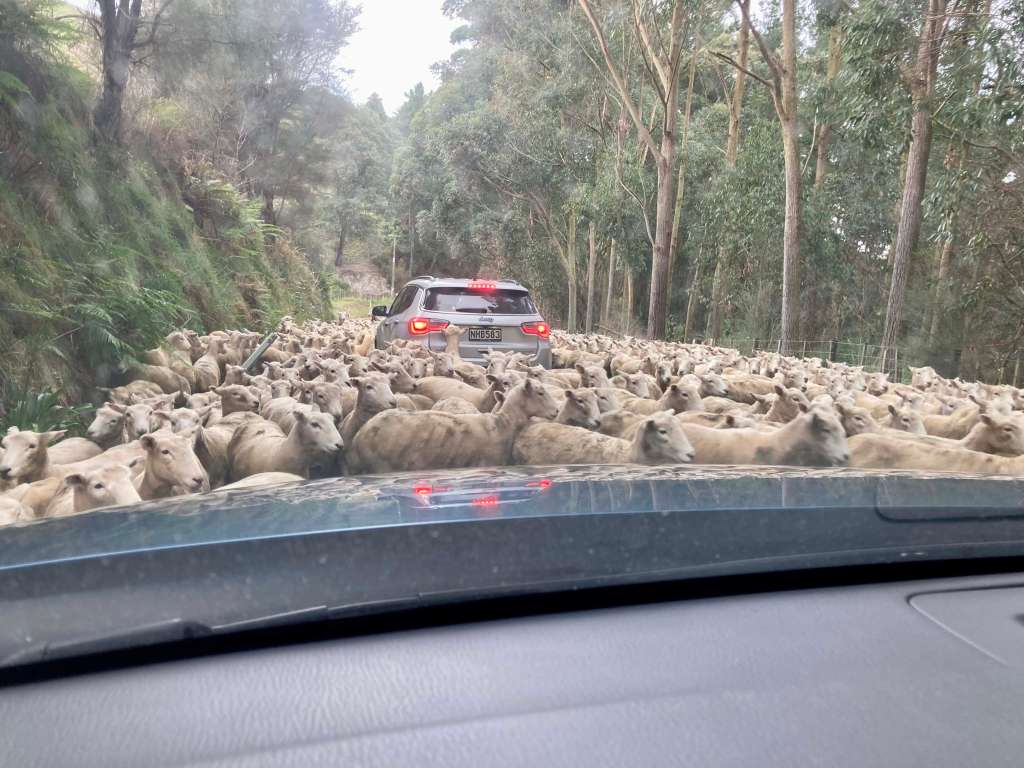
Travel anywhere in New Zealand and you’ll see evidence of our primary industries. Cows graze in fields and amble along purpose-built tracks, through tunnels under roads towards milking sheds; sheep dot hillsides and crowd into farmyards, awaiting a haircut (if you’re lucky you’ll catch them between the two). On the roads trucks carrying towering piles of tree-trunk-logs manoeuvre around tight corners a Toyota Yaris would struggle with, heading to ports where the logs join others in piles that, to me, scream waiting-to-happen carnage if one slipped and they all rolled away. Similar piles lurk in logging yards at mills, facing more saw and machine cuts.
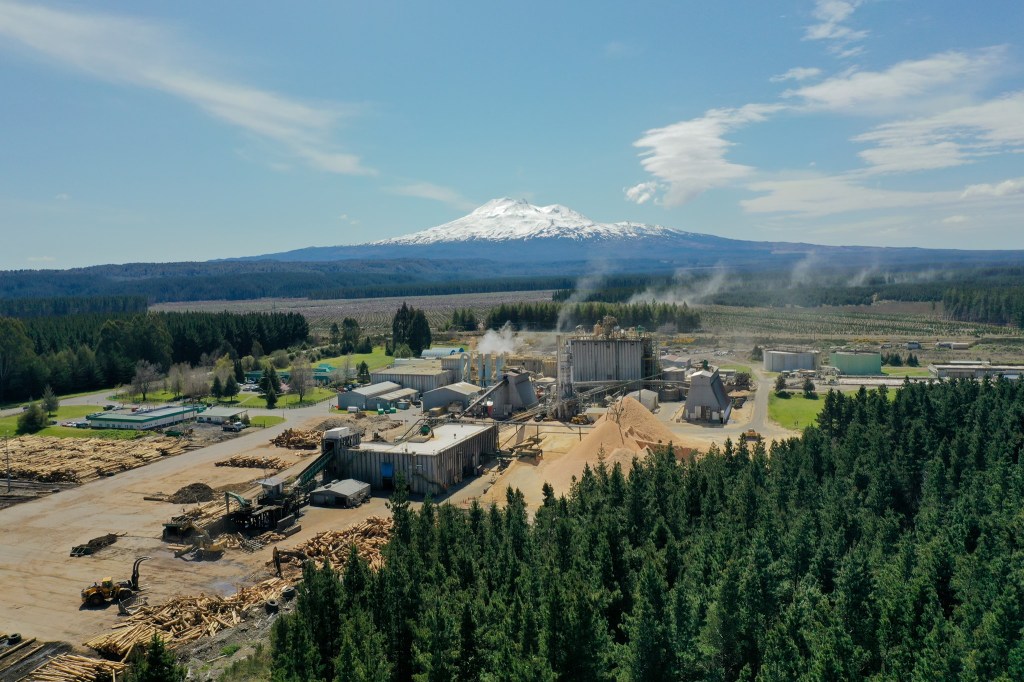
Timber mills have existed in New Zealand since white settlers arrived, when ancient trees were felled to build homes. Two centuries later many of our forest giants are protected, the mills instead chewing into pine, trees whose pointed tops mark them as non-native, a crop grown to be cut, much like wheat or corn. There are two mills in the Ruapehu region, both just outside Ohakune, employing nearly three hundred people.
Well, there were. The buildings will still stand but they are soon to become ghosts of factories, abandoned. Machinery that once hummed will be silenced, belts will be stilled, orange-vested humans that operated them will no longer be needed. Redundant. It’s a word that can strike fear into the heart of a human. My father was threatened with it in his life, each time the prospect of unemployment a heavy cloud over our home, Mum’s face tight with stress, their conversations worry-dull or whip-sharp bickering. It never happened, although once he was the next to go before business picked up again and he was saved.
Last week the area’s biggest employer, struggling for a while and seeing no end to the economic challenges they face, announced they will cease operations in Ruapehu and the mills will close. The old joke of trouble at t’mill has become a frightening reality for the region, heartbreak for many who have lives here. Everyone knows someone who works at the mills. In my small circle I count a handful, one a close friend. The feeling is one of numb acceptance of current reality combined with fear of the future.
It’s a worrying time for the town, more so for its people, many who will be forced away. Some have never lived anywhere else, followed parents into the mills; some are migrants, drawn by the opportunities of work and the lifestyle the region offers. Families with children in local schools will have to leave in search of work, decimating communities. Those with looser ties, younger and more able to adapt, will hunt outside New Zealand, becoming part of a growing (and alarming) statistic. It’s heartbreaking and, as someone who has chosen to live here in the fortunate circumstance of not relying on local employment, I feel sick thinking of those who don’t have that freedom of choice and must leave a place they love.
Ruapehu isn’t the first to suffer in this way. Communities have shattered before when their main source of income dries up and people are forced away to survive. My teenage years in England were peppered with such stories and Kiwis have similar tales to tell. No doubt this is not the last nail in the coffin of New Zealand’s manufacturing industry, although it seems not far from it. We wait to see how it will affect our little town and hope that it survives, along with those who can, reluctantly, no longer be part of our community.
Kia kaha, Ruapehu.
 Tracy Annenberg
It’s sad for the people, sad for the community, but it can save trees, make the area more attractive to visit or settle in, and start a new sustainable economic cycle. I’ve seen this on Vancouver Island, where toruists have replaced loggers.
LikeLike
This is managed forest, grown to harvest, not native timber, which is all protected now. It will still be logged, just milled elsewhere. We do have a growing tourism industry in the area, but tourism is a fickle business and we can’t rely entirely upon it.
LikeLiked by 1 person
Tracey, that brought me to tears. Wayne
LikeLike
Didn’t mean to do that, sorry! But as it affects you directly I can understand why.
LikeLike