21-24th July
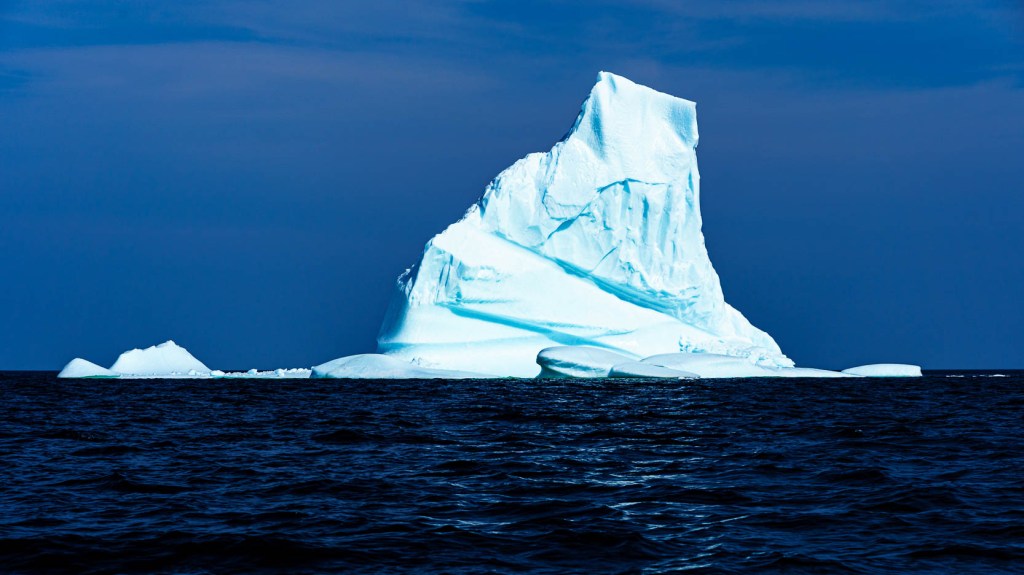
The road to Twillingate, the northernmost point of the Kittiwake Coast, is a twisty affair. It winds around small headlands and smaller coves and crosses causeways that link the many islands. Finally it ends at the sea and, for us, a view of a large iceberg framed perfectly by the harbour heads. Less than twenty-four hours later we’re in a tiny boat zooming towards it, the captain the owner of the motel we’re staying in. Wayne is a classic Newfoundlander, weather-beaten and wiry, speaking little and doing so in a strong accent that has the other couple (also Newfoundlanders) in the boat laughing and Neil and I wondering what we missed.
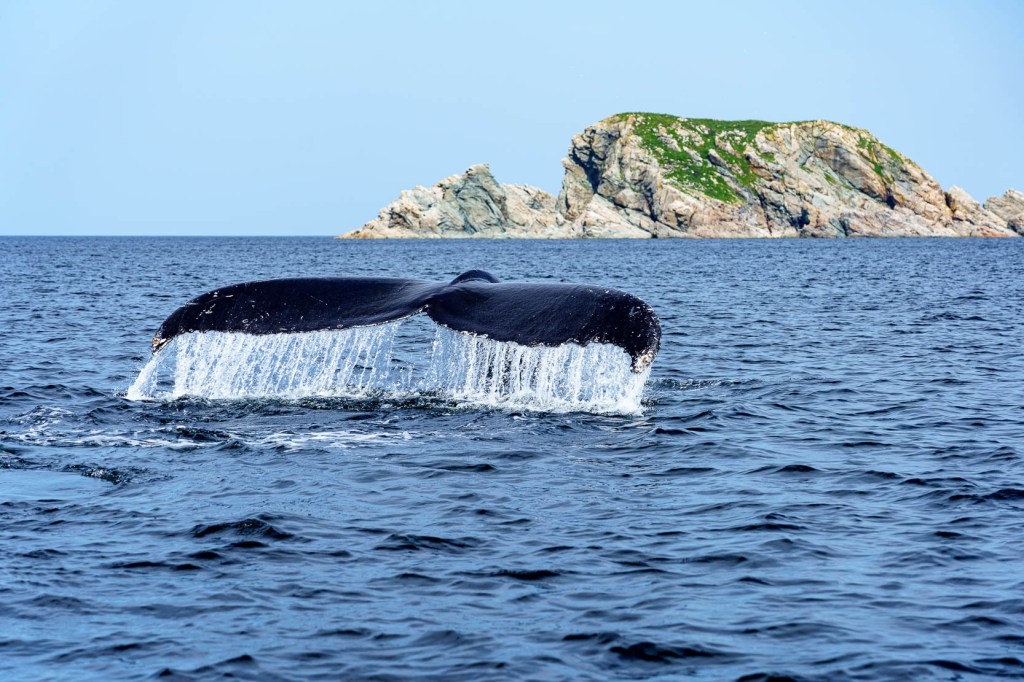
What we don’t miss is the familiar whoosh of exhaled breath, Wayne slewing the boat to a quick halt as a pair of whales surface beside us. They eye us complacently as they go about their business, swimming along beside us for a few minutes, before diving with a quick flick of their tails. Then we’re off again, bouncing over tiny waves to get up close and personal with a chunk of ice.
The chunk is smaller than it was yesterday, half of it having calved off overnight, leaving a lop-sided triangle rather than the square we saw when we arrived. At least a hundred feet tall, according to Wayne, as we approach it appears blue-white; up close it sparkles in the sun and is impossible to look at without sunglasses. Water runs down its flanks in shining streams, creating channels and gouges; through the sea its wide base glows a vivid pale jade-green, from which rise shapes like snow-whales moulded by the water. The ice that calve/d lies scattered in pieces around us like flotsam. We stand in the gently rocking boat in silence, awed by our proximity to something so special.
The quiet is broken by a loud thunk behind us, someone dropping something heavy. Wayne has netted a couple of chunks – ‘bitty-bergs’ – and thrown them into the boat. He hands one to each of us, a heavy weight, too cold to hold for long. We hold them aloft and allow drips, initially salty as the seawater washes from the ice, to fall into our mouths. Wayne mashes a chunk into smaller pieces, which others crunch, but I’m fond of my teeth so decline, instead thinking I’ll let it melt on my tongue. The ice is unbearably cold and I end up jiggling it around for a few seconds before spitting it back into my palm, repeating the transfer a couple of times until it’s melted away.
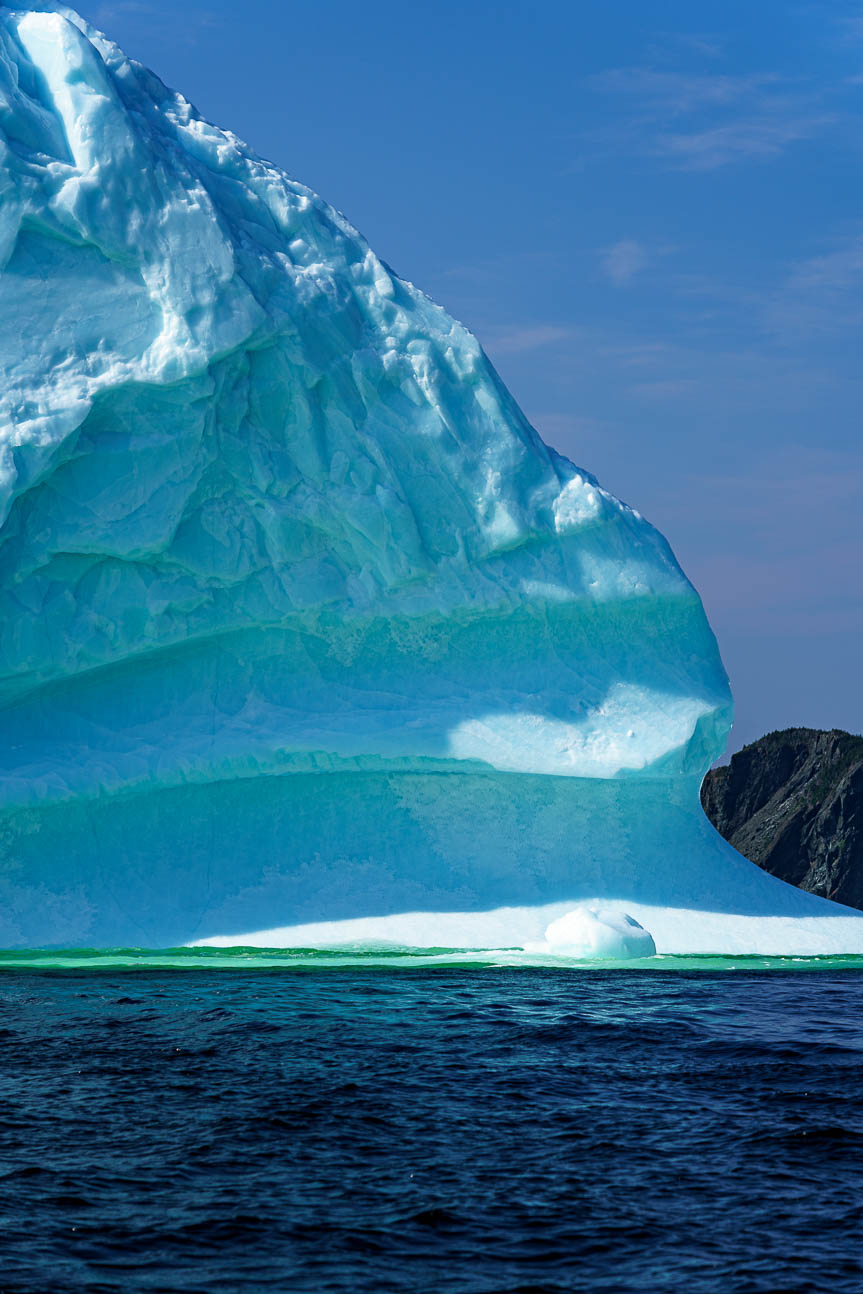
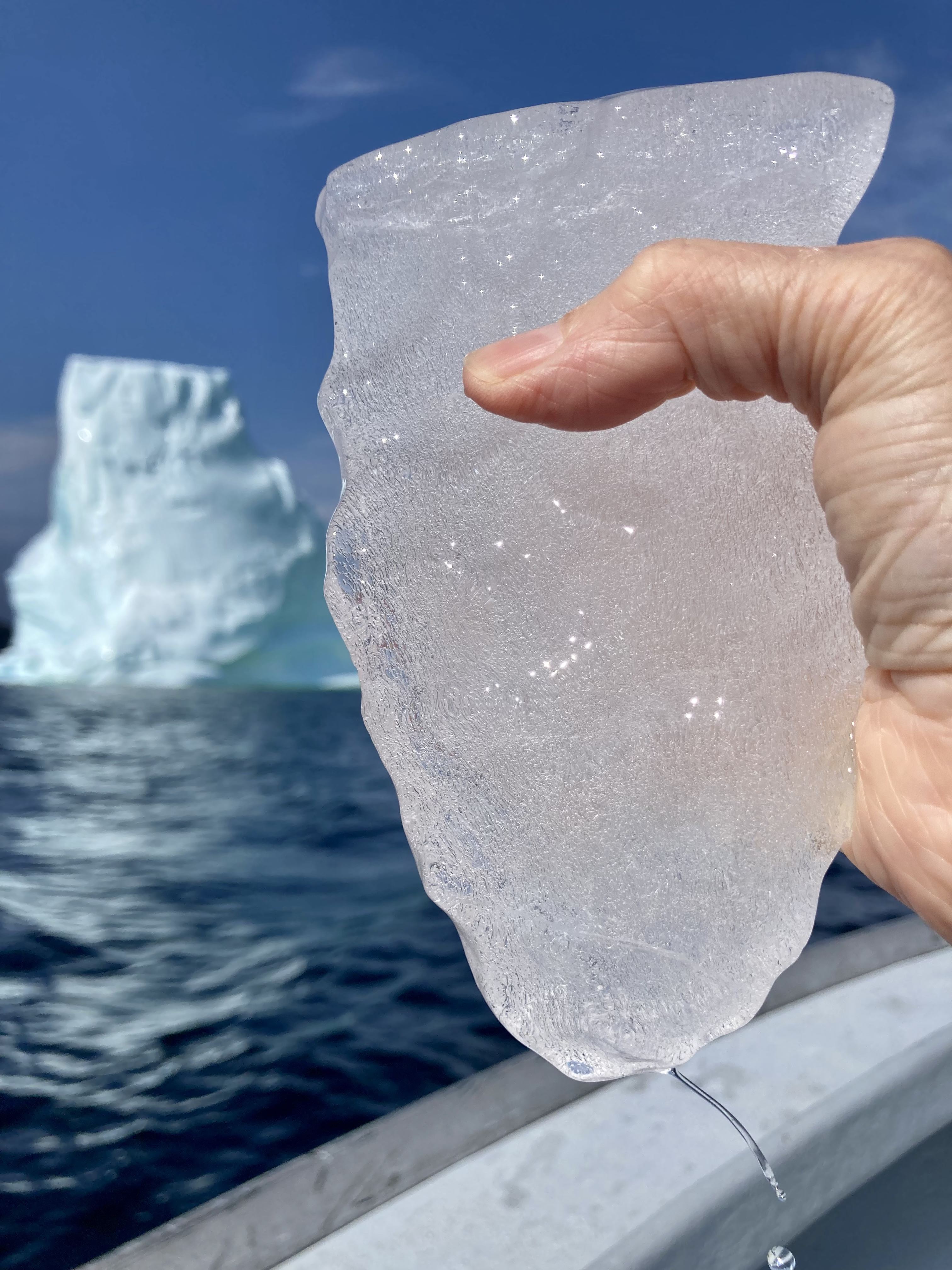
We linger for a while, keeping a safe distance in case it topples (recommended) as Wayne regales us with iceberg stories: a long slab sat off the coast a few weeks ago, hanging around long enough for an intrepid pair to camp on it one night (not recommended) and diminishing in size as locals ‘filled their freezers’. Icebergs are part of life here, forming from the terminal of a glacier as it reaches the sea and breaks apart (in the natural way they do rather than as a result of climate change, although there’s no denying they have been more prolific in recent years) floating down on tides and with the wind as they gradually melt. One brewery makes a tasty beer from melted iceberg.
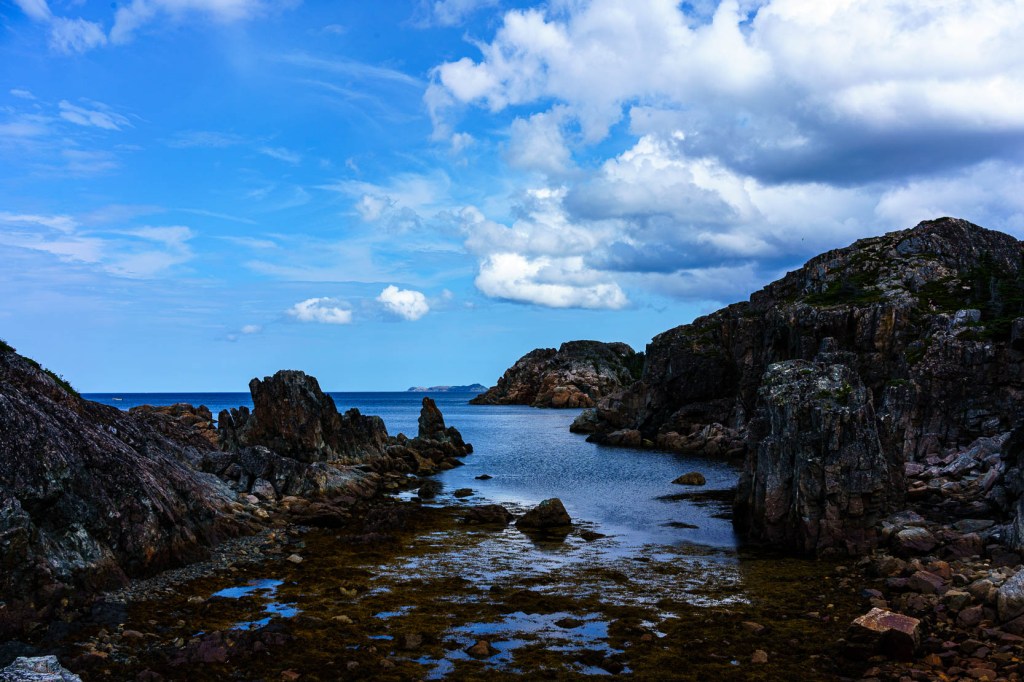
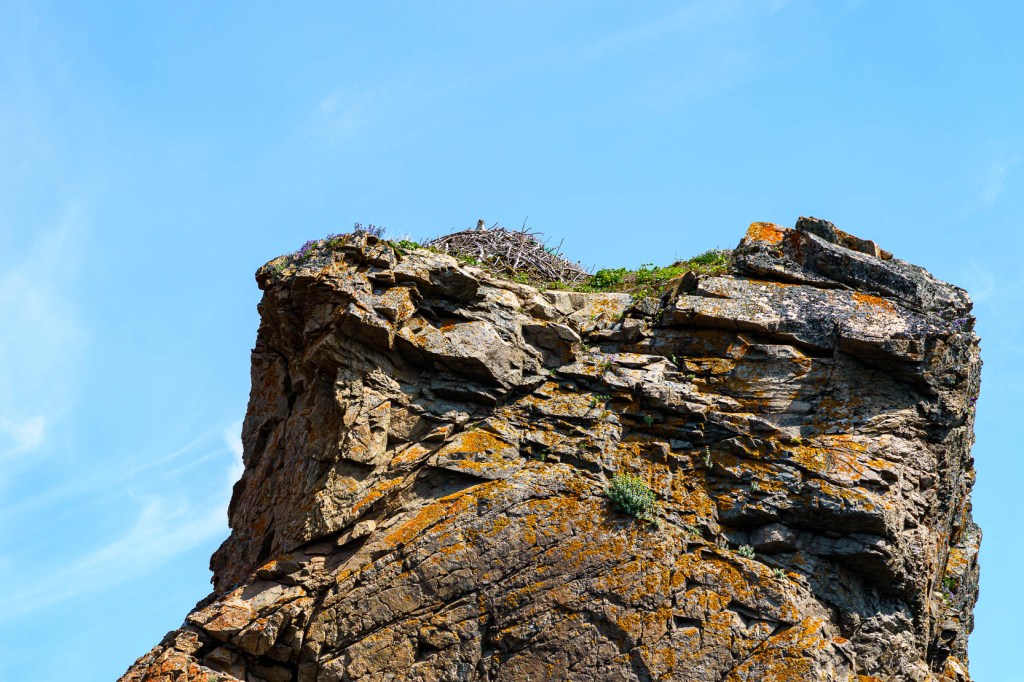
A couple more boats appear and we move on, Wayne navigating close to steep cliffs and through small gaps in ferocious looking rocks, admitting that he wouldn’t do so if the wind was up or the sea rough. He slows as we turn into a small bay with a steep rough beach, Spillers Cove, and points to a rock stack with a tangle of twigs protruding from its top: the nest of a hawk. As we look a head appears, the hooked beak and pale spikey feathers of an osprey clear against the blue sky. A smaller, fluffy head pops up briefly, then Mum takes off, soaring high and watching us with her yellow eye. We take the cautious approach and motor away, leaving her and her chick in peace.

We spend the rest of our time in Twillingate hiking the many trails around here, a somewhat challenging effort in the high temperatures. We climb and descend on uneven narrow paths, into small coves where large boulders stop the sea before the bottom of cliffs. In one I pause, whipping off my shoes and socks and balancing ankle-deep in the cool water to strip off my t-shirt and soak it, putting it back on wet through to try and cool me. Within ten minutes it’s bone dry. Dipping into forested areas to try and hide from the sun fails as we are accosted by swarms of mosquitoes, clearly having heard from their Fogo friends that there’s some tasty human on offer. As I slap my limbs, leaving black and bloody smears, I console myself with the thought that I will leave a little of my DNA on these islands in the form of my blood within dead mosquitoes.


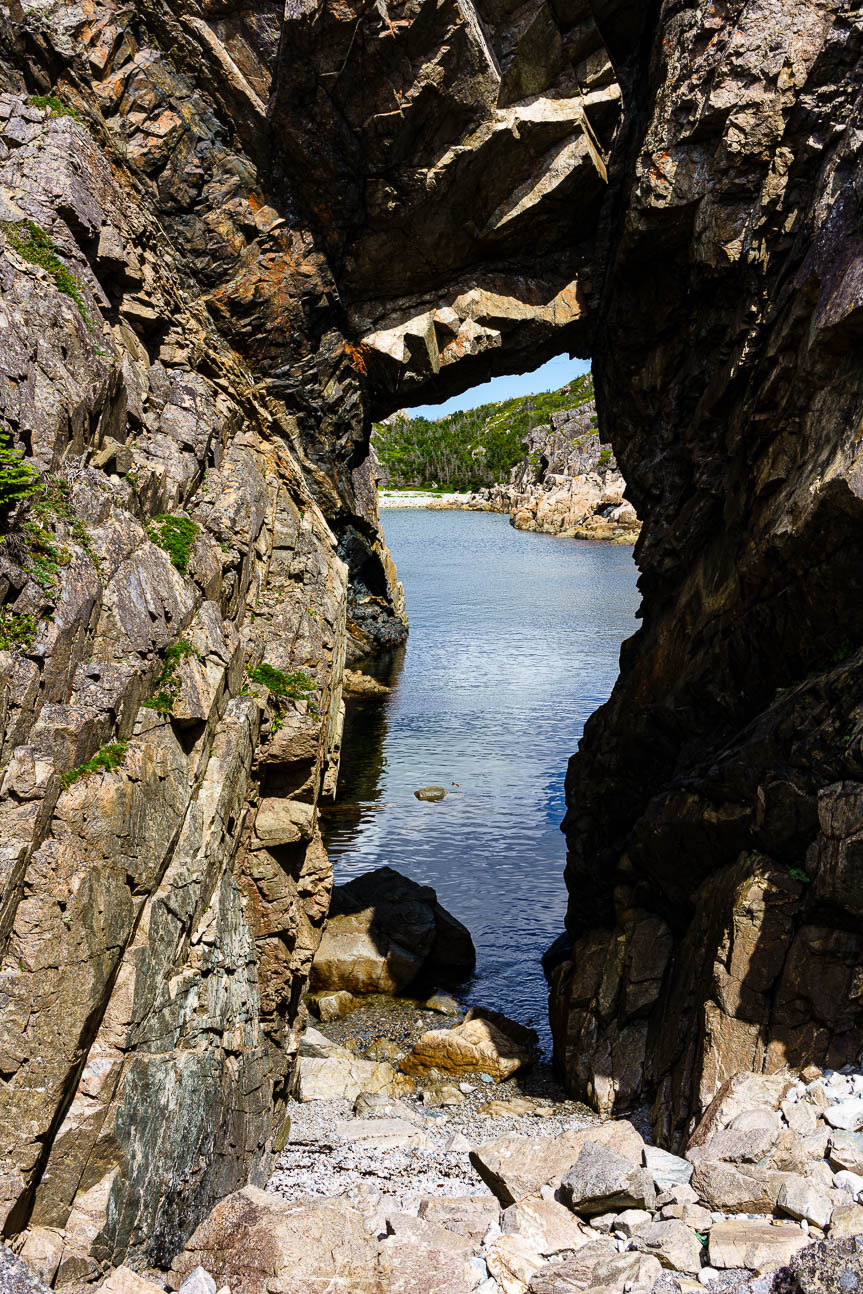
Because of the heat we choose shorter walks rather than the longer ones we had planned, and cool off at the end of each in the local brewbar. The scenery is stunning wherever or for how long we walk: sharp many-hued rocks jutting into the sea; short gnarly trees leaning away from the wind; large grassy areas studded with wildflowers. The shrunken iceberg is now far offshore, a tiny triangle in the distance, too far for a small boat to reach. It turns out to be the last iceberg of the season, our arrival perfect timing before it melted into the sea.
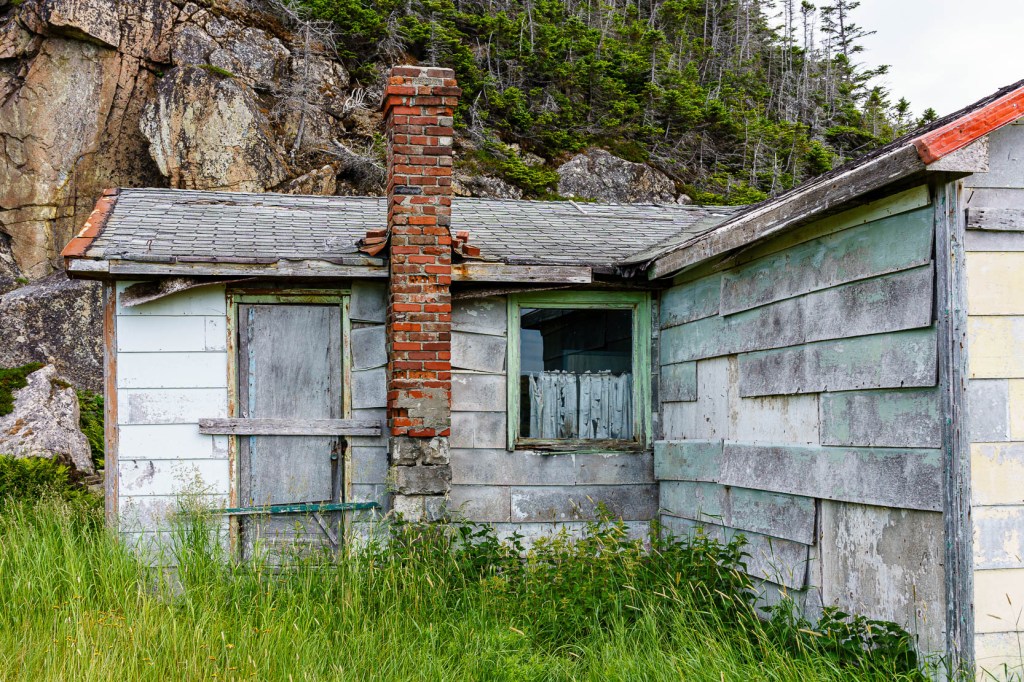
*Toulinquet, named by French fisherman after similar looking islands off the Brest coast, was anglicised to Twillingate by the town’s settlers.
 Tracy Annenberg
Wow what an experience
Love the photos so much xx
LikeLike
My photographer says Thanks!
LikeLike