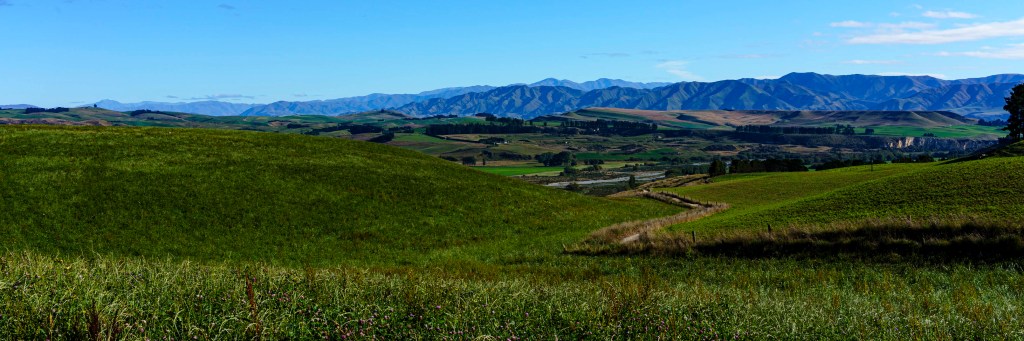
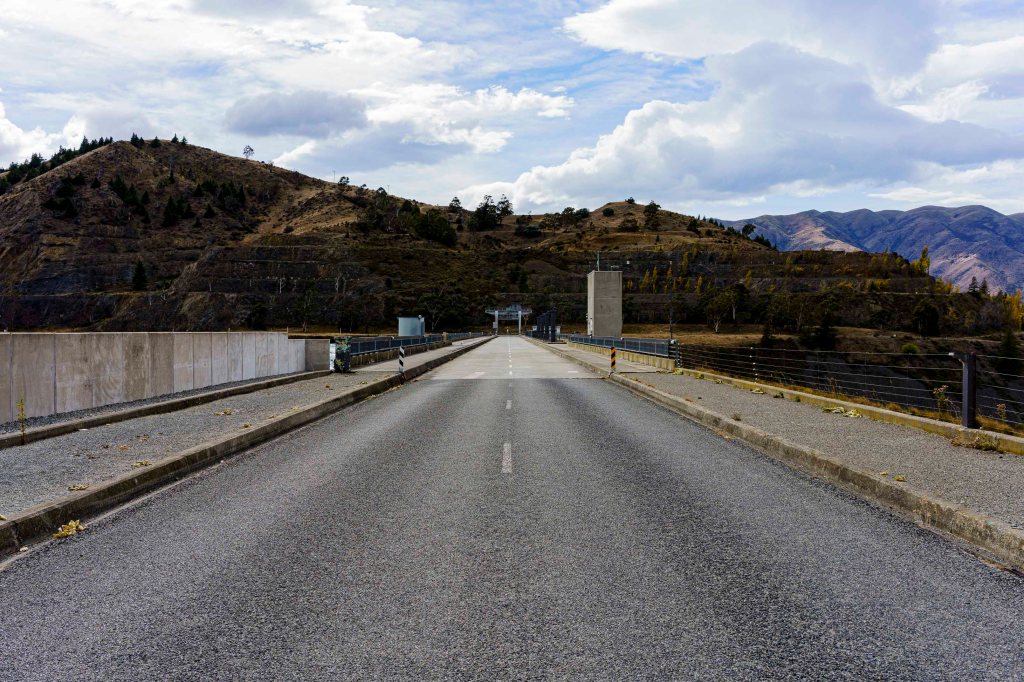
Day five of the Alps to Ocean and we open the curtains to cloud. The forecast is for ‘possible’ rain but the hills beneath the dark mass glow orange so I’m hopeful it will stay fine. What has arrived is a fierce wind, which makes crossing Benmore Dam challenging – even Neil is nearly blown off.
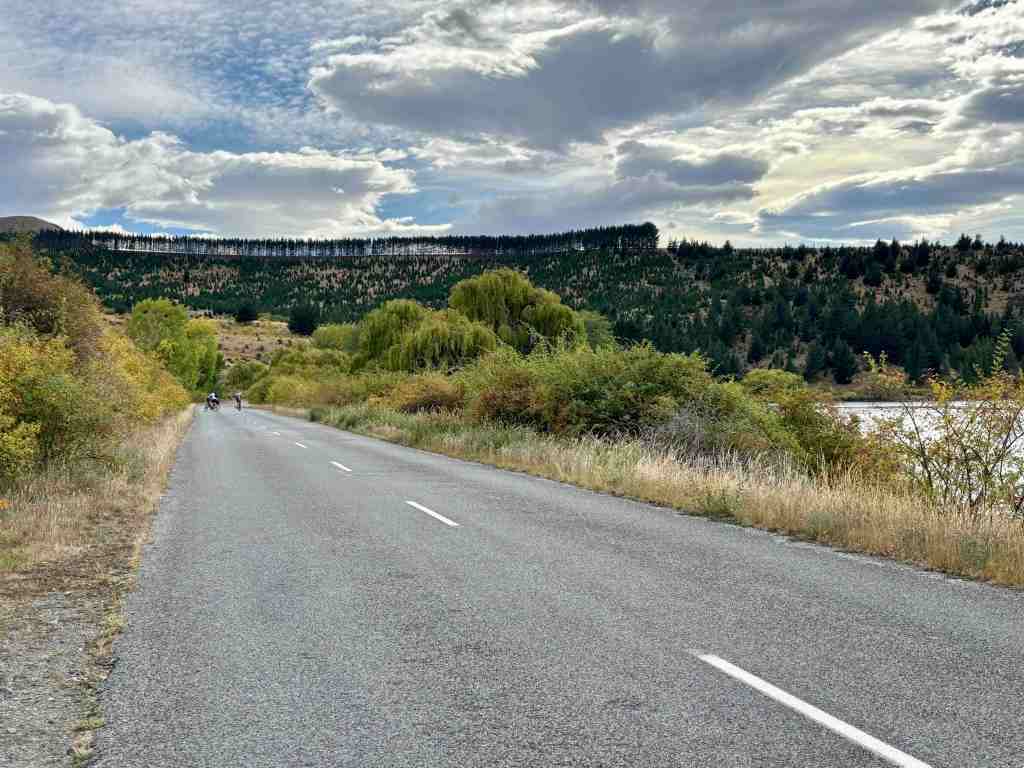
We descend to the side of Lake Aviemore with the wind, so warm it’s like a hairdryer, on our backs. An uninspiring 20km follows, the road rough and gripping our tyres, multiple campgrounds between us and the lake so we have no view of it. The wind has ambition to upgrade to a Wellington blow, flipping direction as we ride, one minute behind us, the next hitting us from the side.
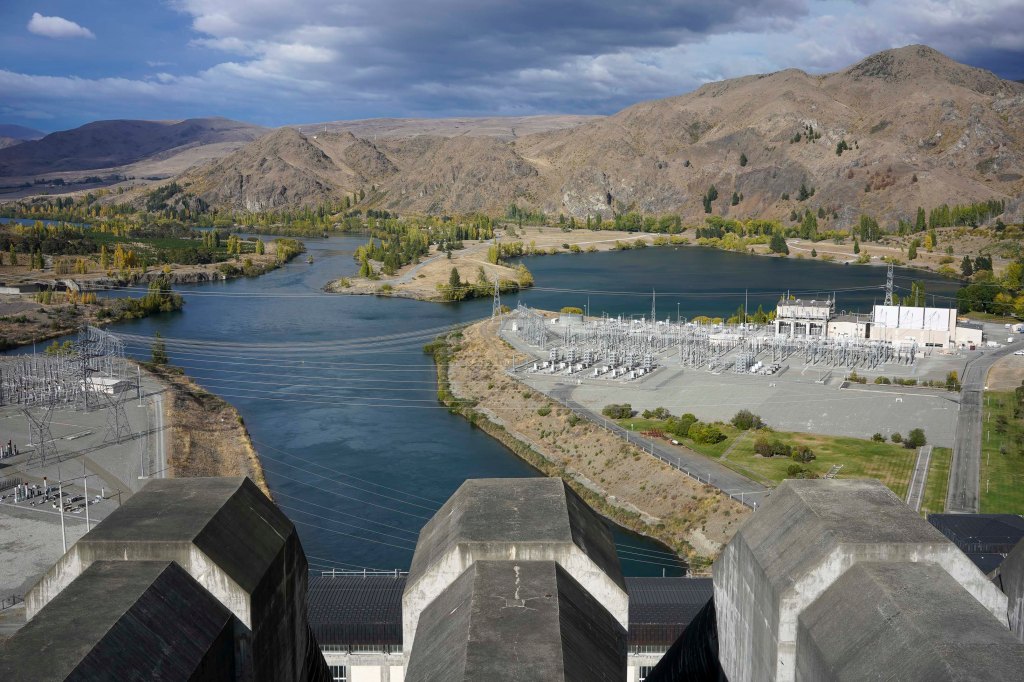
At the Aviemore Dam we pause for a snack, me trying desperately not to run over a skink that zig-zags ahead of me as I come to a halt. Possibly it was trying for a straight line but was wind-compromised – we have to wedge the bikes into a fence to prevent them being blown over. The lake is so choppy you could probably surf on it, water smacking into the dam wall and throwing showers over us as we take the safe option and walk the bikes across it, the gale making even that a struggle.
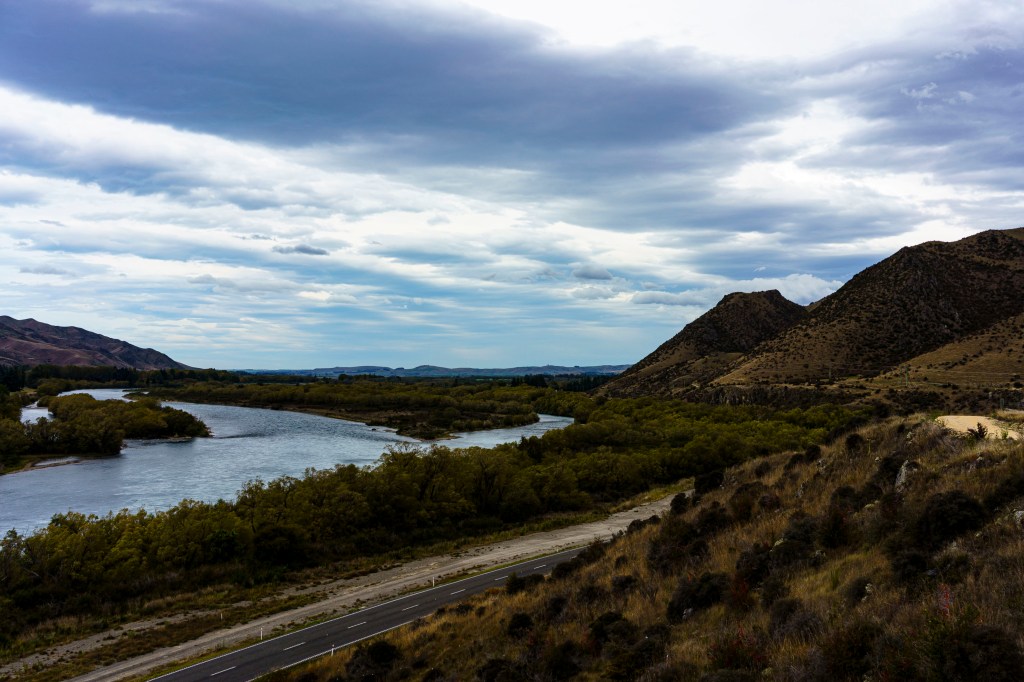
The track now runs beside the road, shingle and gravel, a few uphills and tight turns more challenging than they would have been on a calmer day. At one point we swing around a hairpin and it’s like we’ve run into a wall, the wind bringing us all to a sudden halt. It scares me even to think about how dangerous yesterday would have been in this wind. There’s a long (and, frankly, mean) incline before a swooping downhill towards Kurow for lunch and a wander around a delightful little museum stuffed full of information and treasures.
My app clearly hasn’t liked the wind (nor the 3G my phone has to rely on in this area) but the guidebook says we’ve done 38km so far, and another 5km takes us to River T wines where, after a tasting, we leave our bikes. Our host drives us to our bed for the night, a glamping dome, off-grid, on a hillside overlooking the Waitaki Valley, through which we’re cycling.
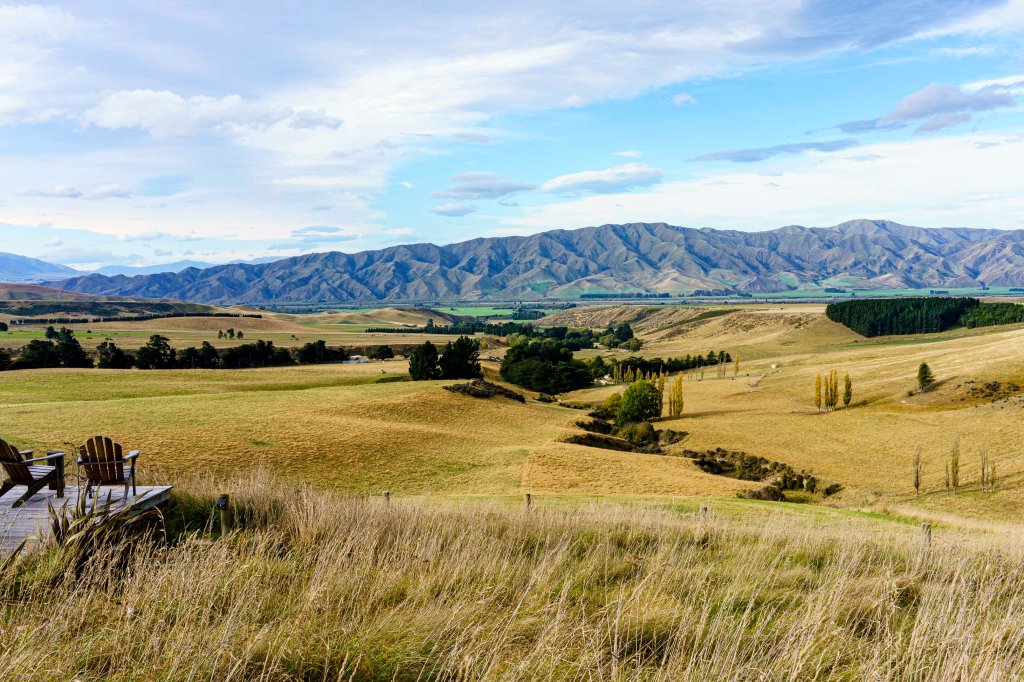
We leave the curtains open and watch the mist fill the valley, opaque in the darkness. It rains on and off through the night, pattering on the roof of the dome. In a gap between showers I wander to the loo, the pale path just visible without a torch. Mist and cloud surround me, the silence almost absolute, the only sound the crunch of gravel under my feet. Inside, I use the red light so I don’t lose my night vision and, as I exit the building, look up. The almost-full moon is a hazy circle through the mist, the domes ghostly in the darkness. It’s magical.
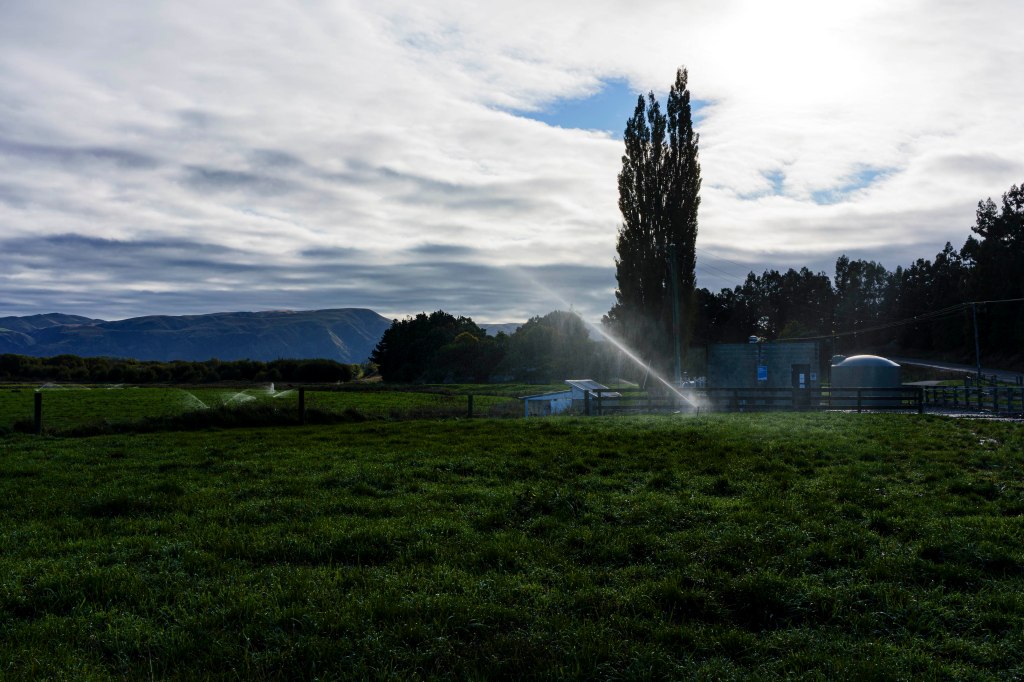
In the morning we grab a coffee at the winery as the rain falls steadily, then face the inevitable. We peddle through puddles, cold and rain stinging our faces. We’re in the flood plain of the braided Waitaki River, although a line of low trees and bush blocks our view of the water. Wide pebbled areas we cross are dry river beds, thankfully the rain not heavy enough for them to flood today. Below the bottom of our rain jackets we are soaked to the skin and mud splatters our legs, the bike wheels throwing a skunk-line of it up our backs. The gears on Neil’s bike skip all over the place and mine make a grinding noise that I’m sure isn’t good.
We ride into Duntroon and the welcome sight of the Flying Pig café. Despite carrying a packed lunch provided by last night’s hosts we order soup to warm us, finding paper towels to put on the chairs before we sit down. The café soon fills with damp cyclists discarding wet rain gear and dripping on the floor, a few non-riders looking on with caution in case we get too close and shower them.
Today, thankfully, is a short day, only 26km in the rain. I’d wanted to visit the Vanished World Centre in the town – the Waitaki Valley is New Zealand’s first UNESCO Global Geopark – and then ride on to the Elephant Rocks, but we’re too cold and soggy so we head to our accommodation where our host points us to the hosepipe. We spray ourselves, our gear and our bikes, then I rinse the rest of the mud from our clothes before chucking the lot in the washing machine.
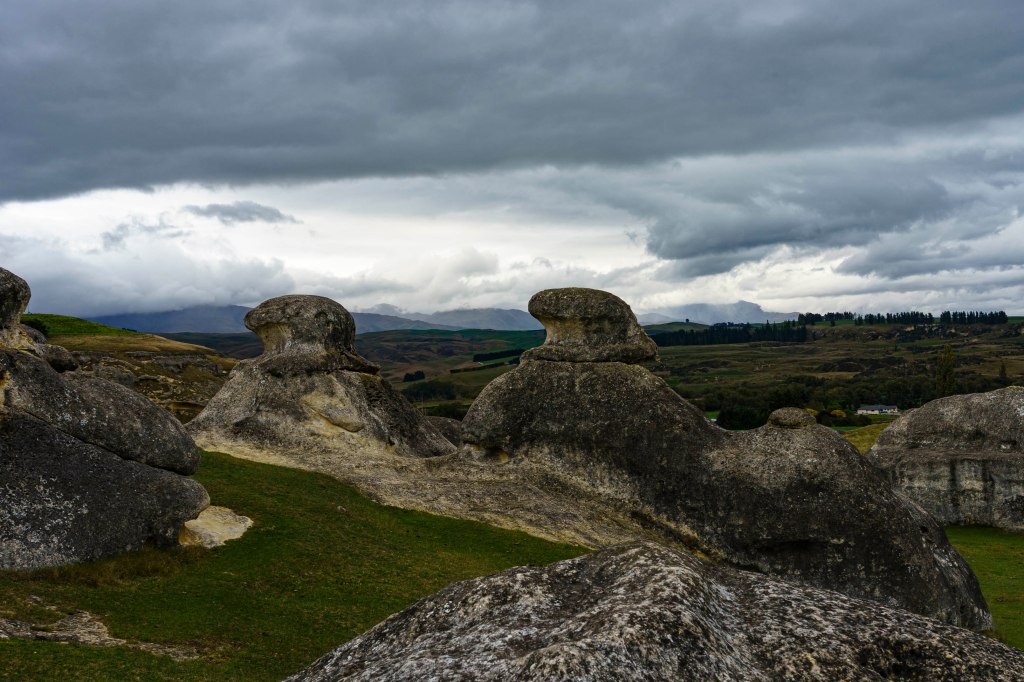
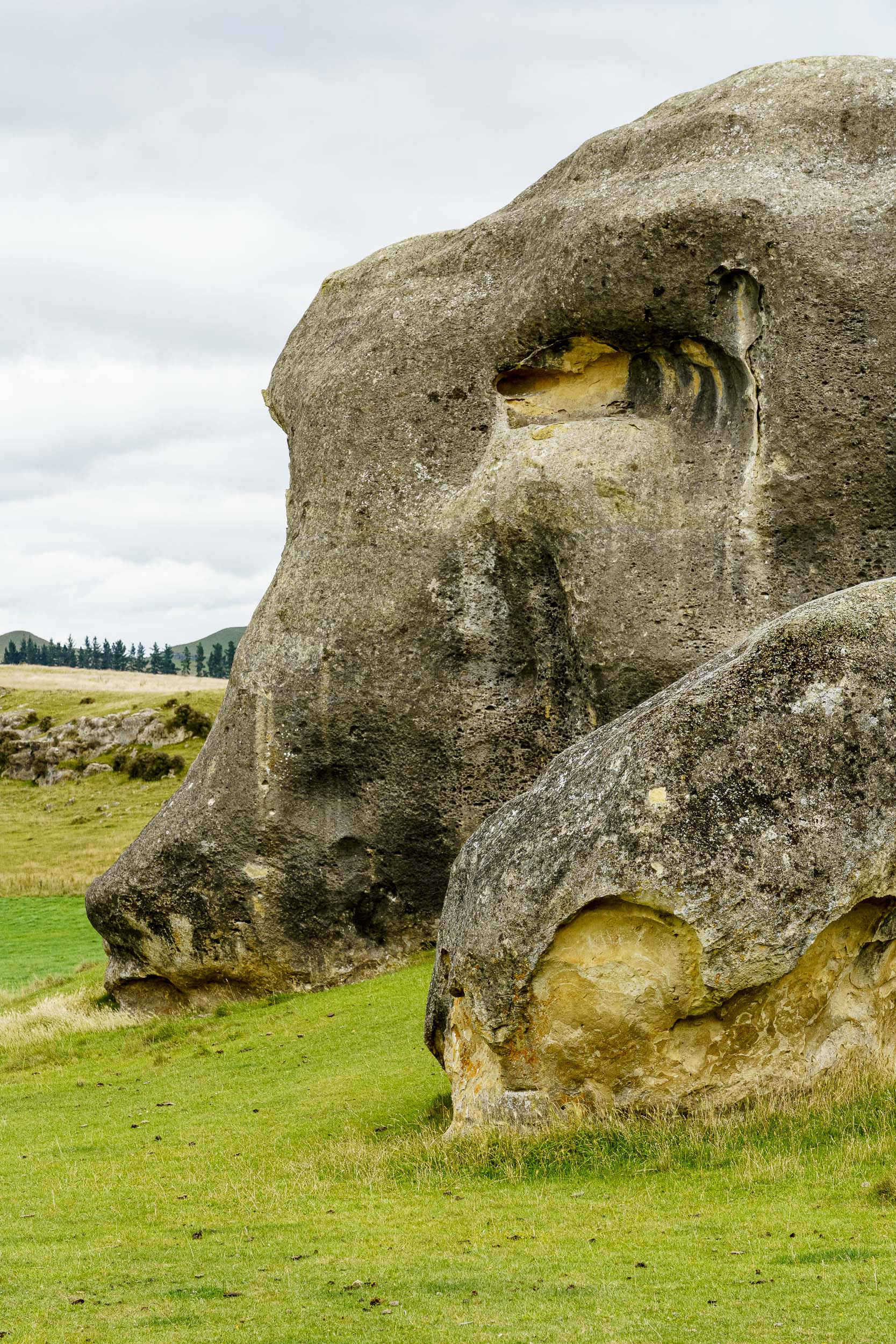
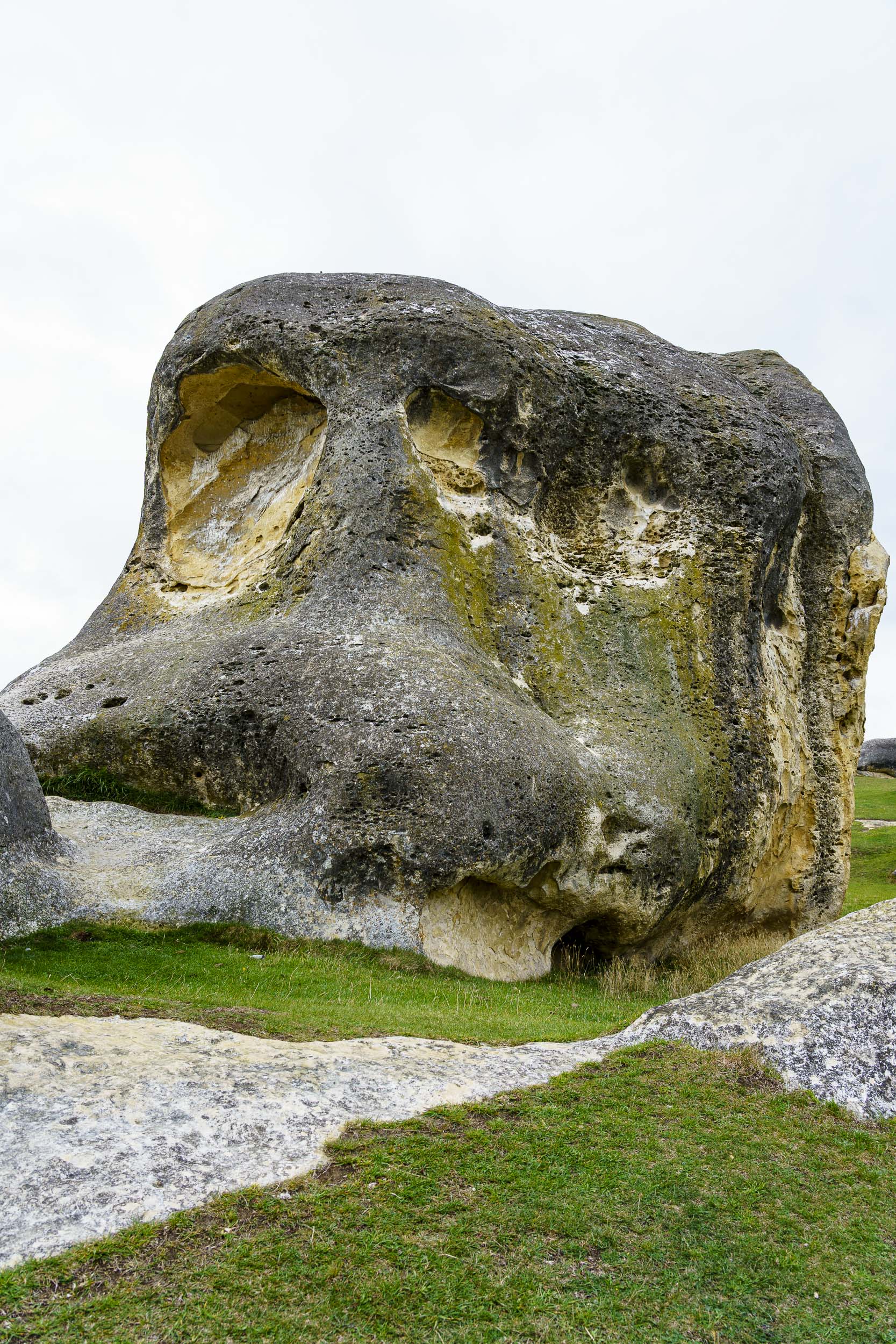
In the early evening the rain eases and, Paul having the car here, drives us the few km to Elephant Rocks. What was once the seafloor is now home to huge limestone rocks eroded over millennia to stunning elephant-like shapes scattered across farmland. I could wander for hours but even wearing warm layers we’re too cold to stay long. My voice drops to a gravelly depth as we get into the car and I mutter, I’ll be back.
The final day, dawning clear and cold again, is a long one (relying on the guidebook 54km – yep, you guessed it, app failure). Bluffs and cliffs rear ahead of us, across the valley, by the side of the trail, and I’d love to stop, look around and take pictures, but my legs feel heavy and each time we pause it’s a huge effort to get going again. After six days of riding we’re all fatigued and the first long climb is challenging, especially for Neil with no battery assistance.
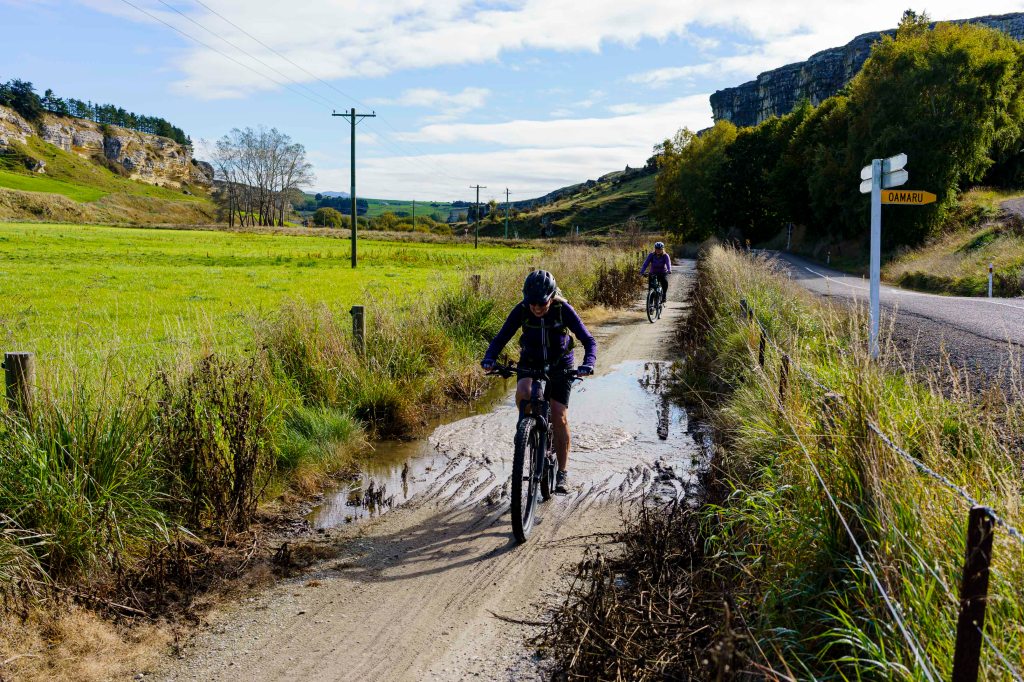
The track is good, alongside the road and through farmland, but little of it is flat and we are either going up or down, making it hard to maintain a steady cadence. The constant shifts make it easier on the bum (or have I become inured to the discomfort by now?) but are wearing me out. Yesterday’s rain means a lot of water underwheel and we’re soon grubby again, splashing through puddles. Ahead we see cyclists on a long stretch of uphill zig-zags – the last serious climb of the ride. After a few false summits we finally swing onto a gravel road and a smooth descent to the Rakis tunnel.
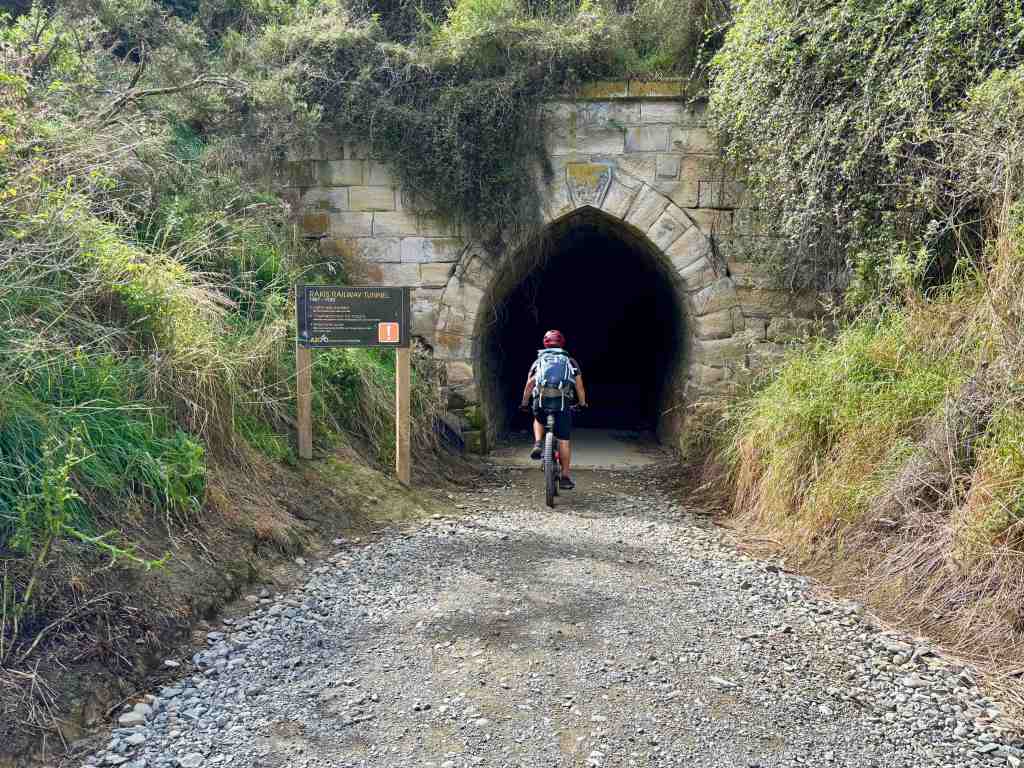
I can hardly stay upright when I can see where I’m going so there’s no chance of me riding through a tunnel and, despite Julie’s encouragement, I push my bike. We then have a lovely smooth ride along the old railway track to Windsor, and a slow slog on an undulating track winding through wetlands to Enfield, our lunch stop. Neil looks like a zombie and I think he’ll be glad to see the end of the trail.
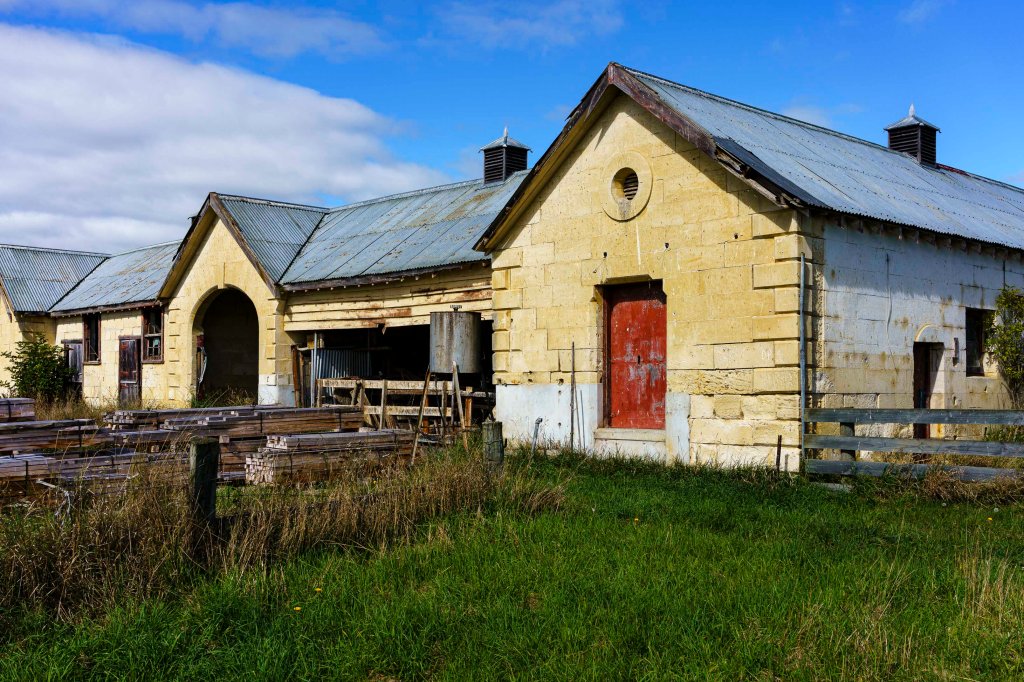
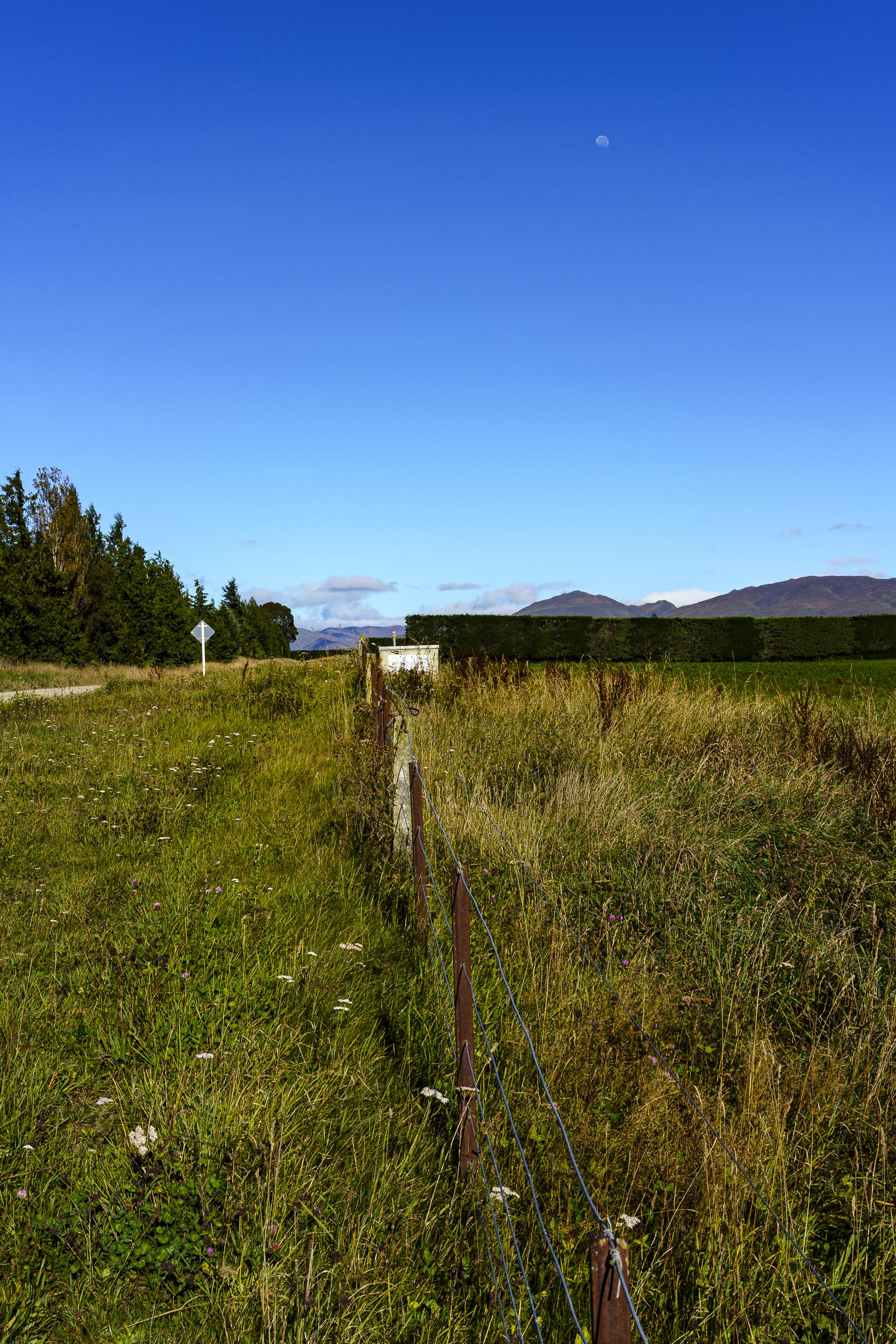
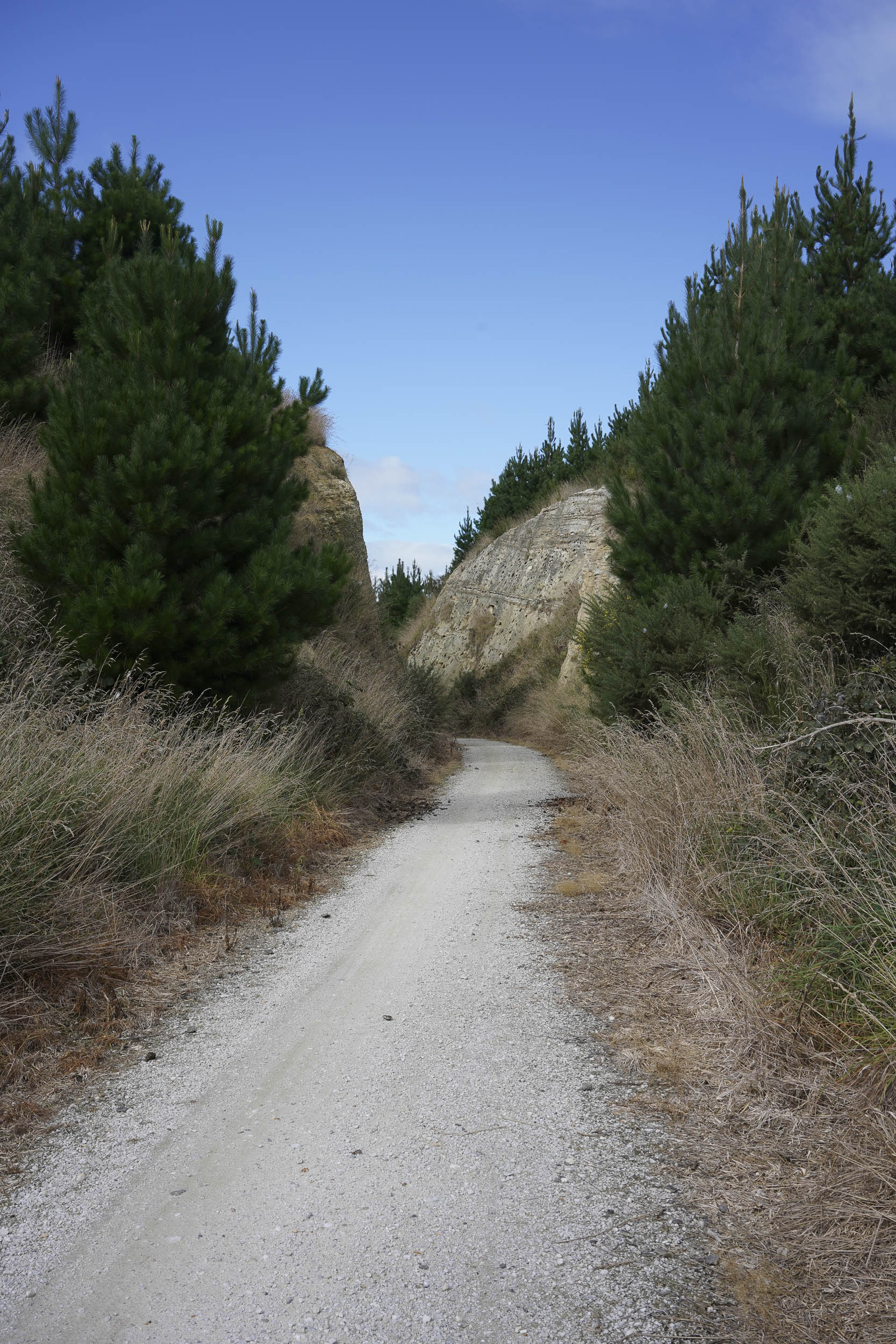
The final section is straightforward, beside the road and along more of the old railway line, becoming busy with walkers, all of whom seem happy to give way to us. A final downhill takes us into Oamaru, through beautiful gardens and the limestone buildings of the historic centre, before the final turn towards the sea at Friendly Bay. The moment is happy-sad. I’m glad I did it, and I’ve enjoyed most of it. I’m tired and need a break from the constant effort, but I’ll miss being in the open air and the beautiful areas we’ve ridden through.
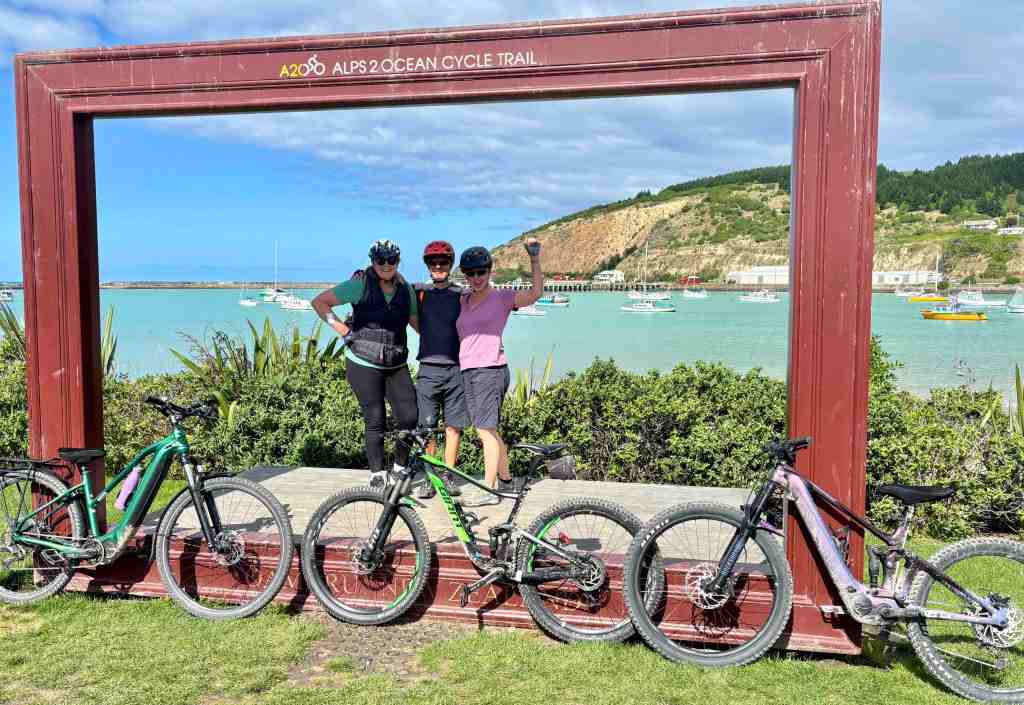
The emotion welling up in me as I see the photo frame positioned in front of the cerulean small-boat-dotted water at the finish surprises me. My eyes sting and a lump forms in my throat. We coast to a halt and I yell: We did it!
 Tracy Annenberg