28-30th July
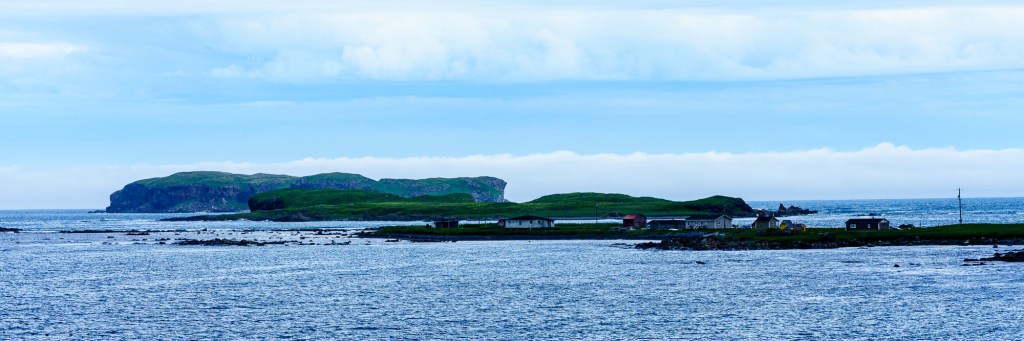
L’Anse aux Meadows sits at the northernmost tip of Newfoundland, the ‘finger’ that points to Greenland. We deliberated about visiting – the drive from Bonne Bay is nearly five hours – but in the end decided we really wanted to see the site where Vikings lived a thousand years ago. The trip isn’t onerous, with the sea beside the road a blanket of blue edged with white lace where it lies against the land, although the beauty is somewhat tempered when we leave the car and a chilly wind whips into us. We shouldn’t be surprised – if you keep heading north you’ll bump the edge of mainland Canada at Labrador, but after that there’s nothing except a lot of sea until the ice and snow of Greenland. Someone quipped that you’re not at the end of the world, but you can see it from here. Standing on a shore looking out to nothing but water and sky I can see what they mean, but they didn’t mention that it’s one of the most amazing places on earth.
This is the site of the earliest known European settlement in North America, some five hundred years before Columbus even thought of getting on a ship, and therefore the place where the human circle of evolution was completed. Here, for the first time, North American indigenous people met those (Europeans) who had evolved elsewhere. In this case it was Vikings, who migrated from Scandinavia via Iceland and Greenland, settling here and staying for a few generations before leaving.
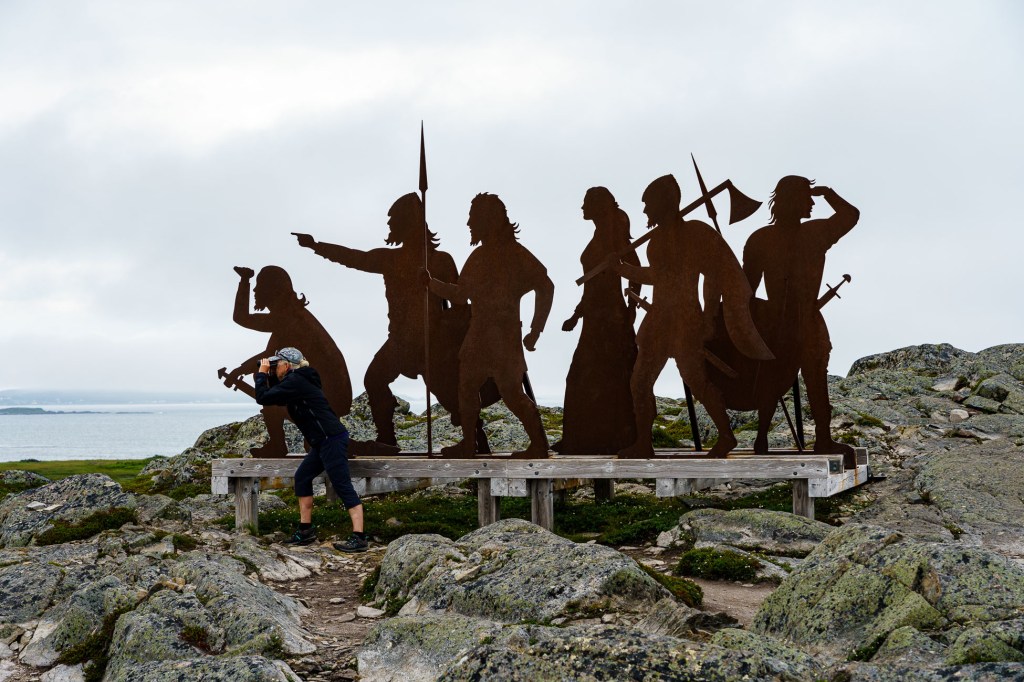
Once again we are in a UNESCO World Heritage site; once again we have an excellent Parks Canada guide to lead us around. The site was discovered in the sixties (I tell you, a good decade…) by a lawyer whose wife, an archaeologist, then excavated it. When the excavation was finished, the site was returned to how it was when first found, which is how we see it, with mounds and raised areas showing the outlines of buildings, firepits, and fences. The guide regales us with tales that have been passed down verbally for centuries, stories for around the fire at night rather than proven history. The Vikings definitely arrived here around 1000AD; they definitely stayed for around a hundred years; they definitely left: there is evidence for all these occurrences. How, why and who we can only guess. The stories must have some element of truth (for a start, this place exists) we just can’t rely on them as historical fact, and we have no way of knowing, for instance, why the settlers abandoned the site, presumably to return to Greenland.

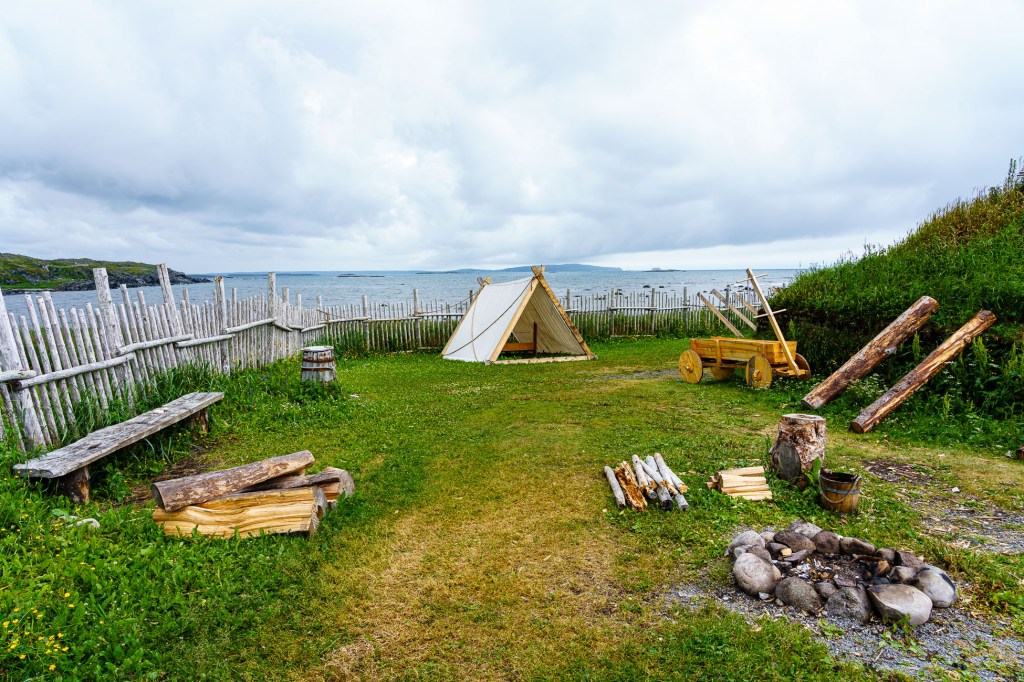

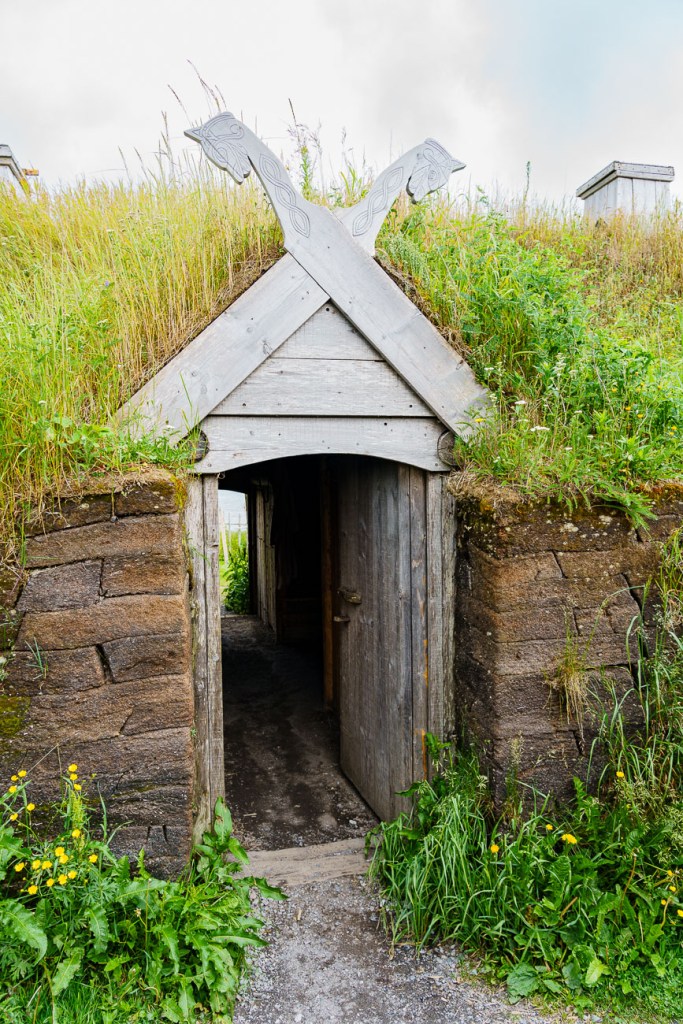
The tour ends in a reconstruction of a Viking village, a few low buildings topped with turf. The walls are peat bricks and inside is dark, the only light coming through the low door and from an open fire, over which a man and woman cook flatbread and share stories, bickering like any married couple. They are natural and entertaining, children in the group fascinated (as am I). A door leads into the sleeping quarters, clothes hung on pegs and furs thrown over wooden bunks. One end of the main room is the work area: a half-woven rug is draped over a loom and tools are scattered around, drying pelts hanging from the roof. The whole is so authentic I genuinely feel I have dropped back in time and am sitting at the fireside of a Viking couple.
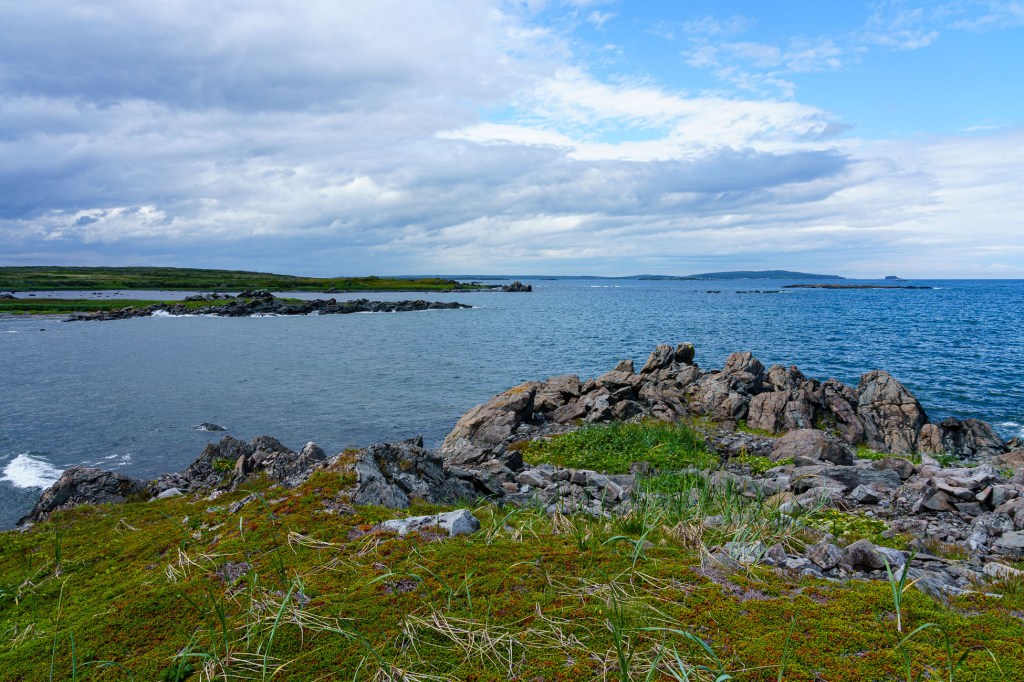
The wind pushes clouds across the sky and rain falls intermittently as we wander a boardwalk over swampy ground, past ponds and rocky outcrops. The grass, scattered with wildflowers, grows low and we spot cloudberries, or bakeapples, their pink-orange clear against the green. The path meanders to the coast and a couple of red chairs face towards Greenland. Near the visitor centre I pause and look back at the sea curling into white foam where it hits land, the rocks catching it and throwing it back.

Again my mind struggles with what it sees and what it knows: I could be in northern Scotland, wandering the low hills around Melness. The difference is the rocks – there they are sharp and jagged, dark cliffs pushing into the sea; here they are rounded, half-buried under grass and soil, paler and grey, strewn with moss and lichen. Both places are stark, windswept and wild, with a chill that seeps into your bones if you stand still too long. In both places the feeling is of permanence, that all this is eternal. Vikings arrived here centuries ago; indigenous people have lived here longer. It will still be here long after I am gone. It will still be breathtakingly beautiful.

 Tracy Annenberg
It’s a place I enjoyed visiting too, and you describe it well. The reconstructed houses help us imagine what life was like at that time, in summer and winter, with all their challenges. Along the Strait the weather is often harsh, even in midsummer, wind and fog are unwelcoming. The reward is seeing whales or icebergs, so captivating the first few times.
LikeLiked by 1 person