10-14th July 2023
In 1497, John Cabot, a Genoan sailing under an English flag (hence the Anglicisation of his name from Giovanni) spotted land for the first time since leaving Britain. Oh, buono vista! he exclaimed. Thus was the Bonavista Peninsula, and the town, named. The town is a strange place, roads twisting and bending, most only single lane. Houses are parked randomly along them, facing all ways and with little demarcation to show where one property ends and another begins, making it hard to work out whether you’re about to turn up a street or into someone’s driveway. When the town was first settled a pattern of paths formed between industry at the water’s edge and homes set back behind allotments and gardens; these pathways morphing into the haphazard street arrangement of today.
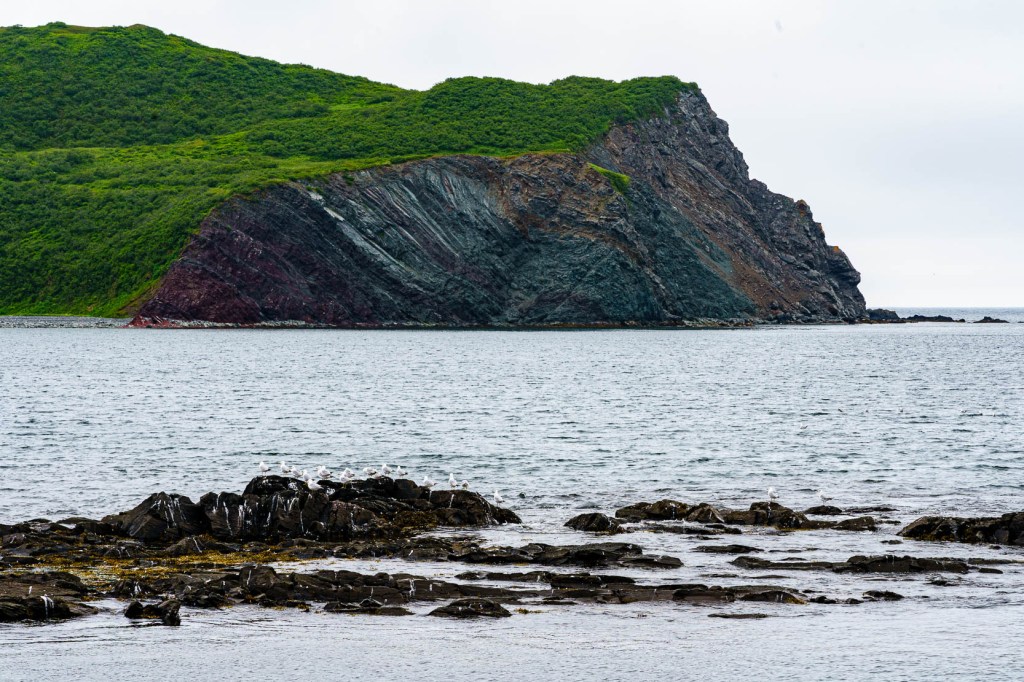
The Peninsula is a UNESCO Geopark, which is basically an area considered of extreme importance in geological terms. There are a dozen or so sites of interest, ranging from fossils to cliffs where lines of layered rock show how tectonic forces have pushed the plates of the earth’s crust against each other with force enough to lift them at a steep angle, to tall chimneys of stone that seem to defy gravity and the elements. A helpful leaflet with a stylised map of the peninsula marks where there is anything of interest – the problem is when you get close to each site there is no signage at all. As a result we drive around a lot of small settlements with no idea where we should be looking and then give up.
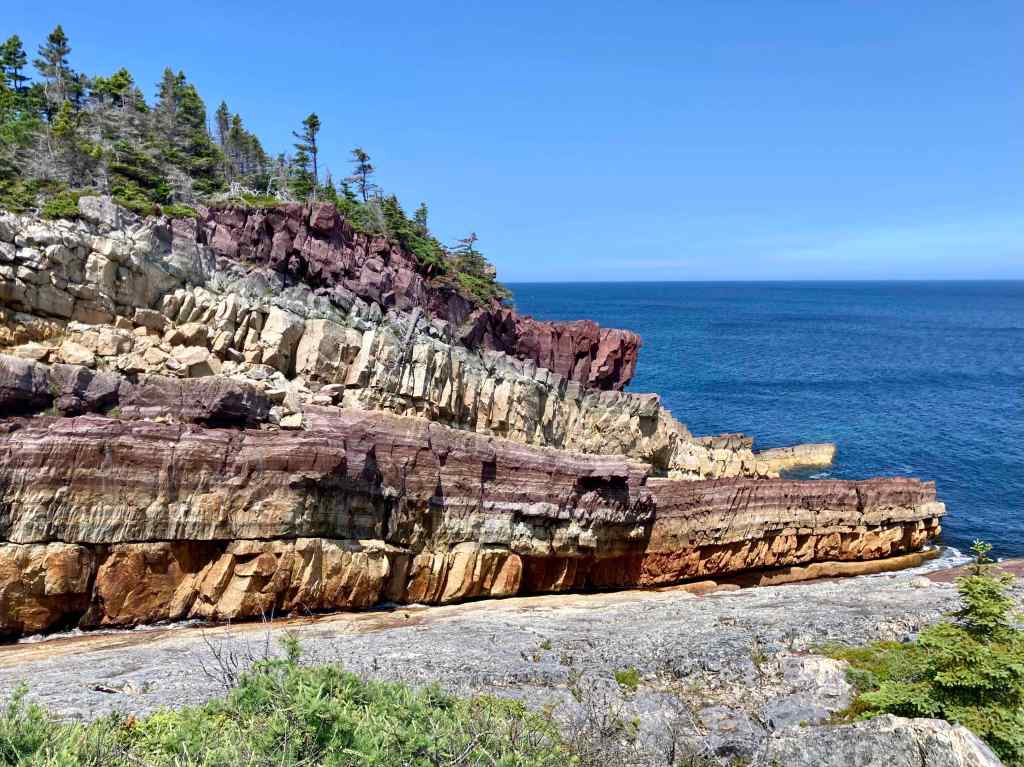
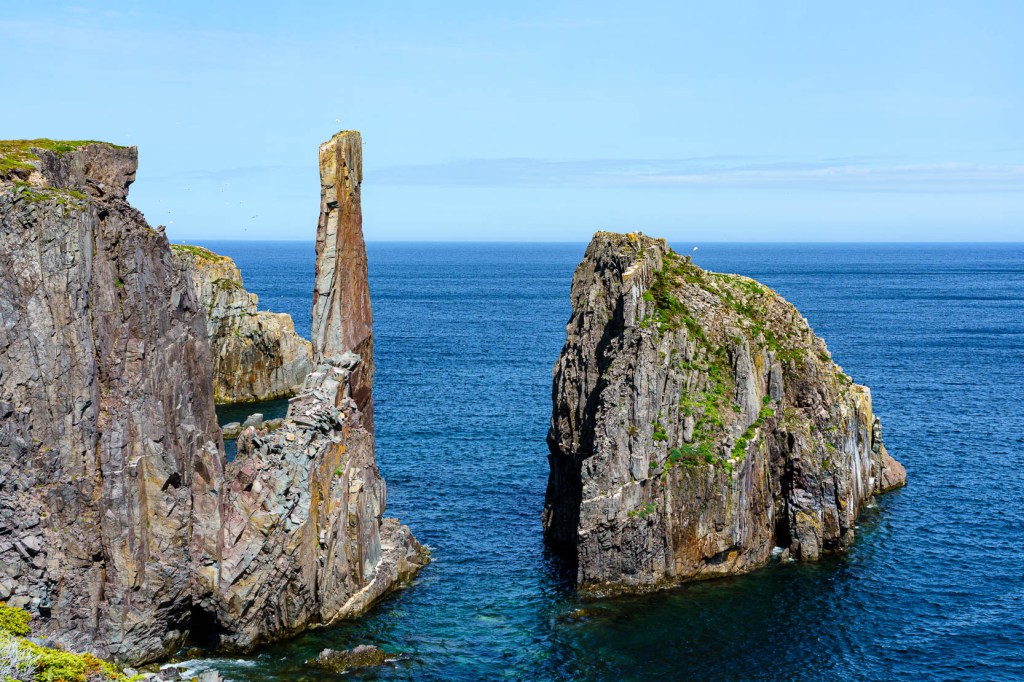
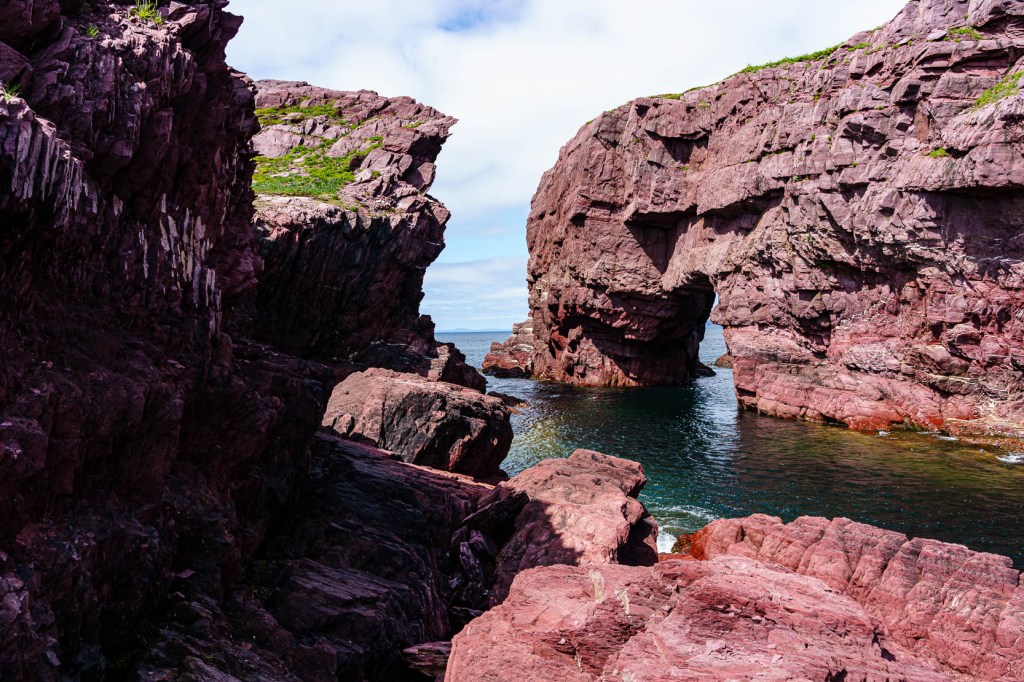
Finally we find what we are looking for at Tickle Cove, where the incessant pounding of the waves has eroded softer rock and left behind a sea arch. I admit it’s impressive, but not as impressive as the cliffs, which rise in ridges of pink and lilac, white lines of quartz through them shining like trapped snow, all surrounded by skirts of bright green grass.
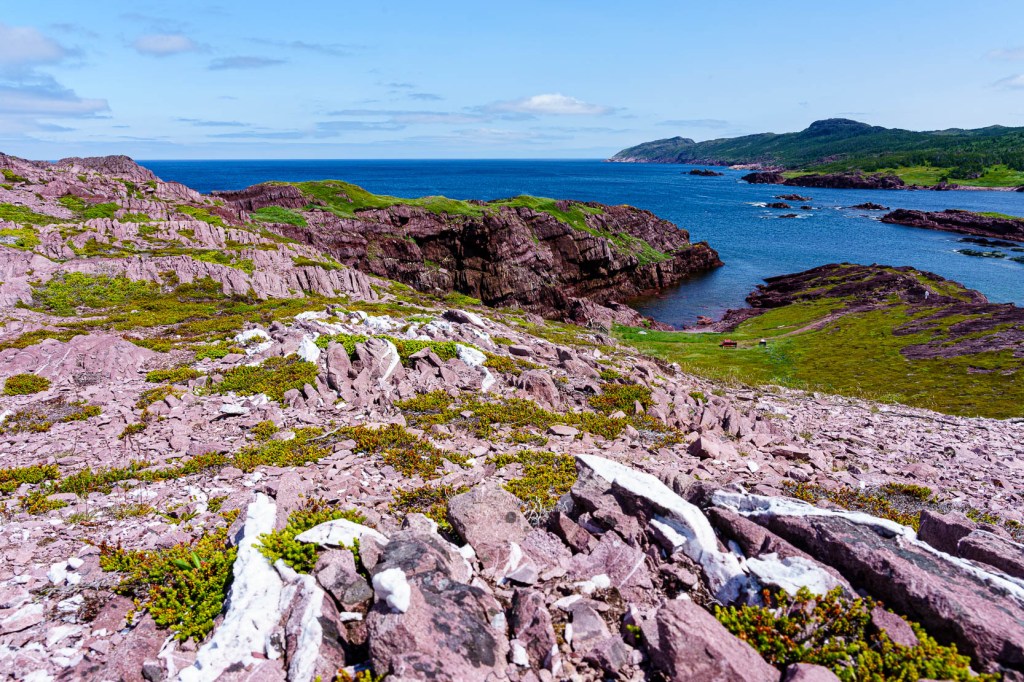
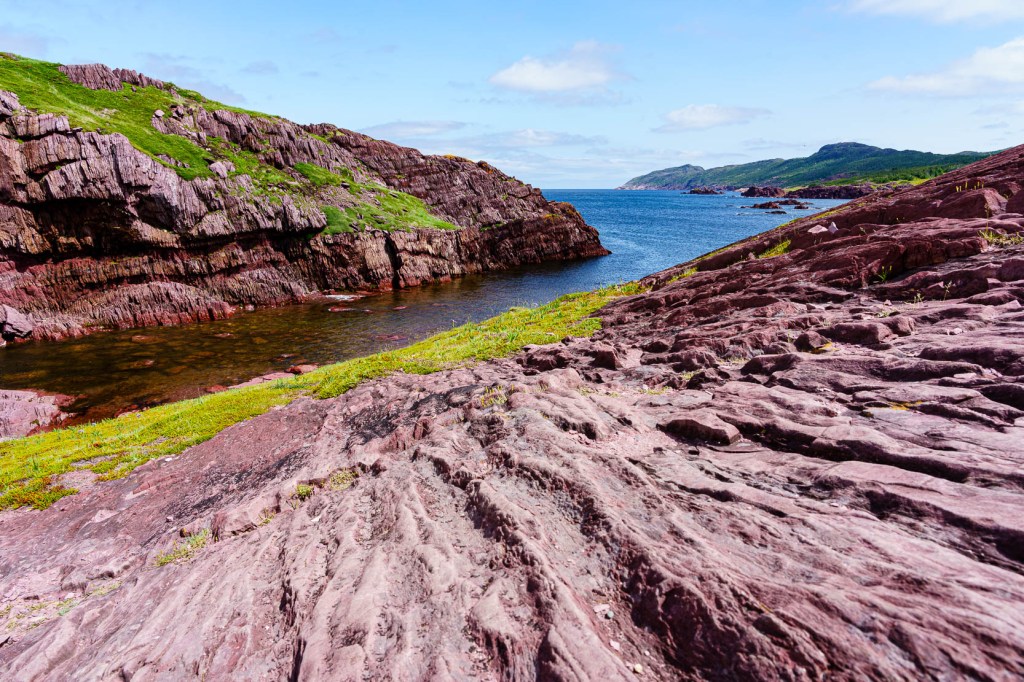
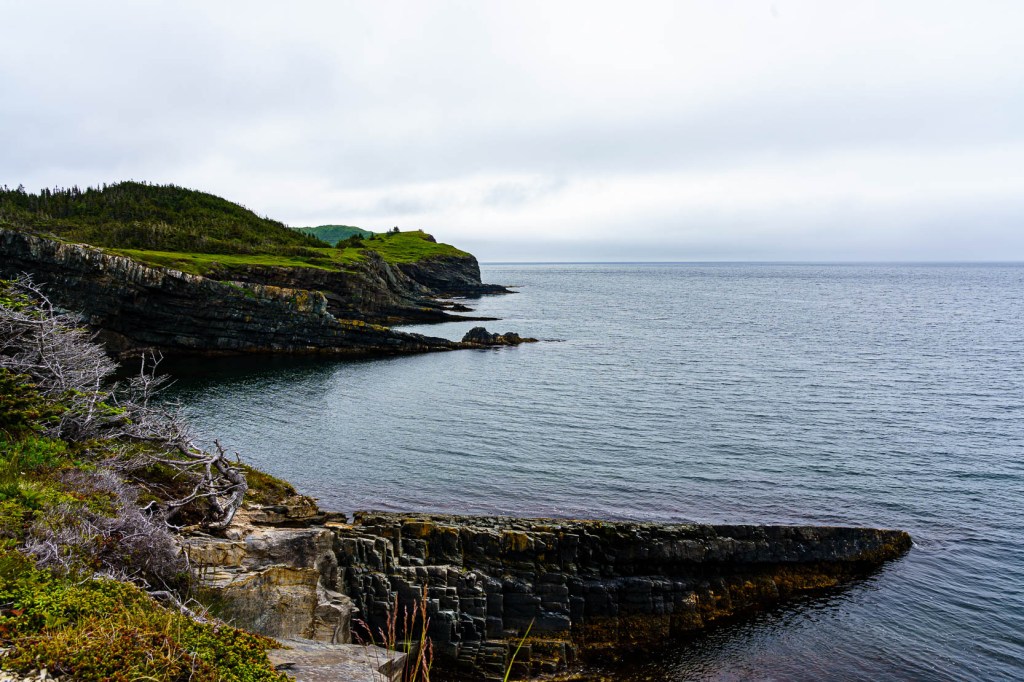
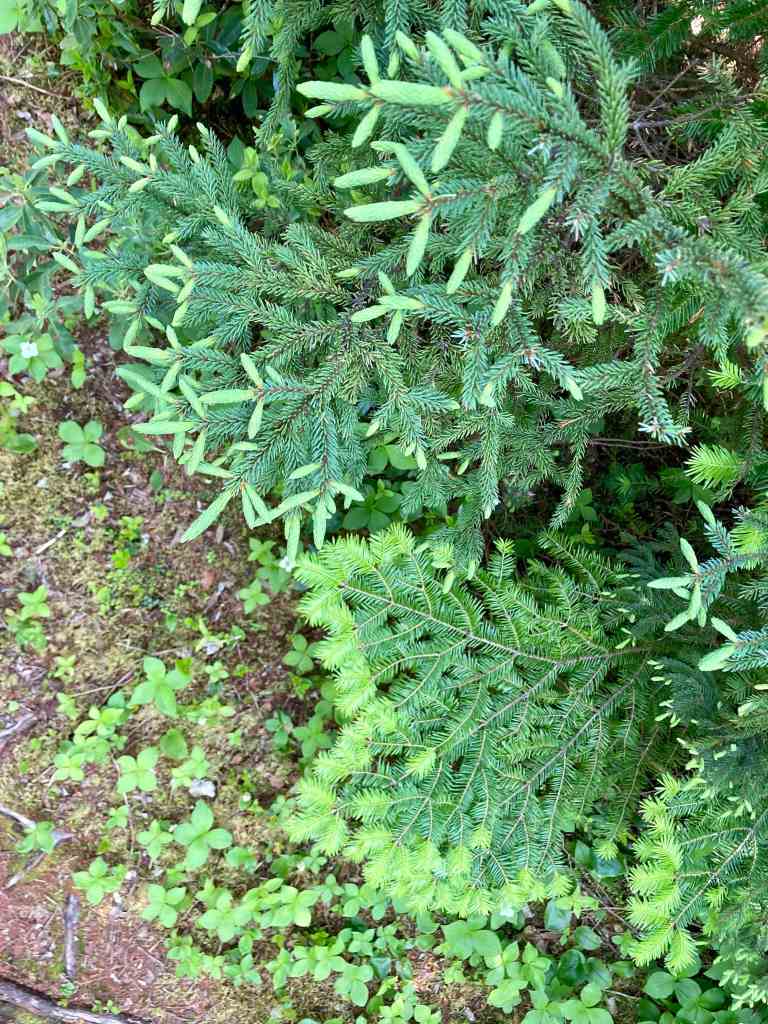
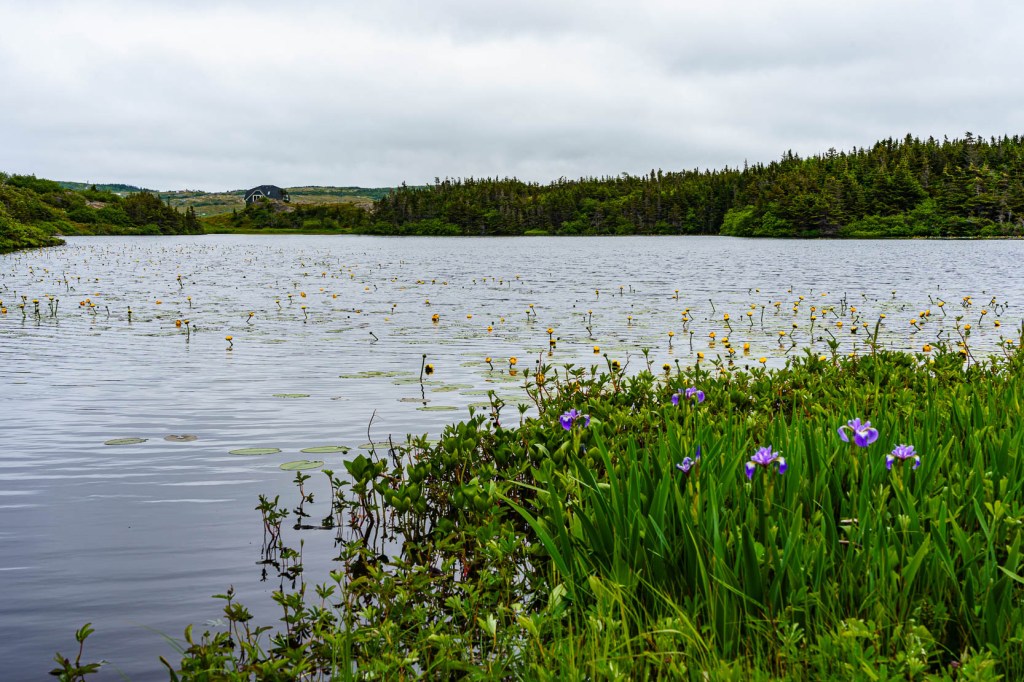
Walking around these rocky headlands my feet bounce on peat-like ground, scraps of dark earth visible through grass that waves in the stiff breeze. The track leads into trees and becomes stony. Small pines and spruce, new growth a lighter green on the ends of each small branch like fingers dipped into paint, break the wind. A bird I don’t recognise, sparrow-like but with a yellow stripe on his head, flits away from me. We break from the trees to views of small bays with steep cliffs. Blue-violet irises grow low to the ground, vivid against the grey and green. The path drops to sea level and a pebbly beach, sea debris and shells scattered across it. A flock of seagulls rest on a pile of sea-smoothed boulders.
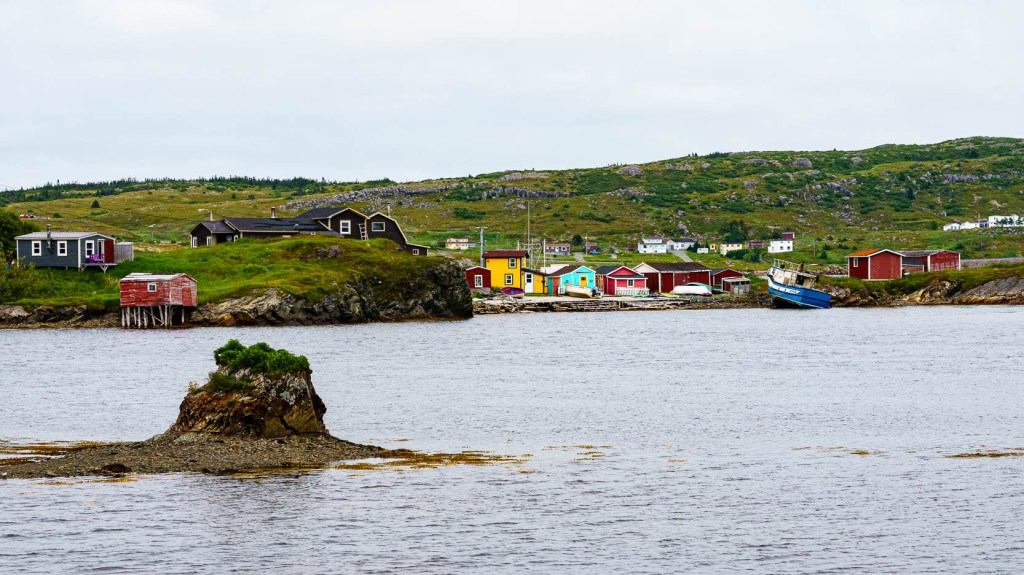
We find a sheltered beach in a round bay on which to sit for lunch, the houses of a small village rising on the low hill opposite. I count at least four shades of blue and red and three of green, along with yellow, grey, cream and brown. A small pier juts into the water, a fishing boat beside it, a row of small huts and houses circling away from it, each with its own little landing. Apart from a couple of other walkers there is hardly anyone around.

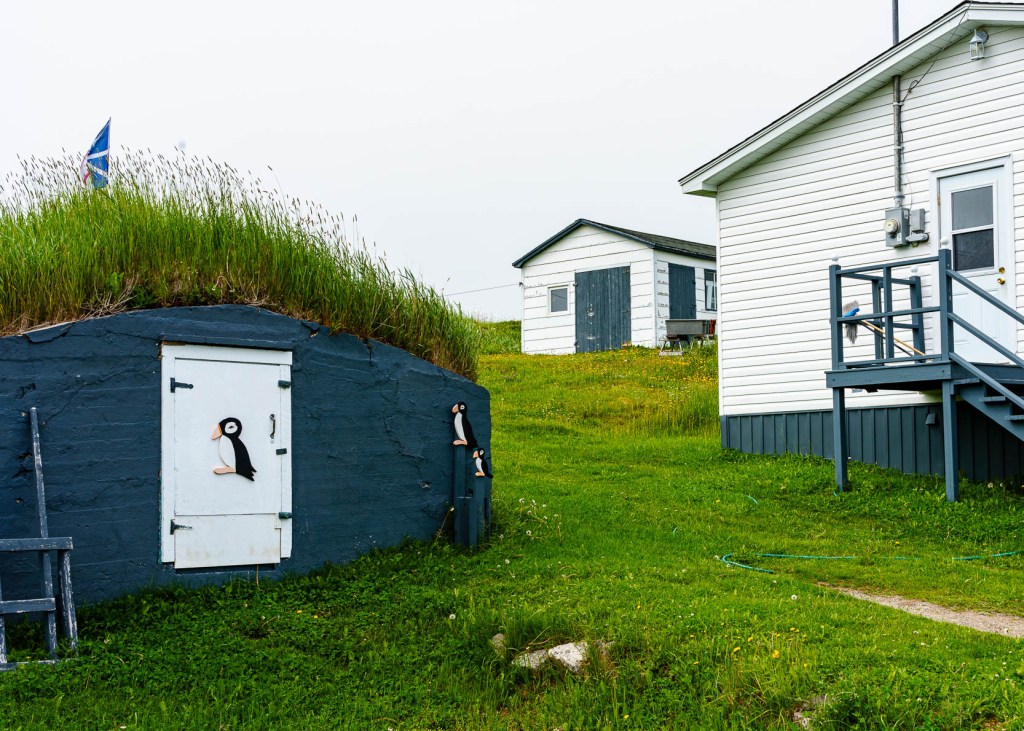
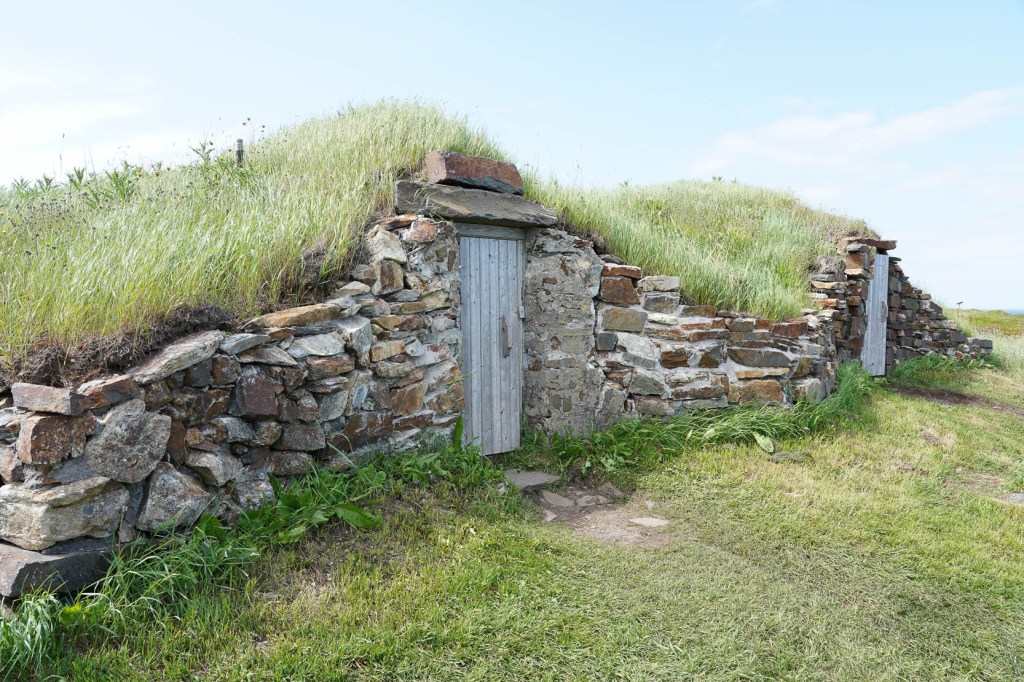
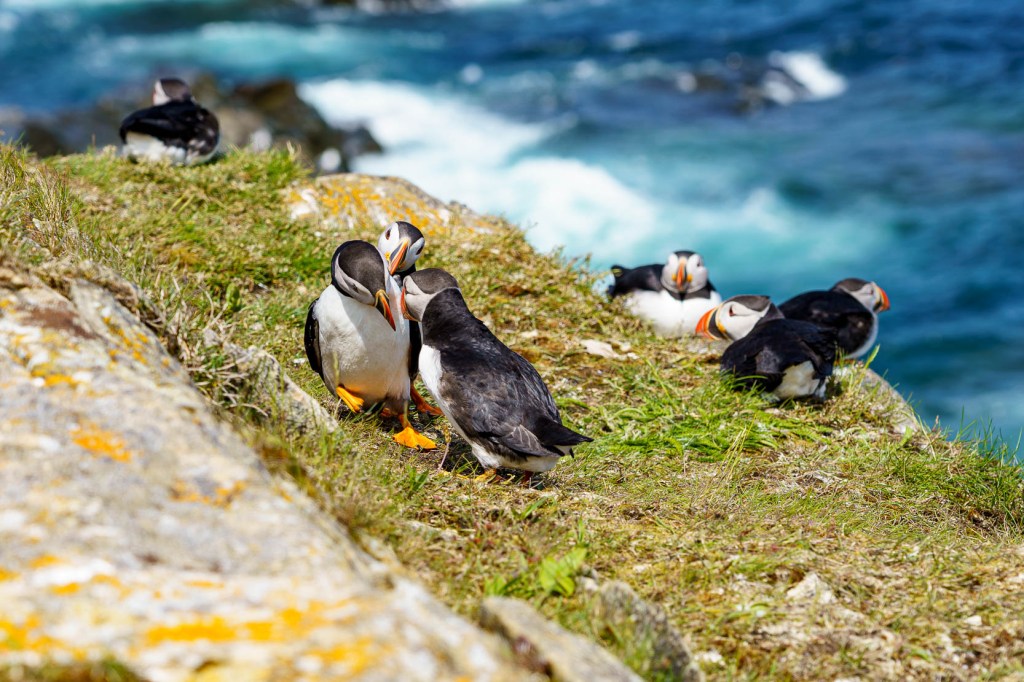
Elliston is, apparently, the root cellar capital of the world, a root cellar being where early settlers used to store their vegetables to last through the colder months. It’s also the place to catch a close-up view of Newfoundland’s signature bird, the puffin. As we approach the small island separated from the mainland by a narrow deep cleft, a movement attracts my eye. Half a dozen birds, their colourful striped beaks vibrant against their sleek black and white plumage, sit only metres away. We join a small group of humans entranced by the antics of these cute little birds, who seem oblivious to our presence. They waddle like unstable penguins, their tiny wings whirring like crazy when they launch their dumpy little bodies into flight (we later find out that they must flap them 300 times a minute to stay aloft). How can anyone not find them entertaining?
 Tracy Annenberg