November 2022
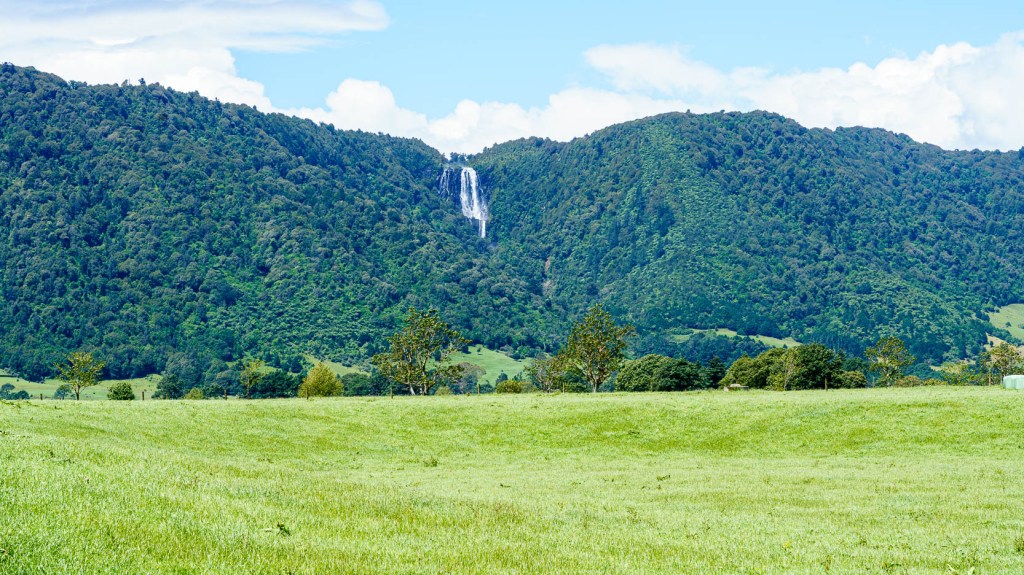
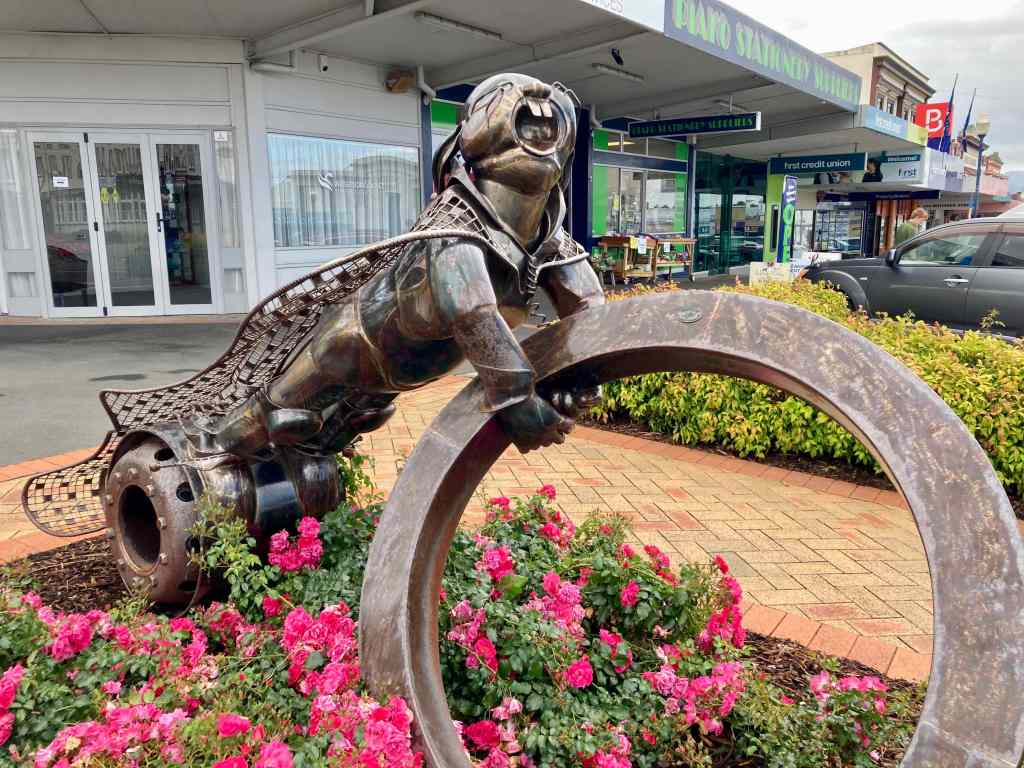
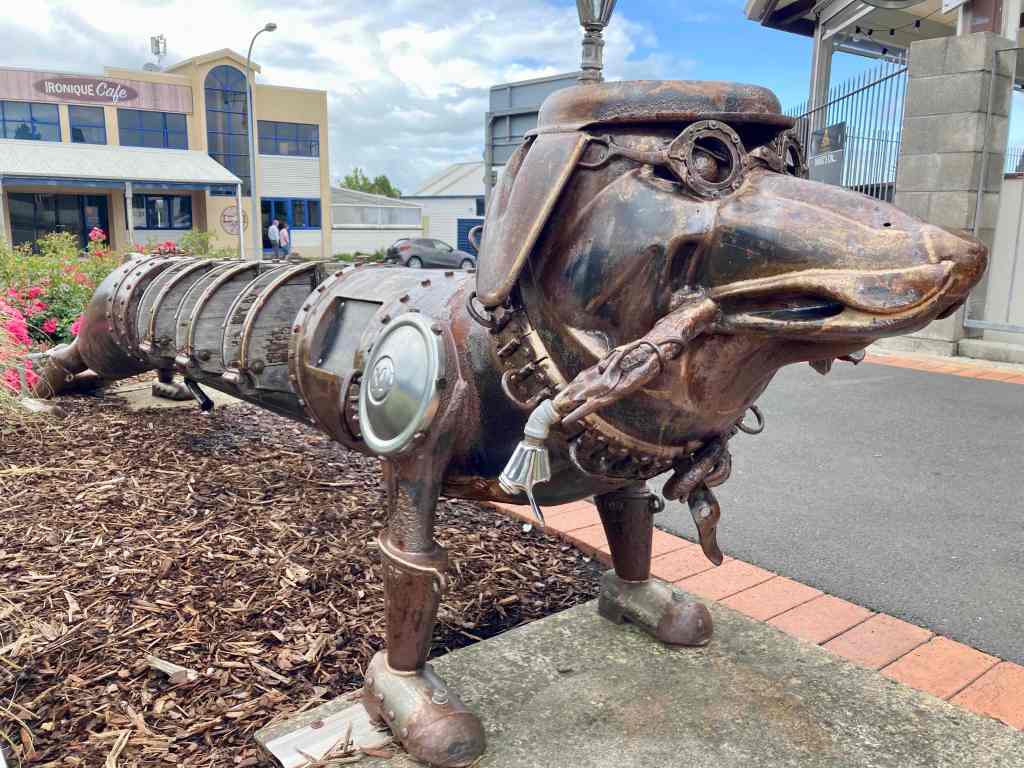
Another day, another set of squally showers, this time accompanying us to Te Aroha, a small town alongside the trail. Not sure what I expected but it wasn’t a tidy place with well-kept public areas, including a heritage precinct and some lovely parks and gardens. Sculptures made from scrap metal dot the main street, the work of a local artist, and there are a few decent cafes. The tracks of a mountain bike park climb up a hill overlooking the town and it’s worth a return visit with more time to explore. We even luck upon a book sale in the community centre.
The farm on which we stay sits in a wide valley in the shadow of the Kaimai Range. The overnight rain ceases and I finally get the chance to sit outside with my morning cuppa, distant low cloud merging into the hills. With the just-risen sun above them they are a dark mass with no discernable features – even the waterfall whose white streaks glared from the green yesterday afternoon isn’t visible. The sun, sliding under the verandah roof, warms me and birds chatter, the harsh notes of the myna strange to my ears – a warm-climate bird, they don’t live where I do.
The Waiorongomai Valley in the Kaimais is another steep-sided cleft where early settlers mined for gold. An uneven track clings to the cliffside and it feels good to get our hiking boots on. Now it feels like we’re on holiday, says Neil. Sunlight filters through regenerating bush and the sound of water is constant, heavy-rain-fed waterfalls gushing across the path and towards the stream below. I jump as a runner appears behind us, his footfalls silent; I’m breathing harder than he is. Mind you, I swear his vest is the official New Zealand kit.

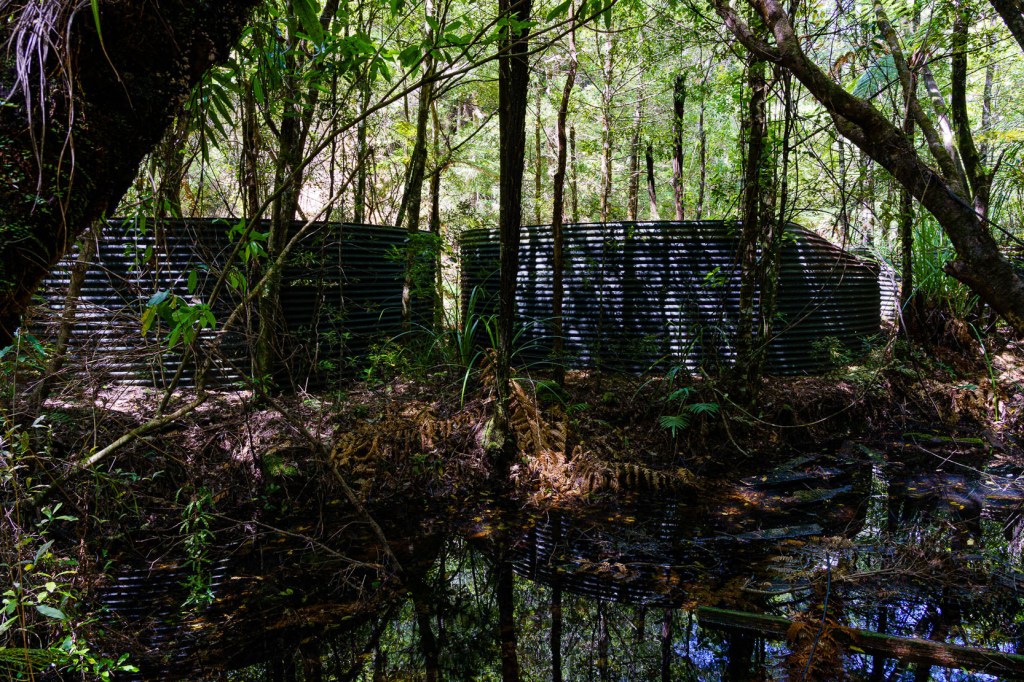
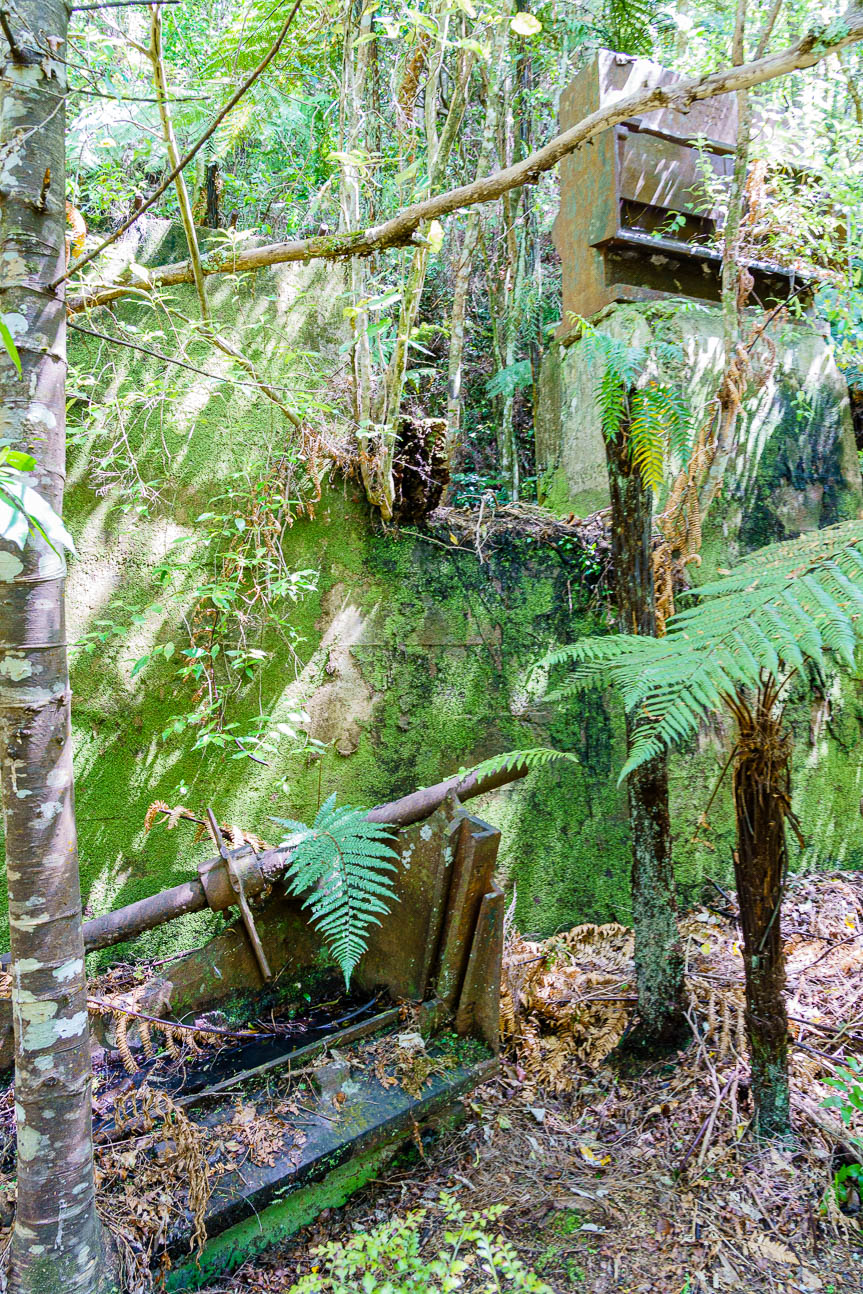
Remnants of machinery are scattered through the bush: the broken and rusted remains of a pipe that carried water to the stampers below and 10cm thick steel hawsers that were strung down and across the hillsides, from which swung ore-laden buckets. A steep side track and a fair bit of bush-whacking take us to the site of the battery, where huge corrugated iron tanks that held potassium cyanide are collapsing into the ground. A black and still pool lies menacingly between a couple, mere feet from the rushing river, but greenery sprouts all around them so surely they can no longer be contaminated.
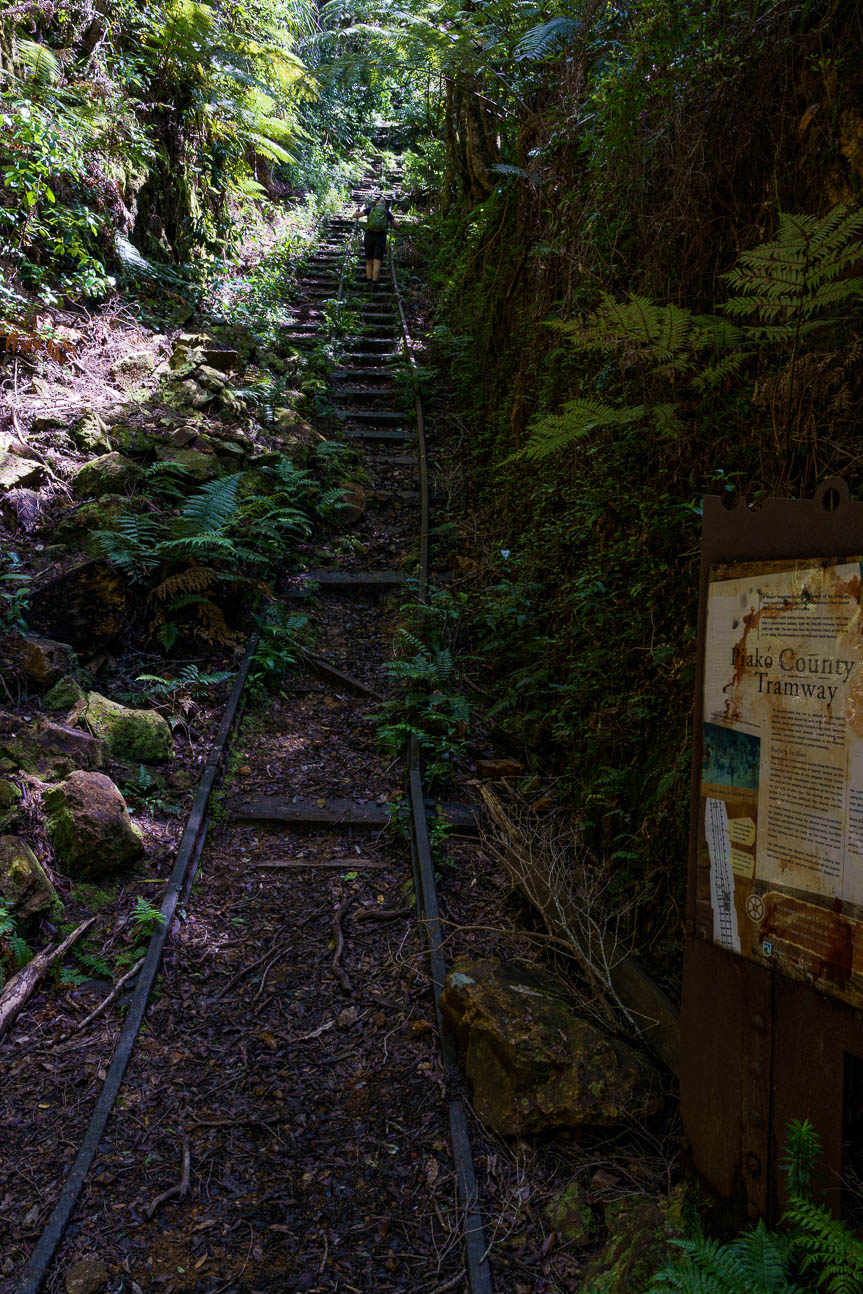
From the bottom of Butler’s Incline metal rails disappear up the hill at an angle I guess to be more than forty-five degrees. Carts full of ore were lowered down these, empty ones dragged up. The climb is steep and unremitting and feels interminable, each narrow step nearly a foot high. My hips and lower back threaten to pack up and my poles are invaluable. Even Neil finds it hard going. Finally the bush opens up and we are at the top. Looking back is vertigo-inducing.
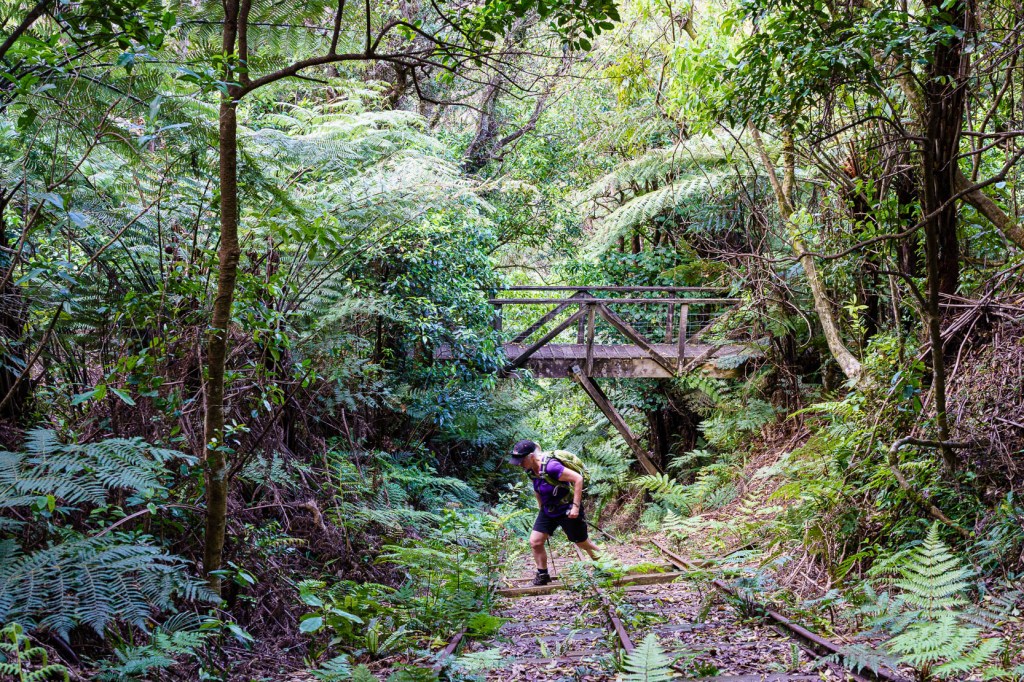
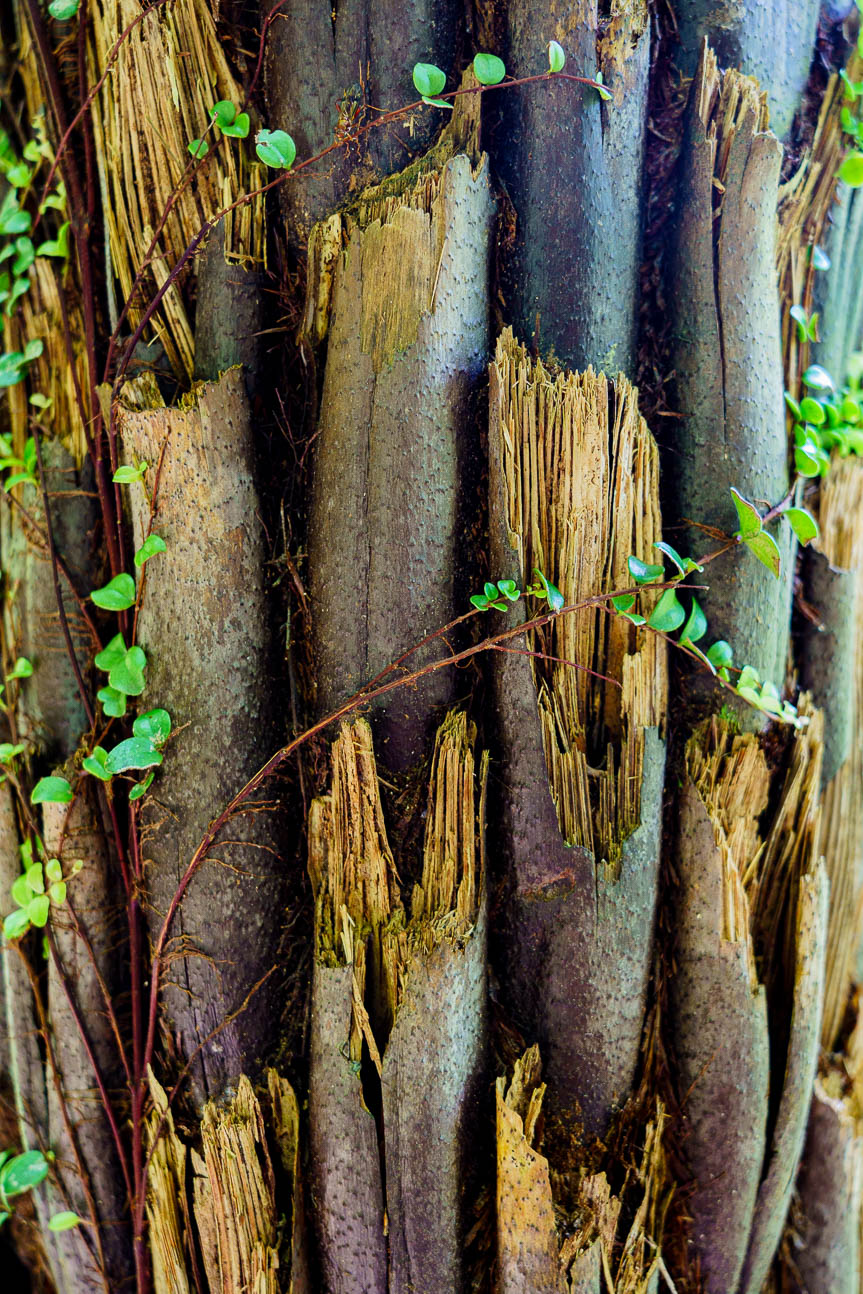
We take an easier route down, meandering through pines and natives. Despite a fresh breeze sometimes penetrating the trees it feels hot and sticky and there is water everywhere, falling beside us and streaming along the path, making it slippery on steeper sections. We turn into a small dead-end gorge, the opposite bank a proliferation of mamakus, the largest fern in the world. I’ve never seen so many in one place and walking under their umbrella leaves is like being in a green wonderland.
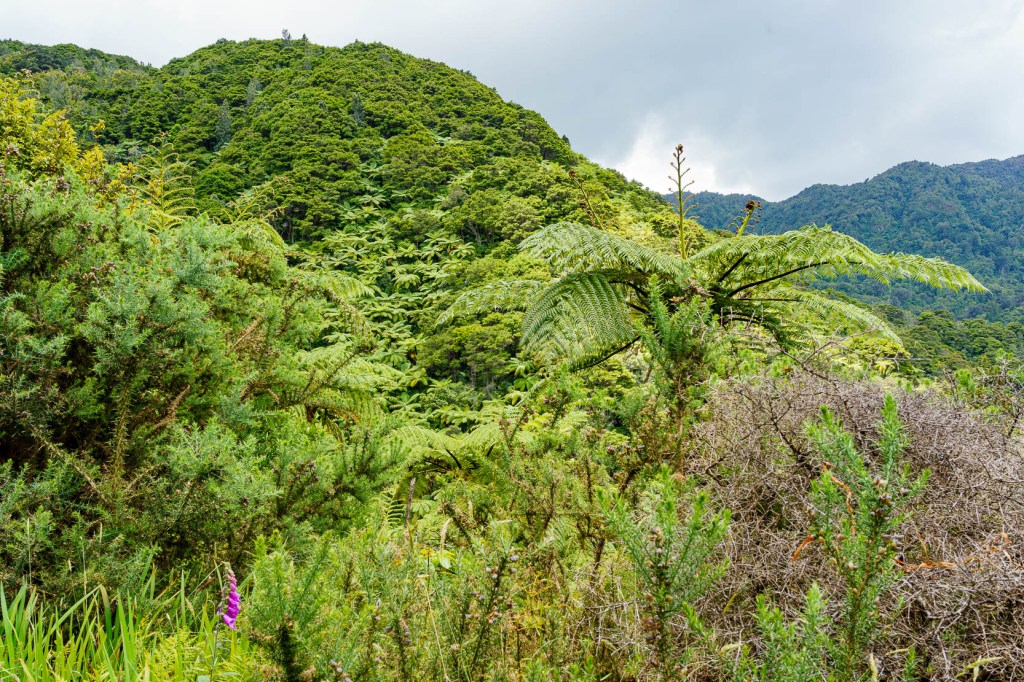
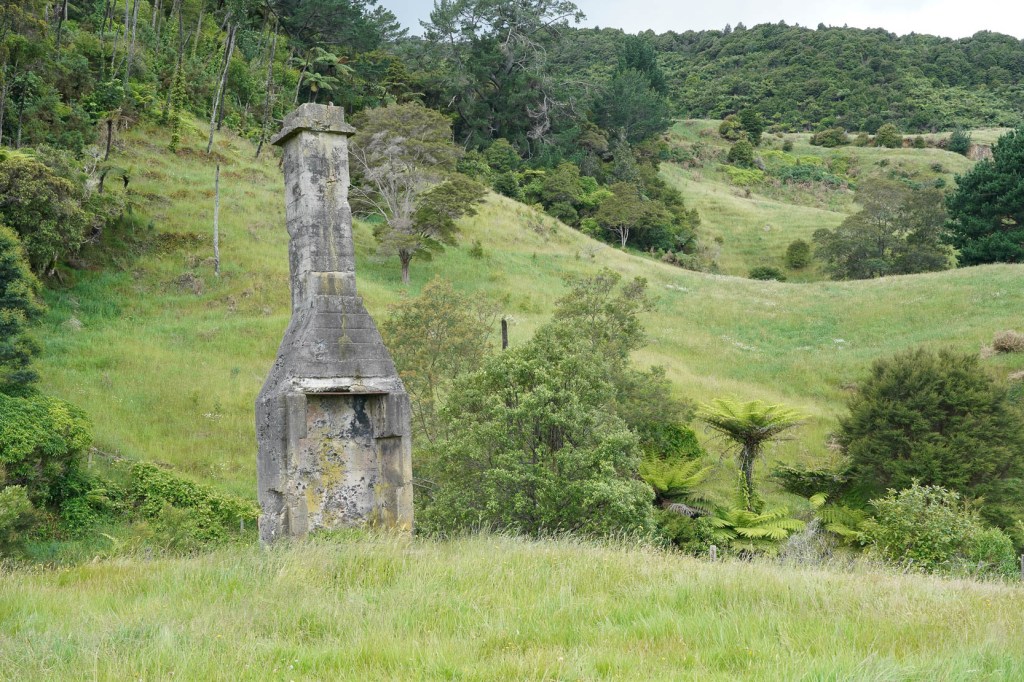
Clouds race across the sky as we emerge from the forest into a field with a solitary stone fireplace and chimney the only vestige of what was once a thriving village. A few spits of rain send us back to the car but despite looking menacing, the clouds hang onto anything more serious.
The next day we head to Wairere Falls, the white streaks on the Ranges we can see from the farm. Being the highest in the north island they are a popular spot and a track, described as easy on DOC’s website, runs to a viewpoint. I wonder how DOC defines the difficulty of its walks – in this case the path may be easy to follow, but I wouldn’t care to do it without proper hiking boots. Underfoot is rocky and rough, more a clamber than a walk. It reminds me of Padley Gorge on the outskirts of Sheffield, huge boulders and moss-covered rocks, the difference being the surrounding mamaku ferns and nikau palms rather than oak and sycamore.
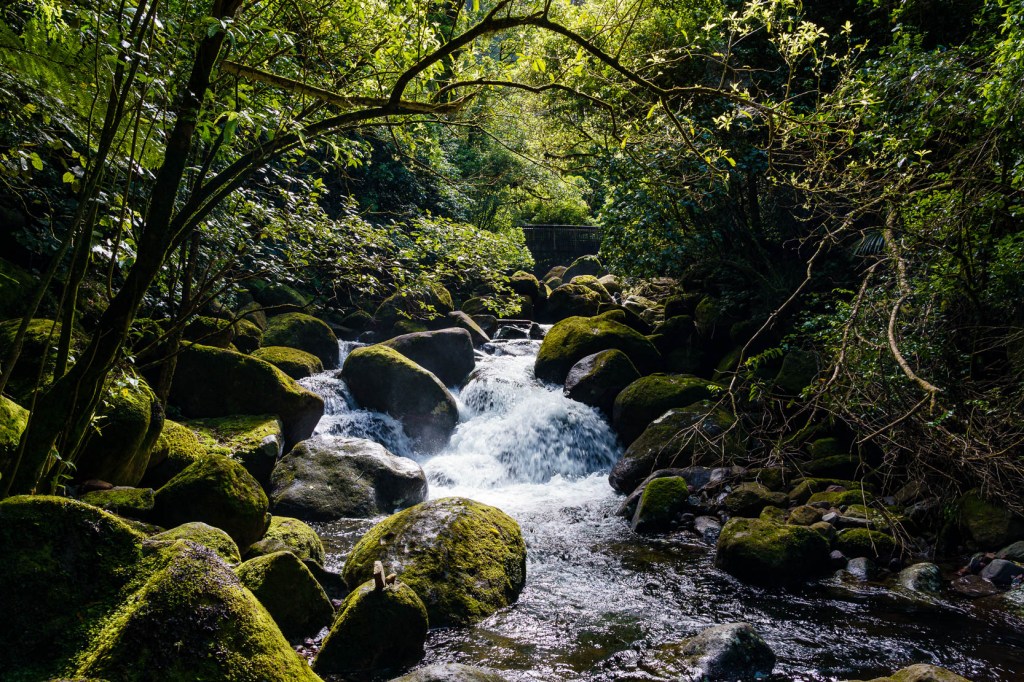
The uneven path and constant climbing make it hard going and I have to take frequent pauses to regain my breath. We twist around craggy outcrops, crisscrossing the river and climb a bit more. Wooden staircases lead over rough and steeper patches until, after an hour rather than the forty-five minutes the sign indicated, we reach a platform jutting from the rocks.
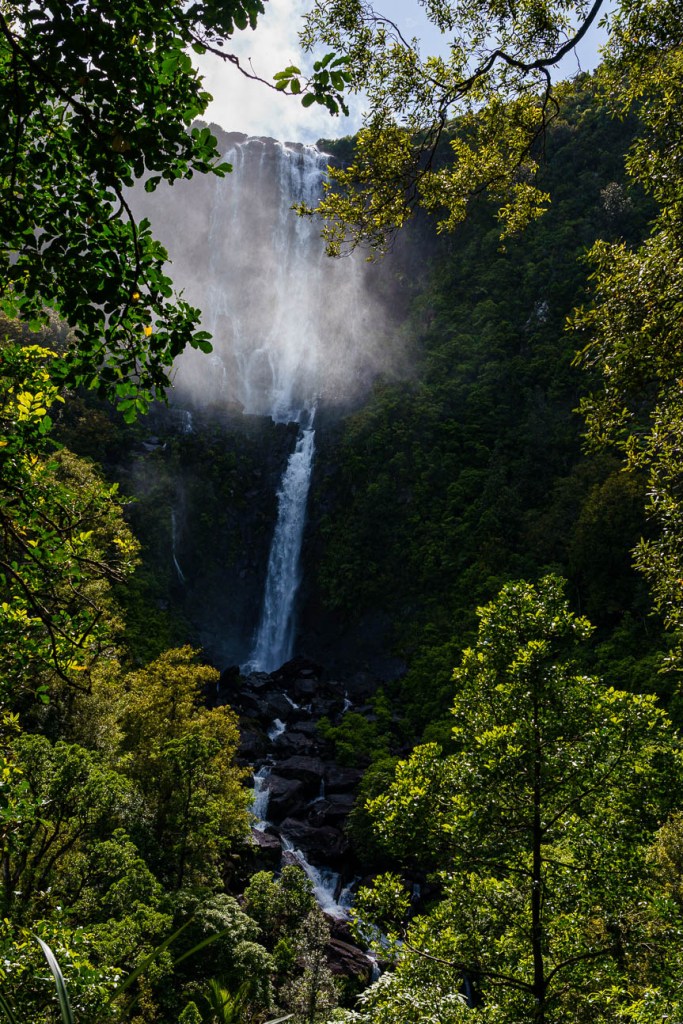
From the road the falls looked impressive; up close they are spectacular. Mist from them drifts on the wind, the sun glaring upon it and masking the upper falls until it dips behind a cloud, when we can see the water appear over the cliff edge above. Straggly streams tumble down the face, catching the rock, until halfway down they pause and regroup, then drop in a single bright line onto the rocks below.

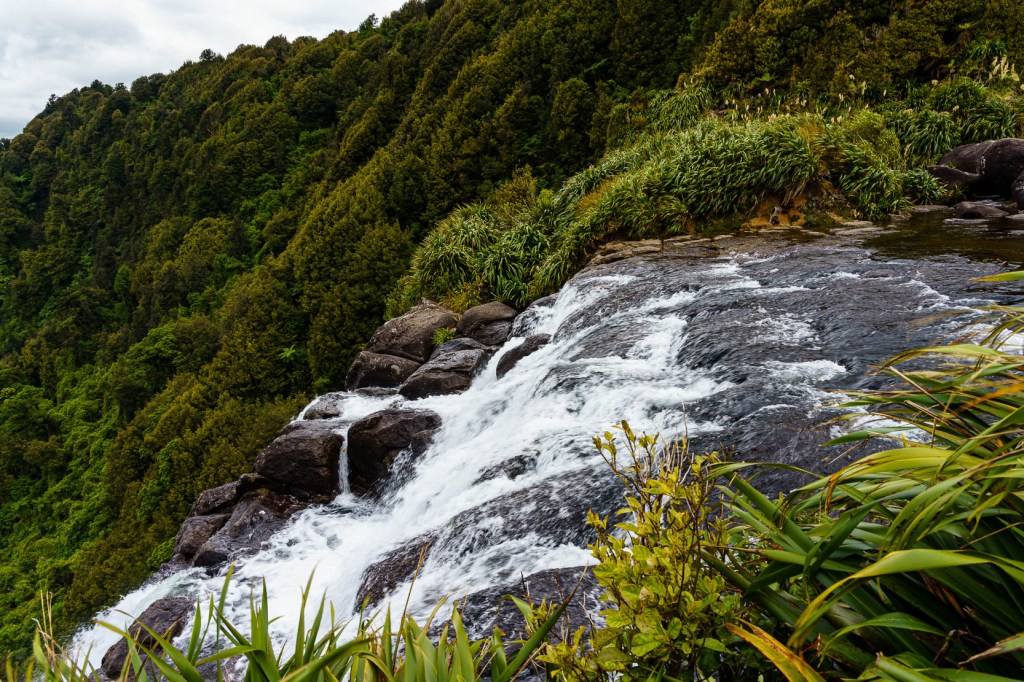
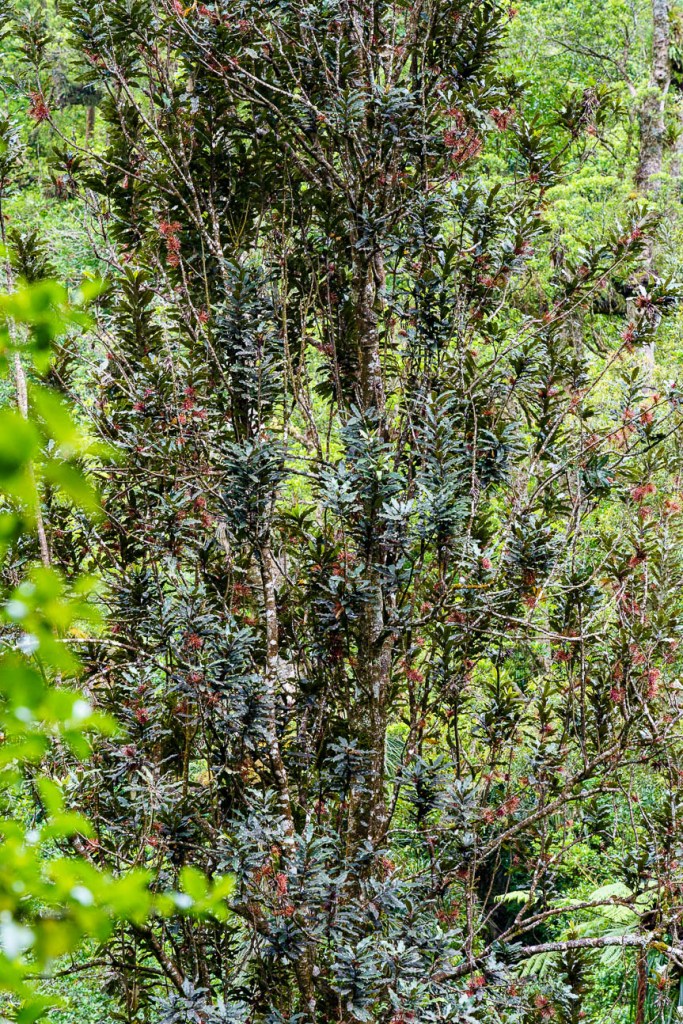
Neil continues up the path to the top of the falls but my legs have called time and I turn and make my way back down. A stunning rewarewa in full bloom stretches up beside the steps, a rare chance to see up close a tree that would normally be high in the canopy and hidden from view by lower trees. A couple of spiky fallen flowers lie on a step. I pause at the twitter of a piwakawaka and search for it amongst the green, wondering at the shortness of its tail until a larger, full-tailed one appears and feeds it a tasty morsel.
Again, spits of rain splash as we drive away and rain crashes down as we eat lunch at a local café. It pauses long enough to allow us a quick swim and spa at the local pool, but we get almost as wet again as we run back to the car in the next downpour. Despite how much rain has fallen this week we’ve been out every day and only got completely soaked once. Serendipitous indeed.
 Tracy Annenberg