November 2022
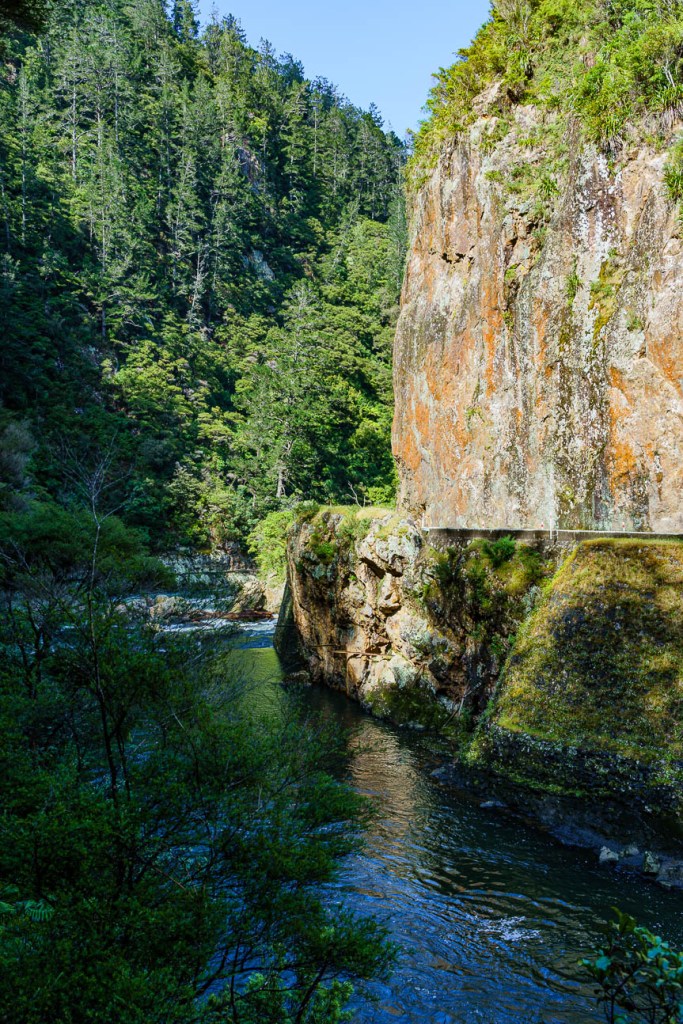
I like hills. Both cities I’ve lived in have been on and surrounded by hills. Flat land bores me, both to look at – nothing to see except sky – and to walk on. I even like hills in the sea; crashing stormy waves are much more interesting than calm water. Only time I don’t like them is when I’m on a bike, and even then I prefer undulations, small efforts rewarded by small breaks in pedalling, to pan-flat. Small gaps punched between hills thrill me, cliffs cascading down, rocky protuberances, often a river at the bottom, plenty to entertain the eyes, mind, and legs.
The Karangahake Gorge between Paeroa and Waihi is a deep fissure through low hills, formed over millennia by the small river that now chortles its way alongside the road and an old railway line converted to a cycling and walking trail. I’m predisposed to like it so chuck in a couple of industrial heritage sites and I’m in a very happy place – New Zealand may have plenty of natural history but is sorely lacking in the built variety and I do miss that of my old country. I can spend hours walking around a stately home or old industrial site where ruined and/or restored buildings tell stories whispered by the ghosts of those who lived and worked in them.
Squally showers splatter the car on our drive south from Thames and we abort a walk around Waihi when one drives into our faces. Back along the gorge the sun glistens on the dark stone of the Victoria Battery and we grab our lunch and cross the river to a bench overlooking the old works. We eat with the sun beating down and I wonder at our wisdom of not applying sunscreen, until the clouds return and small showers accompany us as we explore, following a narrow-gauge rail line that twists around and through ruined buildings.
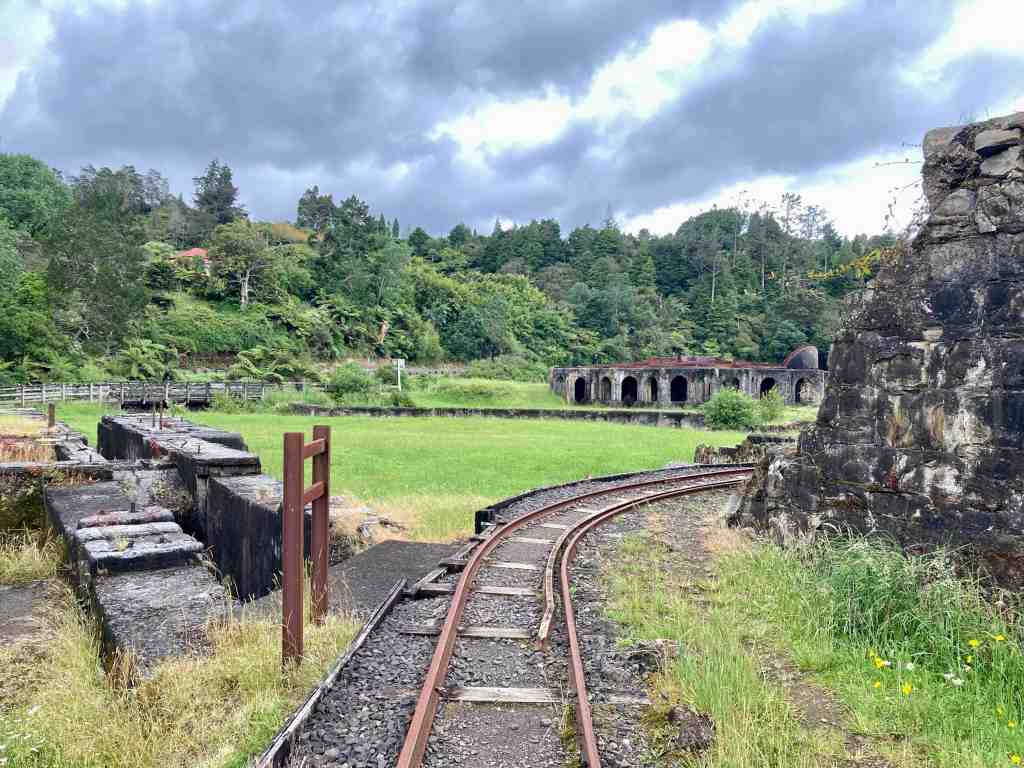
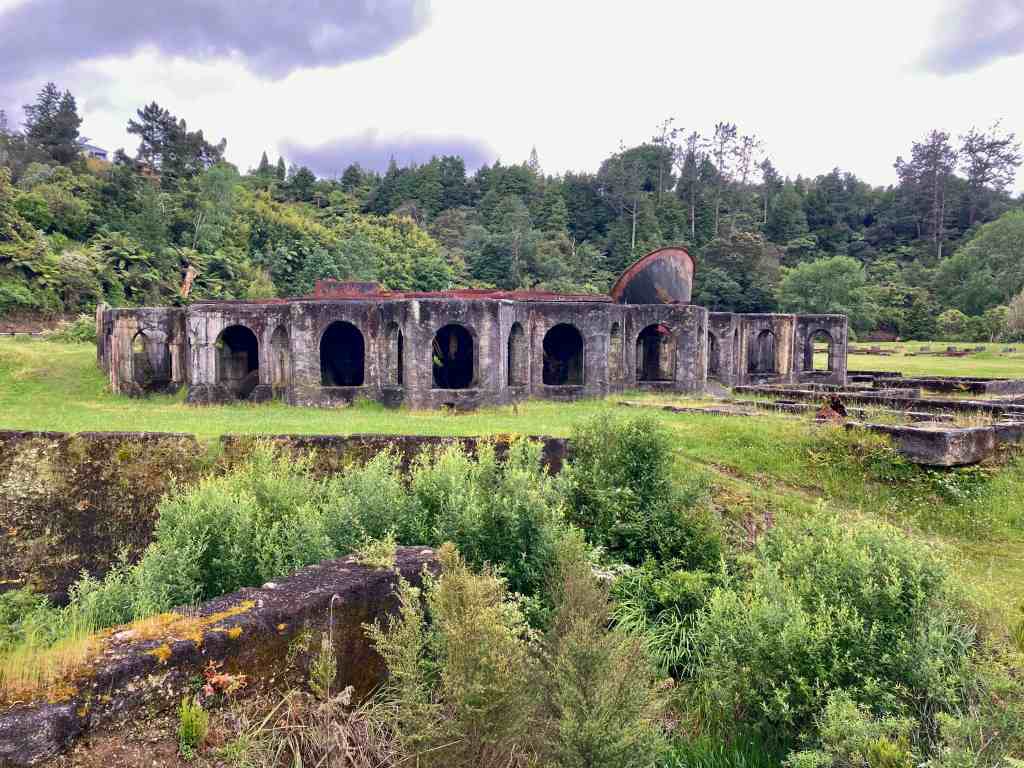
You’d be forgiven for thinking we were wandering around an old army base or military site – it took me a bit of reading to realise this was the home of a battery that battered rather than held arms and soldiers. After gold-filled rocks were excavated from the surrounding hills they were brought here to be literally beaten to crumbs by huge pounding hammers so the gold could be extracted. When it was working at full pelt the noise could be heard over twenty miles away.
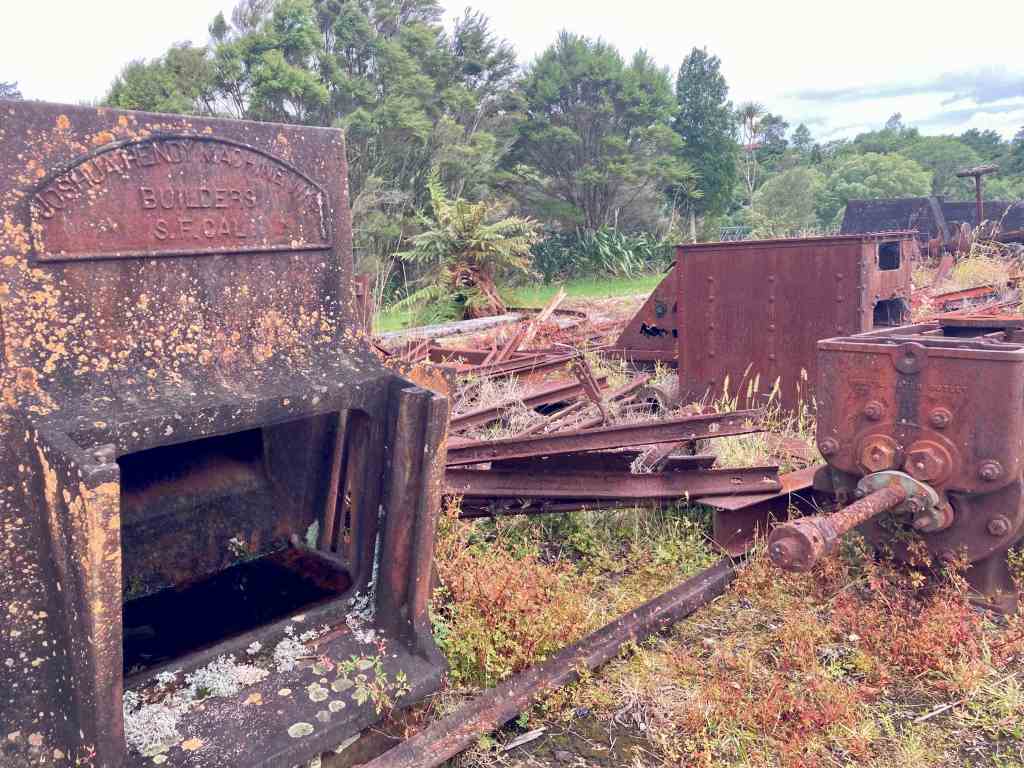
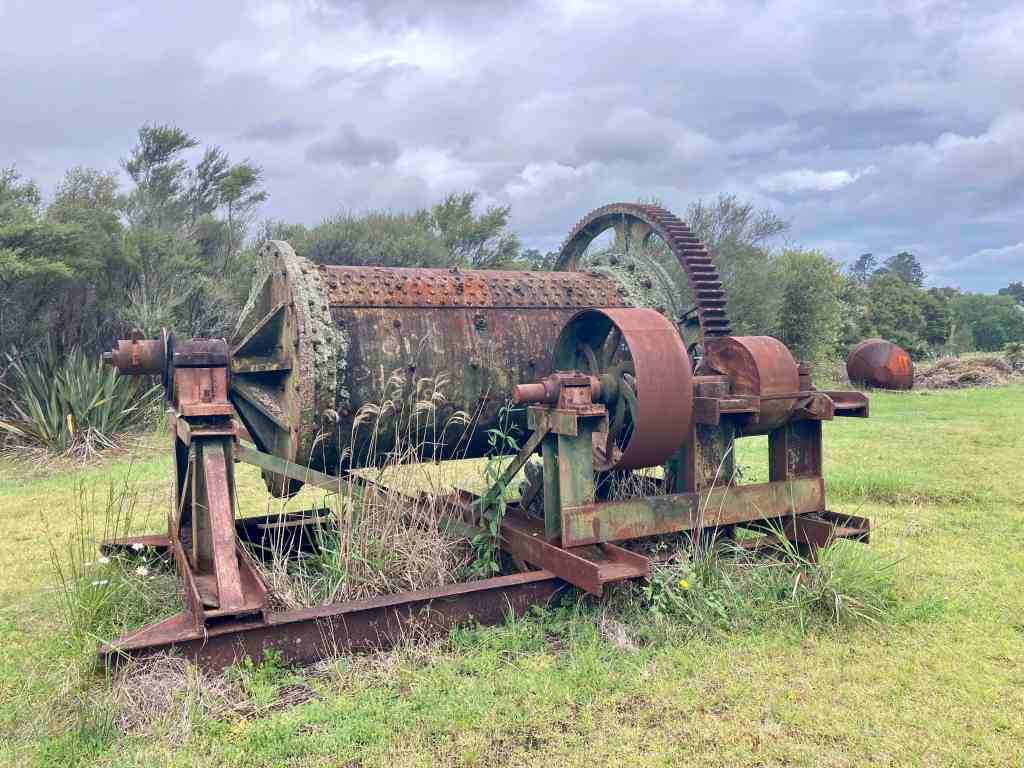
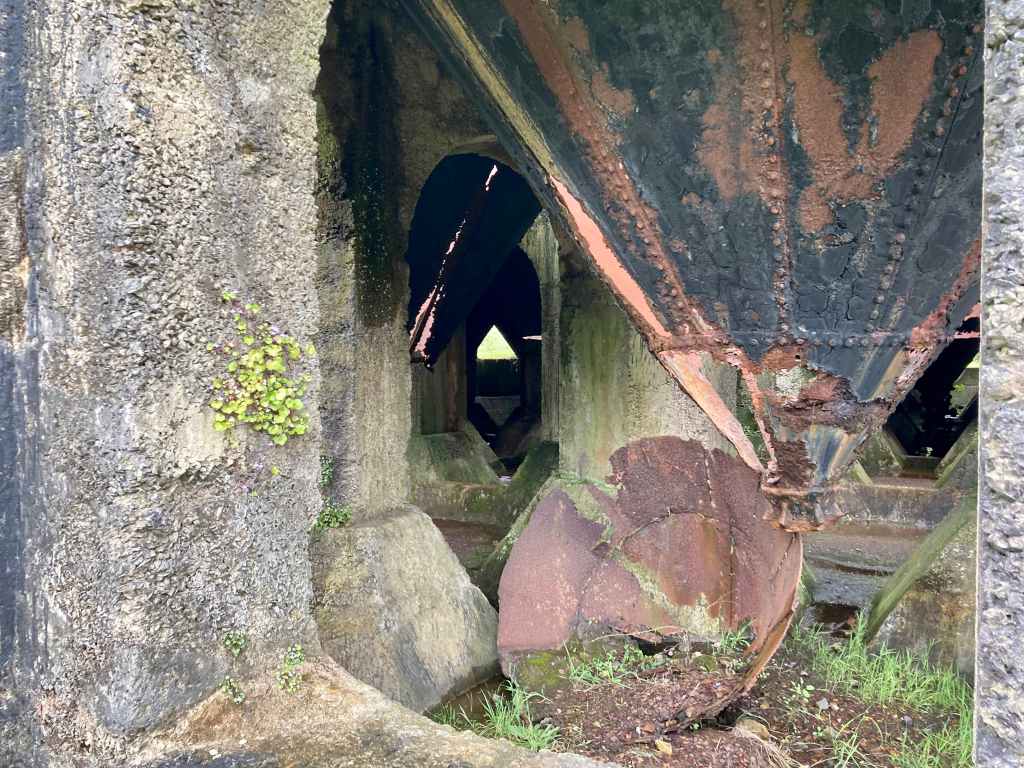
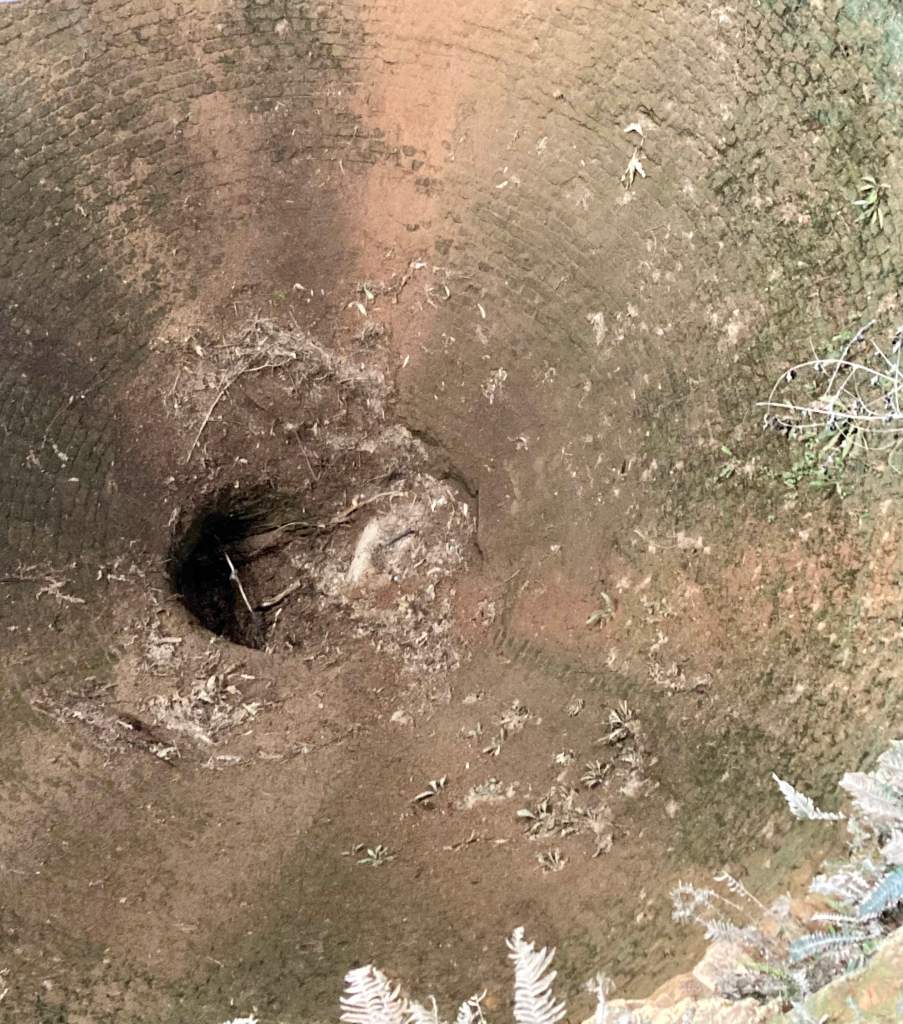
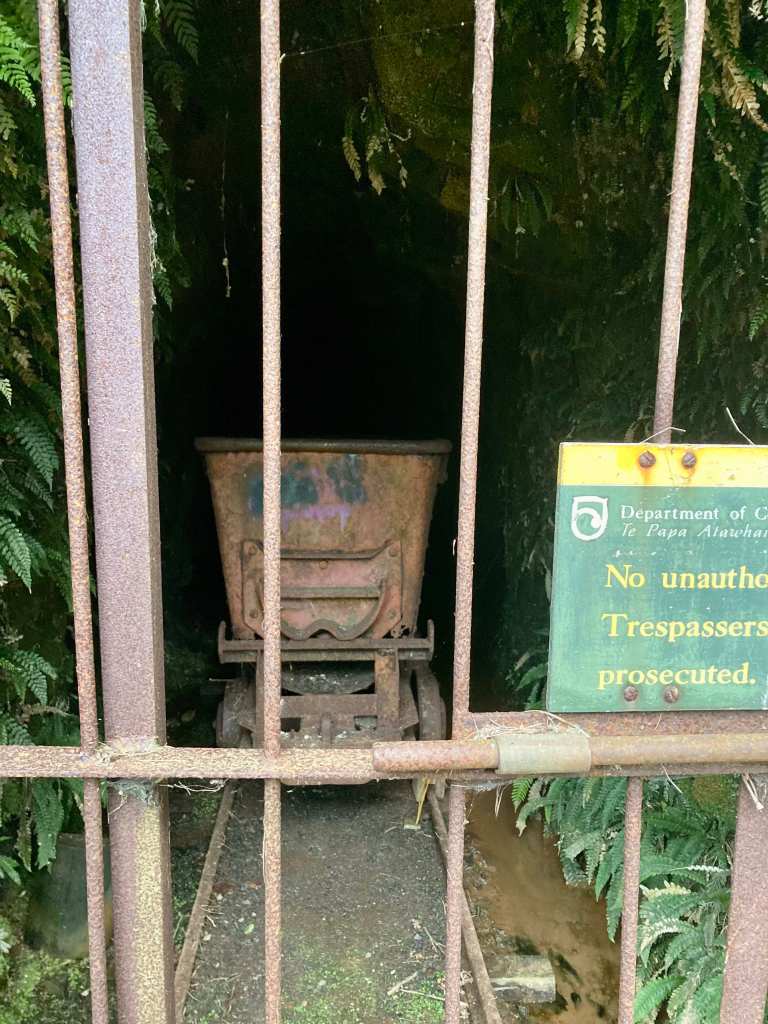
Little remains of the buildings and the place has an abandoned air about it, information boards few and with little actual information. The rail lines disappear into tunnels in the hillside, on the top of which an open-sided shed-like structure warrants investigation. It shelters restored kilns, huge brick-lined pits in the ground where the ore was heated prior to crushing (it made the hard rock brittle therefore easier to crush). I hold tightly to sunglasses, phone and railing as I peer from the viewing walkway built across the kilns into their dark depths. Inside the tunnels carts would trundle under the kilns and collect the heated ore to move it to the batteries below. It’s a lot of work for a bit of bling.
A disadvantage of being in a gorge is you can’t see the weather coming until, within minutes, dark clouds steal the light and in a few more a power shower pummels your head. Unlike the lighter ones it doesn’t give up, dropping fierce and fast and soaking us. We run back to the car and drive to the cabin in the forest where we will stay for the next few nights. At least we won’t have to worry about being incinerated in our beds in a forest fire.
The next morning the sun is back and we cycle towards Paeroa, locking the bikes to a fence where a walkway begins that leads through the forest to the site of another battery and more mine workings. We emerge from the trees and descend a slippery path towards a river that dazzles silver in the bright sunlight. Full of recent rain it roars beside us, banging into rocks and crashing over small falls, running deep and quiet in a few places. The trees drip last night’s rain on us and a piwakawaka flits around hoping we turn up a tasty insect snack.
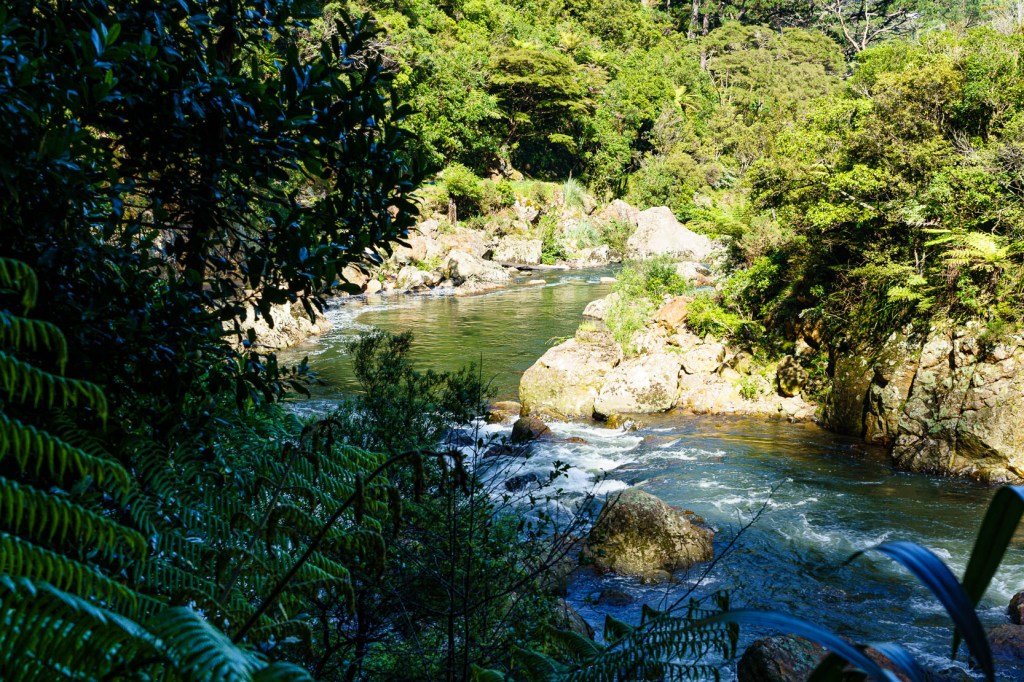
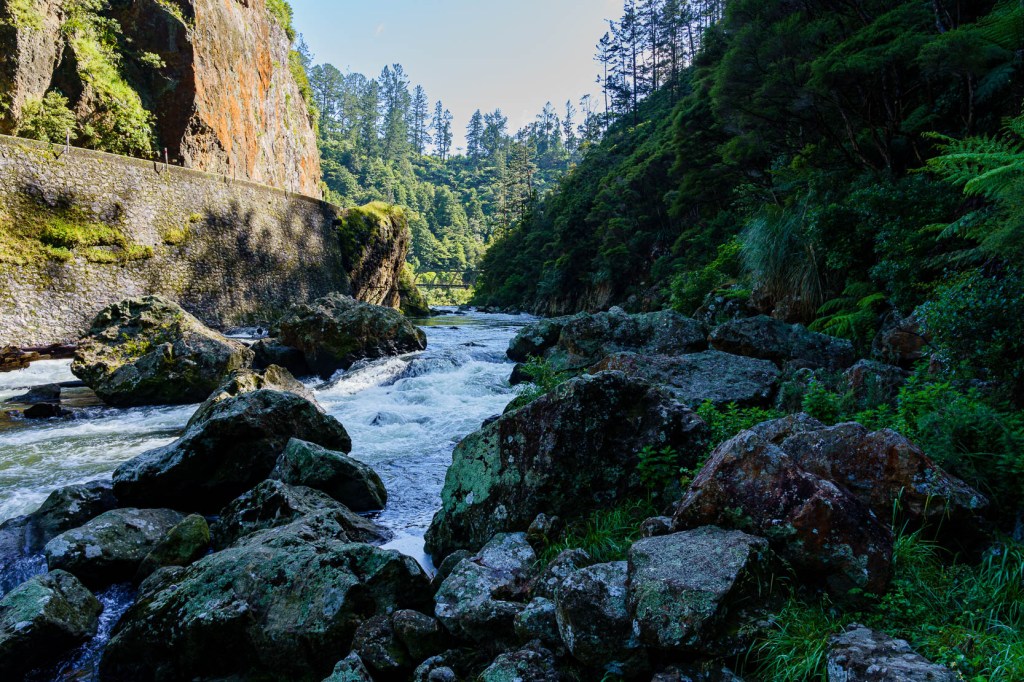

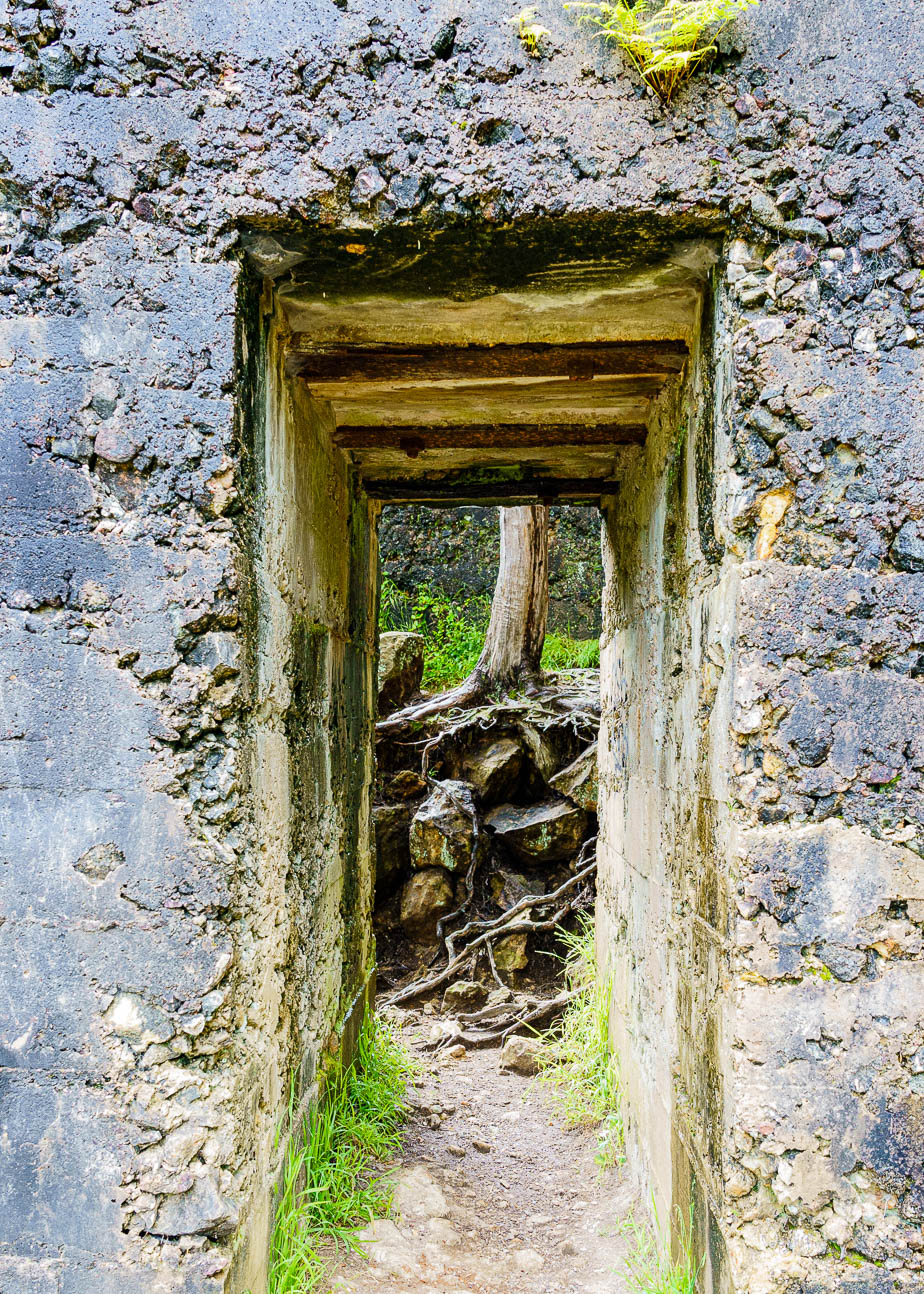
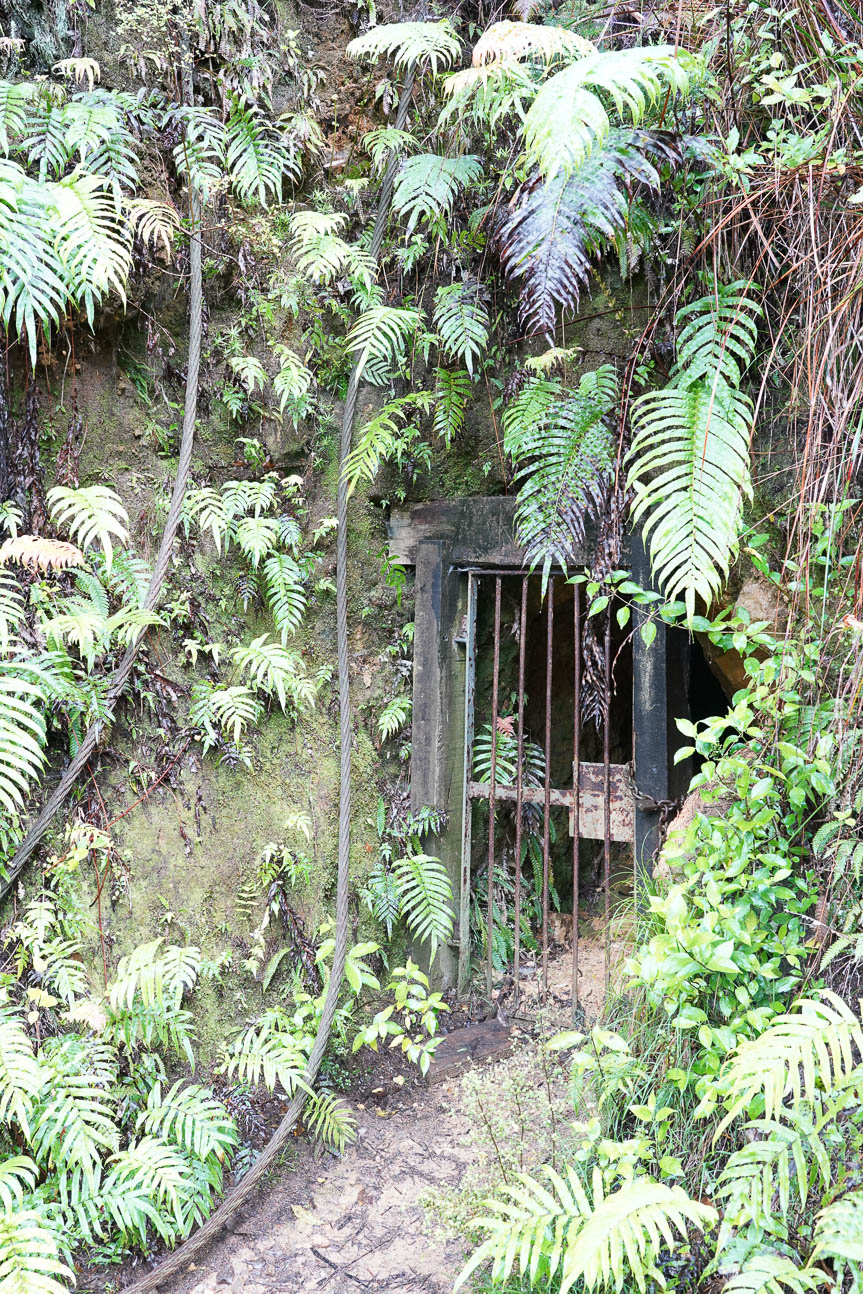
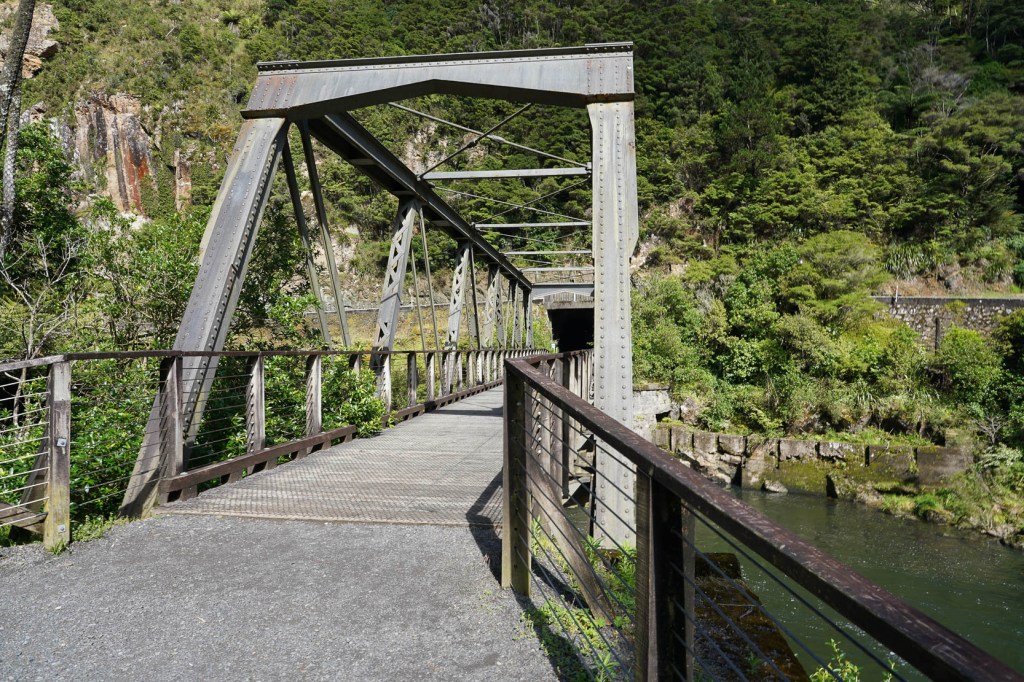
At the works site the remains of buildings run up a deep cleft in the cliffs and alongside a river. A rail line runs between them, disappearing into a tunnel that is closed. A few boards are dotted around but are faded or damaged and offer little in the way of information. Still, we spend a pleasant hour exploring before retracing our steps back to the bikes. The old railway tunnel is only a kilometre but it’s but long enough for the sun to have turned to dark clouds when we emerge. We cycle back through a light shower and are sipping tea as the sky cracks and releases so much water I’m sure we would have drowned if we’d still been out in it.
 Tracy Annenberg